-

What flowers are suitable for an east-facing balcony? 10 plants that won't die in the sun and still grow into a full pot
Do gardening friends with an east-facing balcony always worry? You get a bit of sun in the morning, but by noon there's no direct light at all. What exactly can you plant that will survive and still grow into a full pot? Actually, the "partial sun" environment of an east-facing balcony is especially friendly. If you choose the right plants, you won't have to put in much effort at all. Today I'll recommend several that are easy to care for and good-looking. Advantages of an east-facing balcony:
-
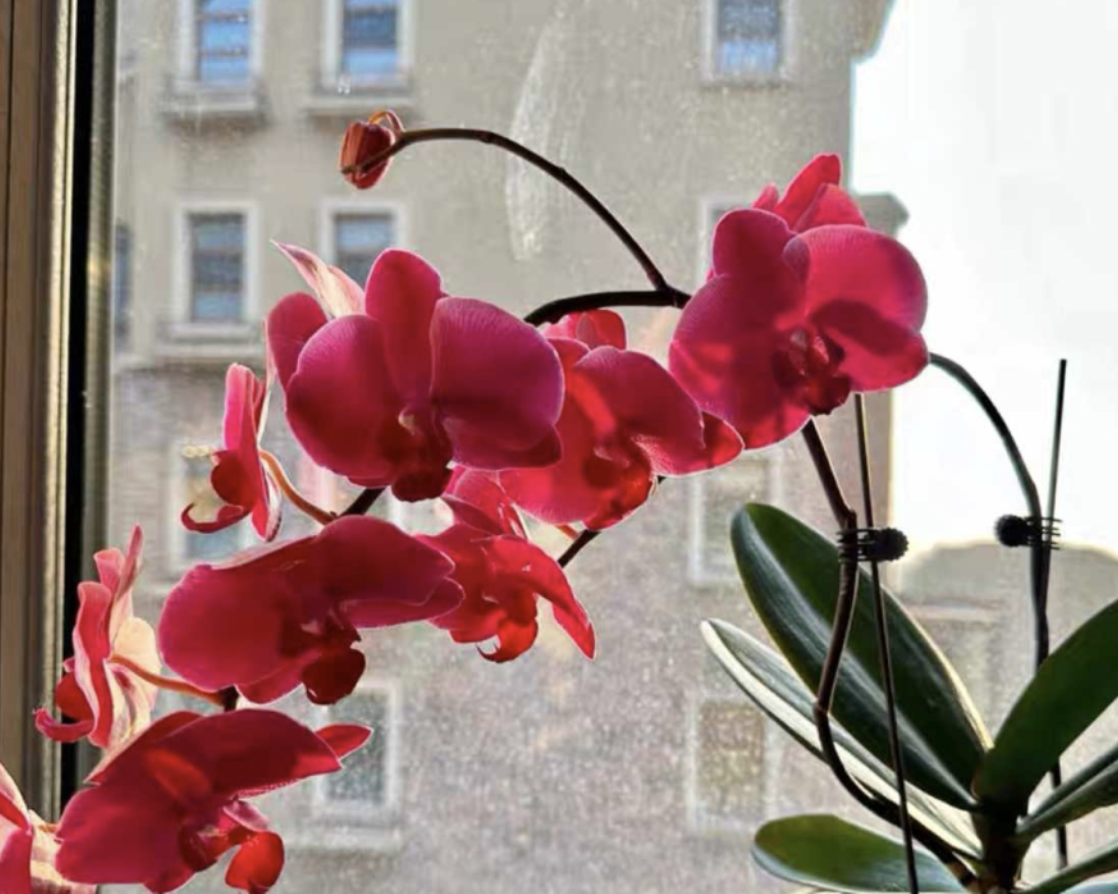
Perennial shade-tolerant plants that still bloom? These three "magical plants" are incredibly low-maintenance!
Many flower enthusiasts complain that they don’t get enough sunlight at home, saying, "I want to grow flowers, but I can’t get enough sunlight, so I only grow
-

4 sun-tolerant flowers recommended, they can still bloom abundantly even with the scorching sun on a balcony in summer
Once summer comes in the south, the balcony is like a steamer, and any flower you grow droops its head, and the flowers you worked so hard to grow can be sun-dried into "salted vegetable dry" in minutes. These 4 "sun-tolerance kings" can still bloom like crazy even under 38°C scorching sun, and beginners can easily handle them too, save this quickly! Lantana: this flower is simply a summer cockroach, the more it is sunned, the more energetic it gets,
-

Can a Phalaenopsis orchid still survive if all its roots have rotted? Here's how to coax it into growing new roots
I believe friends who have kept Phalaenopsis orchids for the first time have all been through root rot, and generally speaking, even with a strenuous rescue effort, for less experienced growers the result is mostly in vain. Here I'd like to share one of the fastest root-inducing methods after root rot, namely the "inversion method." How exactly do you do it? Let's take a look below. "Inver
-

Is September still soon enough for pinching? Get these flowers pruned now for a burst of blooms in autumn and winter
Recently someone asked: "It's already September, can I still pinch back my flowers at home? Will I prune them to death?" Actually, whether you can pinch in September depends on the plant. Not all plants are suitable, but if you pick the right species and prune at the right time, it can actually make them grow more vigorously and bloom more. First, you need to understand what "pinching" really is
-

Are aerial roots of Phalaenopsis still useful after being cut off?
Several plump white "little whiskers" have popped out from outside the Phalaenopsis pot. I looked it up and found out they are aerial roots. So can these things actually be cut? If they are accidentally broken off, are they still useful? The aerial roots of Phalaenopsis "can be cut, but it is not necessary to cut them, and you definitely should not cut them carelessly." You first need to understand what these aerial roots are for - Phalaenopsis in the wild originally grows on trees, not rooted in soil. These aerial roots are its "hands" and "nose": on one hand, they can grip the bark to anchor itself; on the other hand, they can directly absorb water and oxygen from the air, and even help with photosynthesis. So if the aerial roots are not damaged and are still green and plump, keeping them is only beneficial to the orchid, and there is no need to cut them at all.
-

How can Phalaenopsis orchid spikes grow faster, and are they still useful after blooming?
What do flower growers look forward to most? Of course, it is their own Phalaenopsis orchid sending up a flower spike and rapidly pushing out buds! But if the spike grows slowly, or even refuses to bloom, it can really drive you crazy! How do you make the spike grow fast? The first secret is to feed it well! Phalaenopsis orchids use a huge amount of nutrients to send up a flower spike, and the little bit of nutrients in the bark is not enough. From autumn
-

Can a Phalaenopsis still grow again after the flower spike is cut off, and how long does it take to send up a new spike?
Phalaenopsis, after the flowering period ends, faces a question: can a Phalaenopsis still grow a flower spike after the spike is cut off? And after cutting the spike, how long does it take before it sends up a new flower spike? A deeper understanding of these questions can help us better care for Phalaenopsis and let it bloom beautifully many times. First, after a Phalaenopsis has its flower spike cut off
-

Can Sphagnum Moss Still Be Used for Planting After Soaking for 10 Hours? An Analysis of the Correct Soaking Time
As is well known, to grow Phalaenopsis orchids well, besides routine watering, sunlight and temperature, the choice of potting medium is also very important. Among these, sphagnum moss is undoubtedly a common substrate material. Its advantages are water retention and air permeability, and it is relatively easy to buy, so it is favored by flower growers. Its downside is that it is more or less
-
What to do if a Phalaenopsis orchid's flower spike breaks, can it still keep growing?
For a Phalaenopsis orchid kept at home, the flowers are elegant and beautifully colored, and they look especially lovely placed indoors. But what should you do if you accidentally break the flower spike? Below, let me introduce a few ways to save it. First, look at how the flower spike broke. If the flower spike has broken off from the very base, this situation is a bit tricky. If the base is broken, it is like the plant's main
条件筛选