-
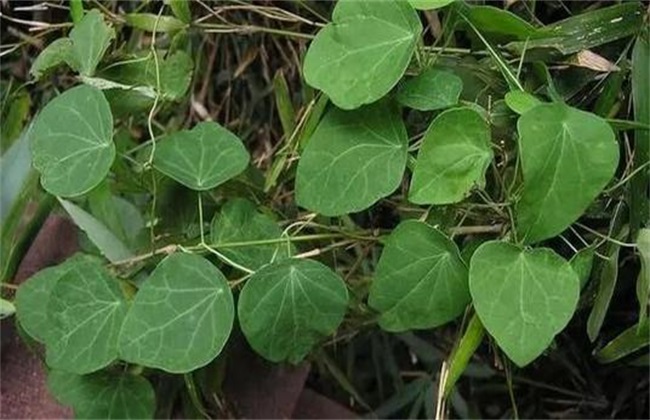
Detailed Explanation of Stephania tetrandra Planting Techniques and Management Methods
Stephania tetrandra Planting Techniques
-

Detailed Explanation of Stephania tetrandra Planting Techniques and Management Methods
Planting Techniques for Stephania tetrandra
-

Three key steps for storing Gastrodia elata properly
Recently, I have received letters from many farmer friends asking how to store Gastrodia elata seed tubers. During the production of Gastrodia elata, seed rot often occurs, causing losses. In my opinion, three key steps should be taken when storing Gastrodia elata. First, the harvest step. Gastrodia elata is dug in spring and winter. When digging Gastrodia elata in winter, select fresh, pest-free, undamaged small tubers, air-dry them for 1-2 days to remove part of the moisture, and then store them together for use as seed the following year. Second, the temperature step. Place the partially air-dried Gastrodia elata seed tubers in layers in a brick pond, a large earthen basin or a wooden box
-
Detailed Explanation of the Making Methods and Steps of Lingzhi (Reishi) Bonsai
1. Selection of materials: Different types of pots should be chosen according to the species, color, form, and size of the lingzhi (reishi). Generally, dark-colored ceramic pots are better. If it is red lingzhi or Matsutake lingzhi (Ganoderma tsugae), brown or purple pots are ideal, as they make the color tone harmonious, simple and elegant. If it is black zizhi (Ganoderma sinense) or black lingzhi, white porcelain pots should be chosen, using strong contrast to highlight the features of the lingzhi's form. Pots with the same or similar color tone as the lingzhi should not be chosen, to avoid a monotonous color tone. For lingzhi materials, wild-collected or artificially cultivated ones can be used. Artificially
-
Detailed Explanation of the Processing Method and Production Steps of Licorice Mango
It is made from salted mango blanks as the raw material, through desalting, soaking in seasoning, and sun-drying or oven-drying. (1) Process flow: salted mango blanks → desalting → drying → ingredient mixing → pickling → drying → finished product → packaging. (2) Key operating points: ① Desalting and drying: Soak the salted mango blanks in clean water to desalt, with a soaking time of about 6-8h, until the salt content is about 5%, then scoop them out and drain, sun-dry or use a dryer to dry to a semi-dry state, in preparation for soaking in the seasoning. ② Ingredients: 100kg mango blanks, 3kg licorice, 10kg granulated sugar, 45g sodium saccharin,
-
Detailed Explanation of Primary Processing Methods and Operating Steps for Gastrodia elata
When Gastrodia elata is sold fresh or delivered for sale, after harvest it should be kept from being bumped, knocked about, or mechanically damaged, then the soil and sand on the tubers should be gently brushed off with a soft brush, and they can be packed into soft-lined wooden boxes or plastic crates. If processing dried Gastrodia elata, it takes longer; generally the boiling method and the steamer method are used for cooking, followed by oven drying or sun drying. In actual production, the steamer method and heated kang drying method are generally used for drying, and the operational process flow is: grading Gastrodia elata -> washing with clean water -> steaming until cooked over high heat -> heated kang drying at 50°C for 60 minutes, at 60°C for 60 minutes, at 70°C for 6
-
How to do simple processing of Gastrodia elata? Detailed method and steps
In the processing of Gastrodia elata, the residual stems must first be removed, taking care to keep the arrow buds, wash off the mud and sand, rub off the rhizomorphs and scales, wash clean with clear water, and then steam in a steamer. The heat must be strong and the steamer lid must be tight, so as to quickly kill the cells of the tuber, inhibit enzyme activity in the tuber, and prevent the leakage of sap. Steam large tubers for 30 minutes and small tubers for 15 minutes, until thoroughly cooked (no white core). If any are excessively swollen with gas, pierce them with a raw needle to release the gas, then place them on a heated kang or in a drying room, or sun-dry them. Generally, 4-5 kg of fresh Gastrodia elata is needed to process 1 kg of finished product. 1. Fire
-
What are the processing steps for Gastrodia elata? A clear explanation of every step at once
If Gastrodia elata is piled up for a long time after harvest, it will rot, so Gastrodia elata should be processed promptly after harvest. Its processing steps are as follows: 1. Grading. According to the size of Gastrodia elata, it can be divided into 3 grades. Those above 150 grams are first-grade products, 75-150 grams are second-grade products, and those below 75 grams and those damaged during digging are third-grade products. 2. Washing off soil. Wash the above 3 grades of Gastrodia elata separately with clean water. The washed Gastrodia elata must be processed the same day. If soaked in water overnight, the processed Gastrodia elata will be black, which will affect its medicinal use
-
Getting the five key steps right in Gastrodia elata cultivation can effectively increase yield
To achieve stable and high yields of Gastrodia elata, the first thing is to get the five pre-planting steps right: First, choose the site. Gastrodia elata cultivation can be adapted to local conditions, whether indoors, in air-raid shelters, semi-basements, or chicken coops. Because Gastrodia elata likes dark, damp, and cool environments, choose places with good ventilation and shade as much as possible, with semi-basements and outdoor trenches giving the best results. You can lay a layer of bricks before use, or increase the thickness of the bottom sand layer to enhance its water permeability. Second, if the indoor floor is concrete, use high-quality Armillaria mellea fungal material (spawn). Armillaria mellea fungal material
-
Gastrodia elata box planting tutorial, teaching you step by step how to grow Gastrodia elata
Gastrodia elata can be grown in open fields, under tree shade, indoors, in basements, in cellar caves, in brick pools and in wooden boxes; as long as you master its growth characteristics, you can achieve a high yield. Based on my planting experience last year, I now introduce the method of asexual Gastrodia elata cultivation in boxes, which is suitable for beginners because temperature and humidity are easy to control. To grow Gastrodia elata, you must first cultivate Armillaria fungus wood; after the fungus wood is well cultivated, plant the Gastrodia elata alongside it. As long as you can buy fresh, high-quality Gastrodia seed and pure Armillaria, cultivation will definitely succeed. 1. Prepare the box: specifications 66×
条件筛选