-
-

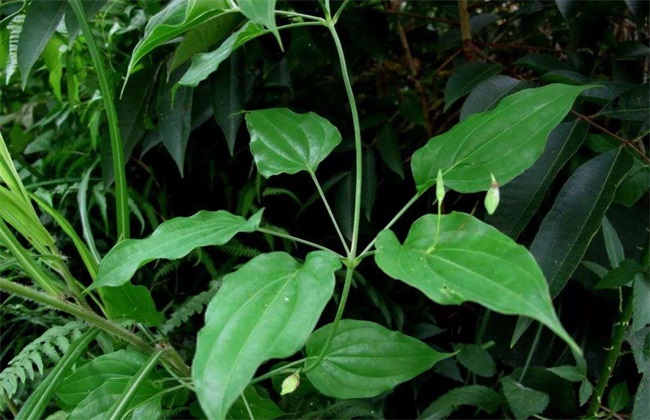
What are the precautions for planting Stemona? Keep these key points in mind
What are the precautions for planting Stemona
-

Detailed Explanation of Key Cultivation Techniques for Hardstem Honeysuckle
Hardstem honeysuckle, also known as tree-form honeysuckle, is a new variety introduced to our province in the past two years, and is currently cultivated only in small quantities in Zhuanghe and Benxi. The traditional old variety of honeysuckle is vine-form, with scattered branches that trail along the ground, which affects ventilation and reduces yield. The new hardstem honeysuckle variety has a hard main trunk, obvious side branches, and a large number of flowering branches, with a yield 2-5 times higher than the original variety. 1. Cultivation Conditions Honeysuckle has a well-developed root system, is a preferred variety for soil and water conservation, is also an ornamental flower, and is moreover an important medicinal herb. It has cold-resistant and heat-resistant characteristics, and can grow within the range of -2
-
Occurrence and Control of Stem Base Rot in Schisandra
Stem base rot in Schisandra can cause the stem base of the plant to rot, the root bark to fall off, and eventually the entire plant to die. With the expansion of cultivated area, the occurrence of stem base rot in Schisandra has shown an upward trend. The general incidence rate is 2%-40%, and in severe cases it exceeds 70%, making it a devastating disease. 1. Disease symptoms Stem base rot occurs on Schisandra of all ages, with 1-3 year old plants being the most severely affected. The disease starts from the stem base or the junction of root and stem. In the early stage of the disease, the leaves wilt and droop as if lacking water, but cannot recover,
-
Codonopsis stems and leaves can be used as livestock and poultry feed
Codonopsis is a precious Chinese medicinal herb; its dried root is used as medicine and has the effects of tonifying qi and nourishing blood, harmonizing the spleen and stomach, promoting fluid production and clearing the lungs. Its stems and leaves were often discarded in the past. However, in recent years, research has found that Codonopsis stems and leaves contain volatile oil, various amino acids, macro- and trace elements, alkaloids, starch, and more. Farmers at the Sifangpa medicinal herb farm in our county dry and grind the stems and leaves, then add them to feed at a ratio of 20-30% to feed pigs, with a clear weight-gain effect. Feeding them to poultry not only increases the egg-laying rate, egg production, and average egg weight, according to chemical
-
Detailed Explanation of New Key Techniques for Pruning the Stems and Vines of Japanese Honeysuckle
Pruning Japanese honeysuckle is an effective technical measure for regulating the growth of stems and vines, promoting flower bud differentiation, extending the plant's lifespan, and maintaining stable high yields. Pruned Japanese honeysuckle generally increases yield by 35-45%, with the highest reaching more than double. For Japanese honeysuckle plants entering the aging stage, pruning measures can extend the full-bloom period by 5-6 years. When Japanese honeysuckle enters the aging stage, its characteristics are sparse and pale leaves, many dead branches and weak flowers, and a shrinking canopy. At this stage, heavy pruning is mainly used for renewal and rejuvenation, to extend the plant's lifespan and maintain stable yields. Pruning should be strictly
-
Codonopsis stems and leaves are a high-quality feed with high nutritional value.
Codonopsis is a valuable traditional Chinese medicinal herb, with its dried roots used as medicine; it has the effects of tonifying qi and nourishing blood, harmonizing the spleen and stomach, promoting fluid production, and clearing the lungs. Its stems and leaves were often discarded in the past. However, in recent years, research has found that Codonopsis stems and leaves contain volatile oils, various amino acids, macro- and trace elements, alkaloids, starch, and more. Farmers at the Sifangpa medicinal herb farm in our county dry and crush the stems and leaves, then add them to feed at a ratio of 20-30% to feed pigs, producing a clear weight-gain effect. When used to feed poultry, not only are the egg-laying rate, egg production, and average egg weight increased, but tests also show that the cholesterol content is somewhat reduced.
-

Detailed Explanation of the Cultivation Techniques and Management Methods of Stemona
Cultivation Techniques of Stemona
-

How to Propagate Stemona? A Detailed Guide to Common Propagation Methods
Propagation Methods of Stemona
-

How to propagate Gynostemma pentaphyllum? A few common methods
Propagation methods for Gynostemma pentaphyllum
条件筛选