-

Can Turtles and Fish Be Kept Together? A Few Things to Know Before You Start
Turtles and fish can be kept together. For mixed turtle-fish culture, the stocking ratio is as follows: per 0.07 hectares, stock 300 silver carp (specification 20-25 g each), 80 bighead carp (specification about 25 g each), 120 grass carp (specification 50-125 g each), 80 common carp (specification about 25 g each), and 80 blunt snout bream (specification 12.5-25 g each). Then stock about 1,200 turtles aged 3-6 years. Fish fingerlings are best stocked before the Spring Festival, while turtles are best stocked after the beginning of spring, when the water temperature has stabilized above 15
-
Start soil moisture preparation for cotton early and seize favorable opportunities
Although there is still one to two months before cotton seedling raising and sowing, the current situation of consecutive drought across autumn, winter and spring has already posed a great threat to cotton planting this year, and based on past years, there is also very little precipitation in our province in March-April. In view of the current situation, Dong Hezhong, deputy director and researcher of the Cotton Research Center of the Shandong Academy of Agricultural Sciences, suggests that cotton farmers: this year's cotton planting should start early and prepare early, seize the opportunity for soil moisture preparation according to weather conditions, actively prepare and conserve soil moisture, fight drought and protect seedlings, and strive for full seedlings from one sowing and early development of strong seedlings. Selected
-
After the Start of Autumn, don't relax on Welsh onion management - keep these key points in mind
Summer goes and autumn comes, and Welsh onion growth enters its vigorous stage. At this time, the main management goal is to promote more leaves and rapid growth, elongate, thicken and increase the weight of the leaf sheaths (the white stalk), and keep the root system strong and firmly established. The field management technical measures can be summarized in four farming proverbs: After the Start of Autumn, don't relax on Welsh onion care, four fertilizers and seven waterings attack in succession, three hoeings and two earthings drain rain and waterlogging, and prevent and control three diseases and six insects. 1. Four fertilizers and seven waterings attack in succession. The four fertilizers refer to the tillering fertilizer (early August), applying 2000-2500 kg of high-quality decomposed barnyard manure, 10 kg of urea or 20-25 kg of ammonium bicarbonate per mu
-
What are the four key points to get right for fish farming at the start of spring?
1. Fertilization: In early spring, when the pond water temperature stabilizes at 8°C-10°C, start applying supplemental fertilizer to cultivate natural food organisms in the water. The amount of fertilizer should be determined according to the fertility of the water quality and the quality of the fertilizer. Generally, apply 60-90 kg of human excrement and urine per mu; or 100-150 kg of livestock manure. If chemical fertilizer is used, follow a nitrogen-to-phosphorus-to-potassium ratio of 1:1:0.5. When applying, first crush and mix with water, then splash evenly over the whole pond, with a total amount of 3-7 kg per mu, and an interval of 5-10 days between each application. Keep the pond water quality yellow-brown or yellow-green, with a transparency of 30 cm
-
Good cotton planting next year starts with winter soil preparation
Many cotton farmers do not pay attention to winter management of cotton fields, and are accustomed to spring plowing and spring irrigation before sowing in spring. In fact, "prepare the soil well in winter, and cotton planting will go well next year; irrigate the land well during the winter slack season, and planting cotton will be effortless; winter plowing plus winter irrigation means fewer pests and high cotton yields" has become an important experience in cotton production. For this reason, in winter, cotton farmers should do the following tasks well: winter plowing of cotton fields with deep winter plowing can not only turn out part of the raw soil and bury surface weeds and crop residues underground; the loosened soil can also improve its capacity to store rain and snow, and after
-
What are the excellent varieties of water dropwort? Growing water dropwort well starts with choosing the right variety
Water dropwort varieties are divided by leaf shape into two types: sharp-leaf cress and round-leaf cress. Sharp-leaf varieties have pointed leaves and taller plants, suitable for deep-water cultivation. Round-leaf varieties have nearly round leaves and shorter plants, suitable for shallow-water cultivation or dryland cultivation. The excellent water dropwort varieties commonly used in production include: Yuqi Large Yellow Leaf-head Cress, a local variety of Yuqi Town, Xishan District, Wuxi City. It is grown more extensively in Wuxi, Changzhou and Yixing. Plant height 60-70 cm. Petiole length about 50 cm, light green. Leaflets ovate, leaves green. The upper part of the stem is green, the lower part white-green. The stem is thick,
-
Preventing and controlling winter pepper diseases starts at the seedling stage
Pepper is one of the major winter vegetables in Guangdong. In recent years, seedling death in peppers grown in winter or early spring in protected and open-field cultivation has become increasingly serious, severely affecting the economic returns of farmers growing peppers. Investigations have found that pepper seedling death is generally caused by Fusarium wilt, Phytophthora blight, sclerotinia rot, bacterial wilt and other diseases. According to many years of investigation and research, in addition to factors such as continuous cropping and climate, pepper seedling death is also closely related to seedlings already carrying pathogens before transplanting to the field. If seedlings carry pathogens, the disease is more severe; if they do not carry pathogens, the disease is milder even under continuous cropping
-
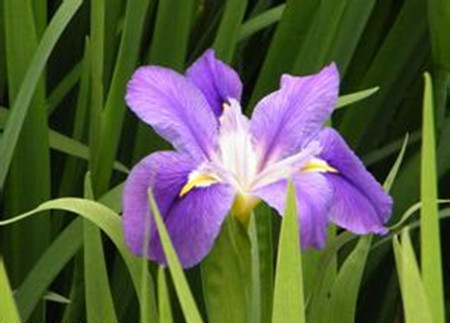
A complete guide to iris planting methods, easy for beginners to get started
Iris is a bulbous plant, and autumn is the season for planting irises every year. Many gardening enthusiasts like to grow irises, but they are not familiar with the planting methods for irises. How to grow irises well is a problem many enthusiasts encounter
-

Homemakers United Foundation 2019 Thanksgiving Tea Party: Starting from Food, When Cherishing Food Meets Food Safety
[Starting from Food - When Cherishing Food Meets Food Safety] Homemakers United Foundation 2019 Annual Thanksgiving Tea Party
-
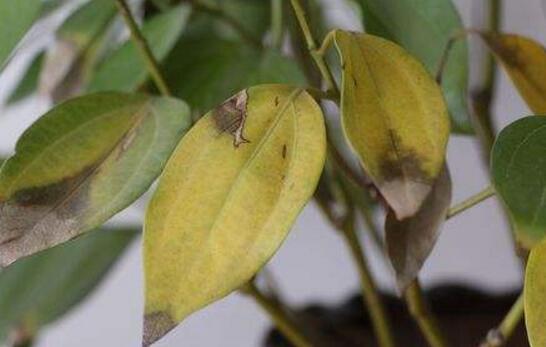
What to do when the leaves of the Peace Lily tree turn yellow and fall off? Solve it by starting with soil, watering, and environment
Yellowing leaves on the Peace Lily tree are a common worry people encounter. Because some people lack experience, they do not know how to deal with this situation, and some even give up on the Peace Lily tree, which is clearly the wrong approach. Yellowing and falling leaves on the Peace Lily tree are caused by many factors
条件筛选