-

Making Potato Starch Noodles
1. Process flow. Raw material selection → starch processing → making the starch paste and kneading the dough → extruding the noodles through a perforated ladle → cooling and drying the noodles as the finished product. 2. Key operating points: (1) Raw material selection: choose potatoes free of insect damage and rot, and wash off the mud, sand and dirt on the skin. (2) Starch processing: crush and filter the washed potatoes, add an appropriate amount of sour slurry and stir to let it settle (the sour slurry water is made by separately storing the clear water from the first settling). The amount of sour slurry used depends on the air temperature. If the temperature is around 10°C
-
Introduction to Potato Variety Mengshu No. 9, a High-Starch Cultivar
Medium-maturing variety, with a growth period of about 100 days. Tubers are round, with yellow skin and yellow flesh, shallow eyes, and concentrated tuber set; each plant sets 8-12 tubers, with large and medium tubers accounting for more than 85%, good eating quality, and a starch content of 18.7%. The tubers have strong storage tolerance, and the rate of tuber rot in the field is extremely low. It is a highly resistant type to late blight in the field, with mild degeneration, slight susceptibility to leaf roll and bunch top, and a degenerated plant rate of less than 0.5%. Adaptability and yield: it can be planted in both irrigated and dry land, is tolerant of water and fertilizer, and is suitable for planting on slopes, sandy loam, and other well-drained plots. It is a high-yield, high-
-
Detailed Explanation of Coarse Potato Starch Processing Technology
Process flow: Potatoes → washing → grinding → potato residue separation → sedimentation → drying → coarse starch. Key operating points: (1) Grinding into slurry: Select potatoes with high starch content, pick out rotten and diseased potatoes, place them in a washing tank, add clean water and stir with a stick to wash the potato pieces clean. Put the washed potato pieces into a grinder, add water while grinding, grind into starch slurry, and let it flow into a receiving tank. (2) Separation: Use coarse and fine flat screens twice respectively to screen out the potato residue from the starch slurry, or put the starch slurry into a cloth bag, tie the bag opening securely, place it in a tank
-
Breeding and Cultivation Points of the High-Starch Potato Variety Qingshu No. 2
The new high-starch potato variety Qingshu No. 2 was bred by the Crop Institute of the Qinghai Academy of Agriculture and Forestry Sciences. This variety is a late-maturing variety with a growth period of about 120 days, good agronomic traits, strong growth vigor, strong disease resistance, and excellent quality; its starch content is 22.86%-25.83%, which is 7-10 percentage points higher than the average value of the 77 nationally approved varieties (15.05%), and its Vc content is 20.92mg/100g; it tastes good and has a high yield level, with an average yield of 3000kg per mu and a maximum yield of 4192kg per mu; it has wide adaptability
-
Method for Making Soluble Starch from Sweet Potato
Soluble starch is a white or pale yellow powder, odorless and tasteless, insoluble in cold water, but it becomes a transparent solution in hot water and does not gel after cooling. Generally, starch from rice, corn, millet, or potato can all be used to make soluble starch, but soluble starch made from sweet potato starch is of the best quality. Sweet potato starch grains are relatively coarse, and the film wrapping the outside tends to rupture during hydrolysis, making it easy to dry. The processing procedure is: take a certain amount of sweet potato starch, sift it through an 80-mesh fine sieve, place it in a large vat, add 8%-9% hydrochloric acid,
-
Introduction to the High-Starch Sweet Potato Variety Shuangwan No. 1
Shuangwan No. 1 is a new sweet potato variety, newly bred by the Sweet Potato Research Institute of the Chinese Academy of Sciences. This variety has stable genetics and does not degenerate over successive years of propagation; it is a new high-starch sweet potato variety. 1. Characteristics: leaves and stems are green, leaves are heart-shaped with serrated edges, vine length is 1-1.5 m, tubers set early and concentrated, tuber shape is long cylindrical, attractive and good-tasting, tuber skin is deep purplish-red, smooth and attractive, tuber flesh is pure white and attractive, strong sprouting ability, strong tuber-setting ability, high rate of large tubers, moderate tuber size, good uniformity, drying rate 37%-39%, starch content 24%-28%, high-quality starch
-
Introduction to the high-starch processing-type sweet potato variety Yushu Wang
The new high-starch "Yushu Wang" sweet potato variety has red skin and white flesh, shows starch when cut open, short and thick stems and vines, strong stem and leaf growth, many branches at the base, concentrated tuber formation, and a high rate of large tubers. A single plant can form 4 to 8 tubers. Spring sweet potatoes contain up to 37% starch, with a drying rate of 48%. The yield of spring sweet potatoes can reach 6000 to 9000 kg per mu, and the highest yield in small demonstration plots can reach more than 10000 kg. It is easy to manage, does not require turning the vines, and is tolerant of fertilizer, drought, and poor soil; it has strong resistance to rot disease, high sprouting ability, wide adaptability, and is easy to store. It is an ideal variety for processing, and
-
A Detailed Guide to the Extraction and Processing Methods of Sweet Potato Starch
Sweet potatoes can be divided into two types: fresh sweet potatoes and dried sweet potatoes. Starch production from fresh sweet potatoes generally belongs to rural manual production, while sweet potato starch factories mostly use dried sweet potatoes as the starch raw material, so it belongs to industrial production. 1. Starch production from fresh sweet potatoes has the following process flow: raw material selection - washing - crushing - grinding and filtering - slurry blending - skimming the vat and settling the vat - skimming the slurry - removing the starch - drying. The production process is as follows: (1) Raw material selection: Because sweet potato varieties differ, their quality and starch content also differ. Even for the same variety, in different producing areas,
-
Sweet potato starch is in high demand in the market, and timely processing yields high returns.
Sweet potato starch occupies an increasingly important position in people's daily diet. Potato-based chemical products have now become the main raw materials for chemical products such as lactic acid, citric acid, disposable tableware and degradable agricultural mulch film. It is understood that the current price of refined white potato starch has risen by nearly 10% compared with last year, and the reason for this price trend is undoubtedly the supply-demand gap for sweet potato starch. Relevant data show that at present, the demand for sweet potato starch in the domestic market alone is more than 1 million tons, while the production volume is far less than this number.
-
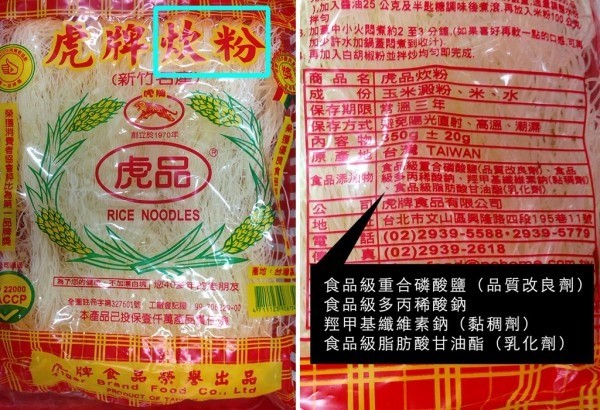
Can Hsinchu rice noodles still be called rice noodles without rice? Scholar suggests renaming them Hsinchu starch
Can something with no rice still be called "Hsinchu rice noodles"? Scholar: Just rename it "Hsinchu starch"
条件筛选