-

A Detailed Guide to the Latest Method for Collecting Lingzhi (Reishi) Spore Powder by Bagging
Lingzhi spore powder is the extremely tiny oval-shaped reproductive cell, namely the seed of lingzhi, ejected from the gills of lingzhi during its growth and maturation period. Each lingzhi spore is only 4 to 6 microns, is a living organism, condenses the essence of lingzhi, and possesses all of
-
What are the benefits and effects of reishi mushroom spore powder? Can it be taken long-term? Who should not take it?
Reishi mushroom spore powder is a powder made from grinding the spores released in the later stages of the reishi mushroom's development. Under natural conditions, reishi mushroom spores are extremely difficult to collect; 1 tonne of reishi mushrooms yields only 50-100 kg of reishi spores, so it can truly be called the essence of the reishi mushroom. So reishi mushroom spore...
-
Key Technical Points and Cultivation Methods for Wild Mushrooms Explained in Detail
Wild mushroom cultivation includes: spore collection and inoculation, spawn treatment, preparation of the growing substrate and bagging and sterilization, spawning and mycelial growth, and fruiting management, among others. Because there are so many kinds of wild mushrooms, the cultivation time and substrate formulation differ for each one, so everyone
-
Prevention and Control Methods for Microsporidiosis in Farmed Shrimp
(1) Pathogen In China, 3 species have been found: Ameson on the bodies of Chinese shrimp (Penaeus chinensis) and banana prawn (Penaeus merguiensis), Agmasoma on the body of banana prawn, and Pleistophora on the body of white shrimp (Penaeus penicillatus). The spores are slightly oval or pear-shaped, with a length of 2 to
-
How much was Ganoderma lucidum spore powder per jin in 2019? What are its effects?
Spore powder is the seed ejected and released by Ganoderma lucidum in its late development stage. In biology it is called a basidiospore. After being gathered together it takes a powder form, commonly known as Ganoderma lucidum spore powder. Collecting spore powder in a natural environment is very difficult; about 100 kg of basswood-cultivated Ganoderma lucidum must be produced to collect 1 kg
-
What to Do When Adiantum Leaves Wither: How to Handle Spores Growing and Turning Black on the Underside of Adiantum Leaves
Adiantum (maidenhair fern) is a plant that likes warmth and cannot tolerate strong light, and it is distributed in many places in our country. It is now a fairly popular houseplant, but if improper management occurs during cultivation, it can cause the leaves to wither or turn black.
-
How Does Maidenhair Fern Reproduce? A Detailed Guide to Spore Propagation and Division Methods
(1) Division propagation. It can be done indoors in all four seasons, but is generally carried out in early spring together with repotting. Take the mother plant out of the pot, cut its rhizome, making sure each piece has some rhizome and leaves, then plant them separately in small pots. Cover the rhizome with mixed soil, water, and place in a shaded, humid environment to cultivate, and new plants will be obtained.
-
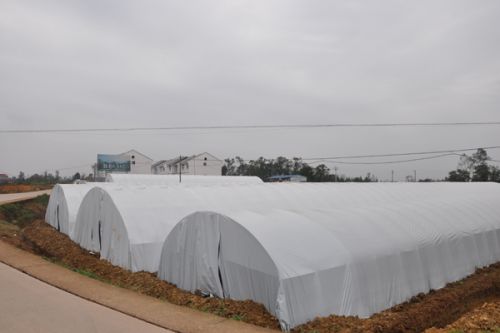
Double-spore mushrooms pave the way to prosperity for college-graduate village official Huang Xiaoli
College-graduate village official Huang Xiaoli: Tiny button mushrooms pave a "road to prosperity"
-
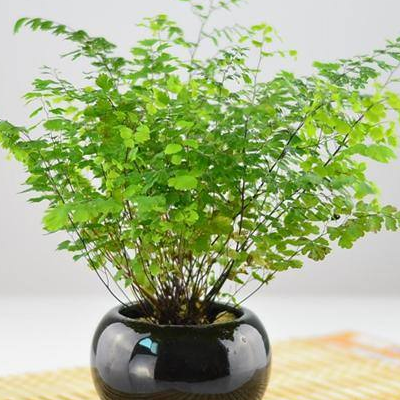
What to Do When Spores Grow on the Underside of Maidenhair Fern Leaves? A Detailed Guide to Propagation Methods
The maidenhair fern (Adiantum) is very well suited as an indoor ornamental plant and is a favorite of many, so what should you do when spores grow on the underside of maidenhair fern leaves? What propagation methods are there for maidenhair fern? What to do when spores grow on the underside of maidenhair fern leaves: 1. The spores won't grow very large, and they will fall off on their own when they are nearly mature.
-
Four-spored mushroom cultivation in summer is difficult, but mastering the techniques brings high returns
Summer cultivation of the four-spored mushroom (Agaricus bisporus) is more difficult than that of the common button mushroom. If cultivation techniques are careless, or if the temperature during the fruiting period is too high or too low, failure will result. The high-yield secrets for summer cultivation of the four-spored mushroom are described below: 1. Plant early at the right time. Planting too early means low temperatures in the early stage, which is unfavorable for the growth of summer mushroom mycelium; planting too late means that timely feeding for the autumn mushroom will shorten the harvesting period of the summer mushroom. Therefore, after cleaning the spring mushroom growing room in late April, the summer mushroom compost can be pre-wetted and stacked. 2. Compost fermentation. 1. Compost formula (calculated for 110 sq m). Rice straw 2000 kg, gypsum 7
条件筛选