-

Detailed Explanation of Technical Specifications for Pollution-Free Pesticide Use in Potatoes
1. Cultivating strong seedlings free of pests and diseases (1) Seed potato selection: For pollution-free potatoes, seed potatoes that are pest- and disease-resistant, disease-tolerant, and free of pest and disease damage should be selected. A seed-production field free of pests and diseases should be strictly established, and pest- and disease-free small whole seed potatoes should be cultivated in the pest- and disease-free seed-production field. The small whole seed potatoes kept for seed should be selected during storage. After the seed potatoes are taken out of the cellar, they should be strictly selected, using young and mature tubers as seed, and eliminating tubers with undesirable traits such as irregular shape, rough and aged skin, protruding eyes, and dull skin color. The quality of seed potatoes shall meet the requirements for improved grain crop varieties or above under GB8079-1987.
-
Detailed Explanation of High-Yield Soybean Cultivation Technical Specifications
Soybean is a major oil crop in our province. Developing soybean production is of great significance for improving people's food composition, developing animal husbandry, and improving soil fertility through crop rotation. From the actual situation of our province, soybean production mainly relies on increasing per-unit yield to increase total output. To achieve the target of over 200 kg per mu, it is necessary to liberate soybean from corn fields, because intercropping and mixed cropping of soybean with corn is one of the reasons for the low per-unit yield of soybean in our province, so clean planting of entire fields should be promoted; second, actively promote high-yield cultivation techniques centered on equidistant sowing, with increased application of farmyard manure
-
What are the common specifications for garlic oil? Read this to understand
Garlic oil is obtained by steam distillation of the bulbs of garlic (Allium sativum L.), a plant in the Liliaceae family. It is a clear, pale yellow to orange-red liquid with a strong, pungent odor resembling mercaptan. 1.050-1.095, 1.550-1.580. Its main components are allyl propyl disulfide, diallyl disulfide, diallyl trisulfide, allicin, etc. It is mainly produced in Egypt, China, and other countries. It is mainly used to prepare pungent seasonings, and also used in disinfectants and other pharmaceuticals. Garlic bulb
-
What are the specification standards for bonsai art?
Some years ago, when Chinese bonsai specifications were rapidly developing toward the two extremes of "extra-large", "super-giant" and "ultra-miniature", Mr. Naiweng pointed out in a timely manner that tree bonsai should have "a certain sense of proportion" in their specifications, "if too large, it becomes merely planting a tree; if too small, it cannot express the beautiful posture of the potted tree." Mr. Naiweng's incisive exposition is full of dialectical philosophical thought, is scientific and artistic true insight, and is a dose of cooling medicine for overheated minds. Now, regarding the question of bonsai specifications, the bonsai world is paying increasing attention,
-
Detailed Explanation of the Cultivation Technical Specification for Golden Privet
Golden privet (Ligustrum vicaryi) is a semi-evergreen or deciduous small shrub of the genus Ligustrum in the family Oleaceae. With its golden-yellow color, it is widely used in urban and rural landscaping in China. To improve seedling quality and the landscape effect of garden cultivation, the author of this article led the compilation of a local standard, the Cultivation Technical Specification for Golden Privet in the Tianjin region. The main technical points are excerpted as follows. 1 Site conditions: good drainage and irrigation conditions, flat and open, various types of sandy loam and loam rich in organic matter, pH range between 6.5 and 8.5, total salt content below 0.3%
-
Several Key Control Points for Large-Specification Hairy Crab Culture in the Yellow River Estuary
In order to build up the "Yellow River Estuary" aquatic product brand and enhance the market competitiveness of "Yellow River Estuary" hairy crab, in 2005 Kenli County, Shandong Province, carried out a large-specification "Yellow River Estuary" hairy crab culture trial in a ten-thousand-mu river crab demonstration park, achieving good economic and social benefits. We now discuss several key technical issues in the culture process with fellow practitioners. 1. Pond ecology. Influenced by traditional concepts, many units follow fish-culture methods when building ponds and rearing crabs, with poor results, low survival rates of "Yellow River Estuary" hairy crab,
-
Fertilization technical specifications for pollution-free cultivation of yam
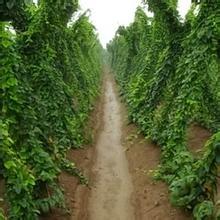
As long as several main aspects of production management are handled well, the planting benefits of yam will be greatly improved. In yam cultivation management, the key points are the application of base fertilizer, loose soil, treatment of yam seed pieces, timely topdressing, disease control, and taking measures to promote the growth of the rhizome as much as possible. 1. ...
-
What are the suitable seedling specifications and stocking density for cage culture of rice field eels?
Q: For cage culture of rice field eels, what size seedlings and what density should be stocked?
-
What are the lysine specifications in feed for pigs at each stage?
What exactly are the lysine specifications in feed for pigs at each stage?
-
Detailed Explanation of Key Points for Large-Specification River Crab Culture Techniques
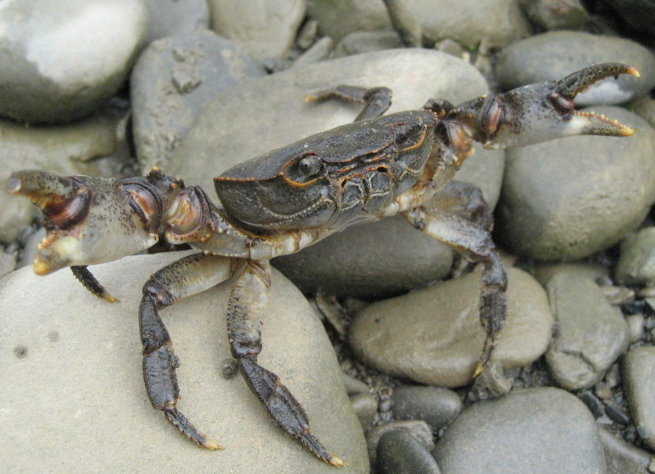
Culture Techniques for Large-Specification River Crabs
条件筛选