-

How to grow sweet potato slips quickly and in abundance, with a method for cutting the slips
Abstract: Sweet potato slips are generally grown using the traditional dormant vine propagation method. The specific steps are: first select healthy vines and remove the leaves, keeping about 1 cm of the leaf stalk, cut them into sections of two nodes each, and soak the cut vines in an Amfetrine solution
-
How to cultivate sweet potato slips? Detailed seedling methods and techniques
Abstract Seedling raising time: the seedling raising time for sweet potato slips is around March. Cultivation methods: the dormant vine seedling method is to take the sweet potato vines harvested in autumn, remove the leaves, soak them in Amfetrine solution for about 3 minutes, dry them and store them until the second year for cutting propagation; root seedling
-
What is the best month to start sweet potato slips?
Summary Sweet potatoes are generally started in mid-February to mid-April, with the timing varying by region. For spring sweet potatoes, slips are started around Awakening of Insects (Jingzhe); south of the Huai River, starting is done after mid-February, and north of the Huai River, before April 10. A hotbed or cold frame can be used.
-
When to raise sweet potato slips? Do a good job of insulation
Abstract The time for raising sweet potato slips depends on the region and climate. Generally, the time for raising slips is around March. In the south, slips can be raised starting in February, while in the north, slips can be raised before Qingming Festival. Because the temperature is relatively low when raising sweet potato slips, they need to be raised in a hotbed
-
Try These New Methods for Growing Sweet Potato Slips
The traditional technique for growing sweet potato slips is to store sweet potatoes harvested in autumn, plant and cultivate them in spring to grow vines, then cut the vines into sections and root them to produce sweet potato slips. This method is labor-intensive, time-consuming and uses up seed potatoes, and the winter storage technique is hard to master, which affects the following year's
-
How to Plant Sweet Potato Slips: A Detailed Guide to Planting Methods and Key Techniques
Sweet potato is an easy-to-grow crop and a high-yielding, highly adaptable food crop. To grow sweet potatoes well, we need to understand how to plant sweet potato slips. How to plant sweet potato slips: first, simply turn over and loosen the soil. When planting sweet potato slips,
-
How are sweet potato slips cultivated, and how many plants can be planted per mu?
Sweet potatoes are rich in nutrients and have the reputation of being a "longevity food." Long-term consumption is very beneficial to the human body, and in recent years the market price has gradually increased. So what are the cultivation techniques for sweet potato slips? How many plants can be planted per mu? 1. How many sweet potato slips can be planted per mu? Generally
-
When to start sweet potato slips? How long the nursery period lasts and how to plant
In the past, when farmers raised sweet potato slips, they usually stored the sweet potatoes directly until spring, when they sprouted and grew vines, and then cut the vines into sections and planted them in the soil to grow. In fact, there are now many methods for raising sweet potato slips, and as long as you master the techniques, a high yield is not impossible.
-
Detailed Introduction to the Latest Growing Environment for Sweet Potato Slips
In China, sweet potato is both a food crop and a vegetable crop, and the demand for it in China is quite large. Not only do the tubers of sweet potato have considerable edible value, but sweet potato slips are also very popular. When planting, if the purpose is to produce sweet
-
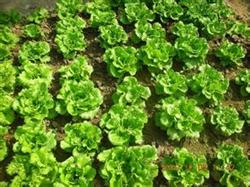
How to efficiently grow multiple crops of cabbage, sweet potato slips, eggplant and cauliflower in succession?
Lettuce prefers a cool environment and tolerates neither cold nor heat well. Therefore, to grow lettuce successfully, the following technical steps should be mastered. 1. Variety selection. For planting lettuce, choose varieties with good cold and heat tolerance and strong stress resistance, such as head lettuce, glass lettuce, curly-leaf lettuce and Caesar, which are better choices. 2. Soil...
条件筛选