-
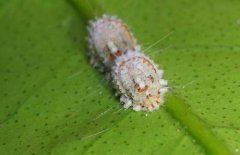
Mealybug Characteristics and Detailed Description of Damage Symptoms
There are many kinds of scale insects. Do you know about the mealybug? What are its damaging habits? What does it look like? Let's take a look together. Damaging habits: It can occur on poinsettia year-round, and infestations are especially severe in poorly ventilated facilities. Many
-
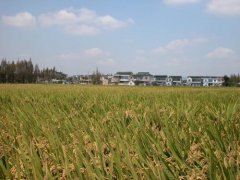
Common plant viruses engineered into nanoscale agricultural materials that help crops grow
To reduce the harm caused by pests and diseases, farmers apply pesticides appropriately in accordance with the crop growth cycle. Since most pesticides are non-specific, improper application may destroy the food web around farmland and thereby affect the balance of the surrounding ecosystem. As environmental awareness
-

What pesticide works well for controlling scale insects?
Currently, scale insects occur in all parts of our country, and the degree of damage is becoming increasingly serious. From southern fruit tree crops such as citrus, lychee, and mango, to northern fruit tree crops such as apple, pear, and peach, none are spared. The scope of damage shows a trend of being heavier in the south than in the north, with damage to fruit trees
-
Which pesticide is effective for controlling the red wax scale
Along with the large-scale prohibition of organophosphorus pesticides on citrus, how to control citrus scale insects has already given many growers a headache, and among them the control of the citrus red wax scale is even more difficult. So what pesticide is used for the red wax scale? Control of the red wax scale: according to the morphological stru
-
Soft-seed pomegranate growing requirements and techniques: large-scale seedling propagation often uses the cutting method
For soft-seed pomegranate cultivation, choose a site with loose, fertile soil, shelter from the wind and full sun, convenient transportation, flat and open terrain, and complete drainage and irrigation facilities. For large-scale pomegranate cultivation, cutting propagation is generally used for seedling raising. After cutting, later-stage management needs to be strengthened. Wait until the cuttings take root and become seedlings, then apply topdressing. After the seedlings shed their leaves, they can be lifted from the nursery and planted out. When digging them up, the trunk and root system must not be damaged. When planting out, the seedlings need to be held upright, the roots spread out, the soil firmed over them, and water given to help them recover; simply arrange the planting density reasonably.
-
How is large-scale cultivation of Dendrobium officinale carried out? A detailed explanation of the methods
Dendrobium officinale (scientific name: Dendrobium officinale Kimura et Migo): stems erect, cylindrical, 9-35 cm long, 2-4 mm thick, unbranched, with many nodes; leaves distichous, papery, oblong-lanceolate, margins and midrib often tinged with pale purple. Racemes often emerge from the upper part of the old leafless stems
-
Introduction to Control Methods for Scale Insects on Pear Trees
The control of scale insects on pear trees should adopt comprehensive measures of strengthening agricultural control, timely application of efficient and targeted pesticides, and protection and utilization of natural enemies: First, reasonable fertilizer and water management should be carried out to enhance tree vigor and reduce damage. In winter and spring, combined with pruning, dense branches and branches with severe pests and diseases should be cut off to make the canopy well-ventilated and allow light through.
-
What are the control methods for scale insects on peach trees
There are many species of scale insects that harm peach trees. The main species occurring in our province is the globose scale (Eulecanium kunoense), belonging to the order Homoptera, family Coccidae, genus Eulecanium. When its population is large, the affected branches are covered with dense layers of scale shells, causing poor tree growth; in severe cases, the leaves and small branches wither and die, and even the whole plant may die.
-
What are the control methods for the tortoise wax scale on jujube trees
In recent years, the tortoise wax scale (Ceroplastes japonicus) has spread through the counties of our city, causing serious damage, which has generally weakened the vigor of jujube trees, significantly reduced yields, and even caused total crop failure. In order to effectively carry out chemical control of the tortoise wax scale on jujube, since 1996 we have carried out control trials for 4 consecutive years
-
What are the control methods for mango scale insect pests?
This pest is distributed in Guangdong, Hainan and Guangxi, and is a locally sporadic major pest, causing damage only in a few orchards. It can damage the branches, leaves and fruits of parts of the canopy, sucking the sap from their tissues, causing leaf drop and fruit drop, and in severe cases causing premature decline of the tree.
条件筛选