-

Water-saving and high-yielding rice, with a jasmine fragrance in every bowl
Wearing shoes to go into the paddy field, water-saving rice cultivation has become a reality. After the team led by researcher Luo Lijun at the Shanghai Agrobiological Gene Center created the world's first hybrid upland rice "Huhan 1A", it has achieved another breakthrough. Hanyou 3 has been approved, and under the condition of saving 50% of water resources, its actual yield per mu exceeded 500 kg for the first time. Shanghai's hybrid upland rice research took scientists 10 years, screened 10,000 resources, and selected more than 100 relatively drought-tolerant resources as parents for breeding. "The characteristic of hybrid rice is high yield, just like
-
Rice cultivation in cold regions requires water-saving irrigation, selection of improved varieties, making the most of accumulated temperature, and growing strong seedlings
Heilongjiang Province is located in a high-cold region, where heat and water resources are relatively scarce, annual atmospheric precipitation is extremely unevenly distributed, spring is windy with little rain, and drought is quite severe. The author discusses how to achieve water-saving, high-quality, and high-yield rice cultivation in cold regions. 1. Selecting excellent varieties is the prerequisite for ensuring high-quality and high-yield rice. The varieties that rice farmers plant directly affect the quality and yield of rice. Therefore, in production, varieties with a suitable maturity period, excellent quality, stable and high yield, and strong stress resistance should be selected. First, select varieties that have passed national approval, been named, and promoted, which can ensure relatively stable rice traits, steady and rising yields, and safe and reliable use; second, introduce varieties with suitable maturity periods according to different accumulated temperature zones, and never introduce varieties across zones; third, pay attention to seed quality, and select first-grade improved seeds with a purity above 98%, a germination rate above 90%, and a moisture content no higher than 14% for production use; fourth, purchase seeds from nationally certified seed companies, research institutes, and agricultural colleges, and eliminate blind planting; fifth, in actual planting, unify varieties as much as possible, plant in contiguous fields, form scale, and achieve industrialized planting.
-
Detailed Explanation of Key Points of Water-Saving Potato Cultivation Technology
The furrow-ridge water-saving potato cultivation technique increases the contact surface between soil and air, ensures a good aeration environment for the underground stems, intensifies the variation in diurnal temperature difference, reduces surface runoff, and enables the soil to more fully absorb precipitation. Through the implementation of the project "Integration and Demonstration of Water-Saving Agricultural Technology Systems in Semi-Arid Rainwater Harvesting and Supplementary Irrigation Dryland Areas of Northern China (Pengyang, Ningxia) - Research, Screening, Integration and Demonstration of High-Efficiency Rainwater Harvesting Agricultural Supporting Technologies," the water-saving potato cultivation technique has been summarized for use in production. (1) Variety Selection
-
Dianthus acicularis is an excellent drought-tolerant, water-saving groundcover plant
Most parts of northern China are resource-based severely water-scarce regions, with per capita water resources of less than 300 cubic meters, only 1/8 of the national average, and far below the international water-scarcity threshold of 1,000 cubic meters per capita. With the vigorous development of landscaping, water consumption for greening is growing ever larger, and this contradiction with the scarce water resources of northern China is becoming increasingly prominent. Dianthus acicularis has good drought tolerance and is an excellent water-saving plant material in landscaping. According to calculations, Dianthus acicularis consumes only 0.
-
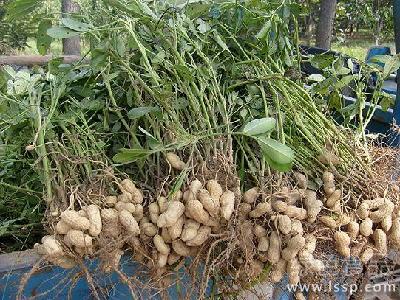
What are the key points for saving peanut seeds? Do these well for a bumper harvest and increased income next year
Ensuring a bumper harvest and increased income next year: key points for saving peanut seeds
-
Qing'an's 700,000 mu of rice adopts cold-region dry seedling cultivation and controlled irrigation technology for water saving and high yield
The controlled irrigation, water-saving and high-yield technology for cold-region dry seedling rice has been successfully tested in Qing'an. This year, 700,000 mu of rice in this county are using this technology. According to expert calculations, it saves about 450 cubic meters of water per mu, saves 11.2 yuan in pumping costs, and increases yield by an average of 22 kg per mu. In recent years, through the trinity approach of "engineering water saving, mechanism water saving, and technical water saving," Qing'an has reduced irrigation water per mu from nearly 1,000 cubic meters to 500 cubic meters. Over 10 years, it has expanded the paddy field area from 640,000 mu to 1.17 million mu, accounting for half of the cultivated land area. Last year
-
The 10th Regiment of the First Agricultural Division pioneers a new water-saving technique for dryland rice cultivation with drip irrigation under plastic film
In 2010, the 10th Regiment of the First Agricultural Division of the **Production and Construction Corps used new science and new technology to transform traditional agriculture. Faced with a severe shortage of water resources and its disadvantaged position as a unit downstream of the First Division's water supply, it independently developed new machinery for sowing rice on dryland with drip irrigation under plastic film, which was put into rice production and vigorously promoted by Aral City of the First Division. According to Kong Jun, the First Division's deputy division commander in charge of agriculture, this cultivation model not only saves labor in rice planting but also conserves water resources and farmland costs, helping to increase rice yields and efficiency, and it has opened a new chapter for the Corps' agriculture and livestock farms.
-
Detailed Explanation of Key Techniques for Saving Seed Potatoes from the Autumn Crop
1. Fine land preparation For autumn potatoes, choose a field with high terrain, convenient drainage and irrigation, and fertile soil, preferably loamy soil. 2. Sprouting seed potatoes In mid-August, remove diseased potatoes, cracked potatoes, and irregular potatoes from the harvested spring potatoes, and cut them into pieces according to the seed potato eyes. Cut each seed potato lengthwise into 4-6 pieces, and prepare a medicinal solution by mixing 0.1 g of gibberellin with 100 kg of water. Soak the potato pieces for 10-20 minutes, take them out and let them dry, then stratify them with wet sand to promote sprouting. During the sprouting period, generally do not sprinkle water, and keep the sprouting temperature above 30°C
-
How to Save Seeds from Angelica sinensis? Detailed Key Points of Seed-Saving Technique
Select disease-free plants or a field plot; do not dig them up in the autumn of that year. After seedlings emerge the following year, carry out normal field management. 30~40 days after bolting, that is around mid-August, when the seeds turn from red to pinkish-white, harvest the seeds. Because the seeds do not ripen uniformly, they can be harvested in batches. When harvesting, collect the seeds together with the fruit stalks, tie them into small bundles, dry them in a cool place and thresh them, then store them in a ventilated, dry place. Avoid heat and moisture.
-
Guizhou and Shanghai Join Forces to Farm the Chinese Zebra Loach Artificially, Saving Guizhou's Native Fish
Jinqian Online News: A reporter learned yesterday from the Luodian Fisheries Station that at present, the fisheries departments of Guizhou and Shanghai are jointly conducting experimental research and development on the artificial domestication and breeding of the Chinese zebra loach (Botia zebra), in order to save this rare native aquatic wildlife species of Guizhou in the Pearl River system - the Chinese zebra loach. The "sesame sword" (scientific name: Chinese zebra loach) has no scales and a body shaped like a sharp sword; it gets its name from the sesame-like spots on its body, lives on the bottom of rivers, and feeds on small aquatic animals. It is mainly distributed in the Pearl River and Yuanjiang River systems, and its flesh is tender and delicious, making it an important commercial fish in its producing areas. Together with the sea bass (Japanese sea perch)
条件筛选