-

Going away for the National Day long holiday - what do you do about your Phalaenopsis at home? Save this orchid care guide
For the 7-day National Day holiday, who doesn't want to grab a suitcase and just go? But the moment you think of that Phalaenopsis on the balcony that just put out a flower spike, it suddenly feels like a "sweet burden" - this thing hates drying out and hates being waterlogged, and if you're away that long, you can't let it thirst into a "dried flower," and you can't water it so much that the roots rot, right? So here are a few tried-and-tested
-

Repotting Sick and Weak Phalaenopsis Orchids Requires Care: Save the Seedlings in These 5 Steps
When a Phalaenopsis orchid's leaves turn yellow and go limp, and its roots are either half rotted or shriveled and lifeless, repotting is the "key to saving its life." But many people panic and act rashly: they just rip off the old medium, casually trim the roots, and switch to a bigger pot, only to find the orchid gets weaker with each change until it dies. In fact, repotting sick and weak orchids
-

Is there any hope for a wilted Phalaenopsis? Let me help you find the cause and save your beloved orchid
You carefully nurtured your Phalaenopsis, and suddenly the leaves are soft and droopy, the buds and flowers are wilting and hanging down - it hurts just to look at it. What on earth is going on? Is there any hope? Actually, a drooping Phalaenopsis isn't that scary. The key is to first identify the cause and then treat it. Below, the common problems and solutions are explained clearly to help you save your beloved orchid. A drooping Phalaenopsis may look like it's "lacking energy
-

Don't throw away a Phalaenopsis orchid with a rotting crown - with the right method you can still save it
I believe many friends who grow Phalaenopsis orchids panic when they see rot appearing in the crown, but in fact, as long as you spot it in time and treat it properly, this "butterfly among flowers" still has a chance to recover. Especially for those growing Phalaenopsis orchids in the office or at home, mastering the correct steps is key, so here are the specific
-

Don't panic if your Phalaenopsis orchid gets sun-scorched and wilts! This rescue method works better than randomly watering. How do you save a Phalaenopsis orchid that has wilted from sun exposure? First do 2 emergency steps, then do 3 things.
Everyone knows Phalaenopsis orchids like indirect light, but if you accidentally let them get too much sun, the leaves wilt and curl, and the edges even turn scorched black. It really hurts to see! Actually, after sunburn, don't panic. With timely emergency care, they can still be saved. The key is to focus on "shade, rehydration, and controlling the environment." Just like a person with sunburn needs to get out of the sun and apply moisturizer, Phalaenopsis orchids also need to be treated accordingly.
-

What to do when a Phalaenopsis orchid has stem rot and only the roots are left, can it still be saved?
Gardeners who grow Phalaenopsis orchids have probably all experienced this kind of crushing moment: an orchid that was perfectly fine suddenly has roots that are rotten, black and slimy, falling off at the slightest touch, and when you lean in there is a sour, foul smell, the leaves droop limply downward, and the stem even has brown rotten spots... At this point many people think "it's hopeless" and just toss it into the trash. But the
-

How to Tell If a Phalaenopsis Orchid Has Root Rot and How to Treat It to Save It
Speaking of Phalaenopsis orchids, they are a favorite of many plant lovers, blooming with an elegant, fairy-like beauty. But as you care for them, the dreaded problem of root rot can strike. How can you tell if a Phalaenopsis has root rot? Unlike ordinary plants, Phalaenopsis roots are plump, semi-transparent aerial roots. When healthy, they feel firm to the touch and have a greenish or silvery-white color; look closely and you will see tiny fuzz on the roots, which are great helpers for absorbing nutrients and water.
-

Can a Phalaenopsis survive if its crystal head (root tip) rots? Here's the correct way to save it
When growing Phalaenopsis orchids, nothing is more distressing than seeing the crystal head (root tip) turn black and rot, but as long as you treat it promptly and adjust your care routine, there is a high chance it can be saved! Today I've put together the detailed treatment steps and follow-up care points, so even beginners can follow along. 1. Emergency root rot treatment If the crystal head has rotted, it means the root system is already infected, so you must act decisively to stop
-
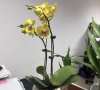
Reasons for Phalaenopsis root rot in summer and how to save it
In summer, with high temperatures and high humidity, Phalaenopsis orchids can easily develop root rot if you are not careful - the roots turn black and mushy, and the leaves turn yellow and soft, which is really distressing to see. In fact, as long as you act promptly, a Phalaenopsis with root rot can absolutely be saved! Today I will share the emergency rescue steps and follow-up care tips with everyone, so even beginners can handle it easily ~ 3 steps to rescue root rot
-

Can a Phalaenopsis with stem rot still be saved? Detailed explanation of the most effective treatment
Can a Phalaenopsis survive stem rot? Actually, as long as it is discovered early and treated promptly, there is a good chance it can be saved. But if you wait until the entire stem has rotted through, then even a miracle worker cannot save it. So the key is "early detection, early action." How do you tell if it is stem rot? The most obvious sign is brown spots appearing on the stem
条件筛选