-
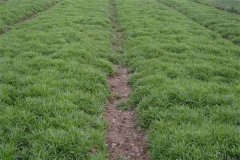
Key Points for Organic Cultivation of Ryegrass as Green Manure
Ryegrass (referring to Italian ryegrass) is a biennial herbaceous forage grass, generally with a growth period of 1 to 2 years. It has well-developed fibrous roots, grows in clumps at the base, and reaches a plant height of 90 to 130 cm. The leaves are long and relatively wide, dark green and glossy, drooping in an arc. Ryegrass prefers a mild and humid climate and fertile soil, and is also suitable for clay soil and red soil. The most suitable soil pH is 6 to 7.
-

A Detailed Guide to Ryegrass Planting Time, Methods and Growth Characteristics
Ryegrass is a grass family plant with fairly strong adaptability to the environment and can be planted in both northern and southern China, though the milder climate of the south makes ryegrass planting somewhat more effective there. Ryegrass is a very suitable
-
When to Plant Ryegrass? A Detailed Guide to Planting Methods
Ryegrass is a widely distributed plant, and it can often be seen in wetlands. Ryegrass has a fairly wide range of uses, generally serving as forage for cattle and sheep. Nowadays, many places plant this grass specifically for livestock raising, and because of its high yield, it is the preferred forage grass for many breeders
-
Detailed Explanation of Key Ryegrass Sowing and Management Techniques
Ryegrass, Latin scientific name: Lolium perenne L., a plant of the grass family (Poaceae) and the genus Lolium, about 10 species, including forage grasses and pasture grasses of the temperate regions of Eurasia as well as some poisonous weeds. Ryegrass is an important cultivated forage grass and green manure crop. This genus has about 10 species, and our
-
Key Technical Points for Winter Cultivation and Management of Ryegrass
Ryegrass (scientific name: Lolium perenne L.) is a perennial plant of the genus Lolium in the grass family (Poaceae). The culms are 30-90 cm tall, soft in texture, and root at the basal nodes. The ligule is about 2 mm long; the leaf blades are soft, slightly hairy, and sometimes have auricles. The spike-shaped inflorescence is erect or slightly curved; the rachilla is smooth
-
When to sow ryegrass as sheep feed? Plant it this way for higher yields
Ryegrass is a forage variety with very high nutritional value, and sheep farmers often plant it as feed for their flocks. So when should ryegrass be sown? How should it be planted to achieve high yields and a bumper harvest? = There are two types of ryegrass, annual ryegrass and perennial rye
-
How to grow ryegrass outdoors? A detailed explanation of the latest methods
Ryegrass is a crop with very high economic value. It can be cultivated into an excellent forage grass for livestock feeding, and because of its wide range of uses, its value and status have also been greatly elevated at the same time. Ryegrass is not only used in grassland farming, but for some
-
Ryegrass Seeds: Latest Prices and a Detailed Guide to Planting Methods
Ryegrass is a grass commonly used on golf fairways and an excellent forage grass widely introduced and cultivated around the world. It is a perennial plant of the genus Lolium in the grass family (Poaceae), growing in meadow grasslands and commonly seen in roadside wetlands, widely distributed in the Kashmir region, Pakistan, Europe and Asia
-
The Latest Ryegrass Planting Techniques and Methods Tutorial
The lack of green feed in winter and spring is still a factor limiting the improvement of production performance in herbivorous livestock. To solve this problem, using idle winter land after the autumn harvest to plant ryegrass is an important approach for developing herbivorous livestock in the Huaibei region. Ryegrass generally yields about 300
-
Feeding Methods and Technical Key Points for Raising Geese on Ryegrass
How to Use Ryegrass to Raise Geese
条件筛选