-

Detailed Explanation of Mechanized Potato Production Technology Throughout the Entire Process
Shawan County has an annual potato planting area of 2,250 hectares, which has become a new highlight for increasing the income of farmers and herders in cool and cold regions. Because the traditional manual planting and harvesting methods are backward, labor-intensive, and low in efficiency, it is difficult to achieve large-scale operation. Through practice, advanced potato seeders and harvesters were introduced, and a mechanized technology for the entire potato production process was summarized. At present, this technology has been fully promoted. 1. Pre-planting preparation 1. Soil conditions Choose loam or sandy loam with deep soil layers, high organic matter content, loose and easily crumbled texture, good permeability, and medium or higher fertility.
-
Detailed Explanation of the Causes of Chicken Pecking at the Trough and the Control Methods
I. Causes 1. Excessive stocking density. When the stocking density is too high and there are not enough water troughs and feed troughs, the flock competes for water and feed, causing some chickens to suffer nutritional deficiencies in their bodies, making them prone to pecking vice. 2. Improper regulation of the chicken house environment. If the air inside the chicken house is foul and harmful gases exceed the standard, the flock will become restless and irritable and develop pecking vice; uneven temperature, with sudden cold and heat, will cause great stress to the flock and lead to pecking vice. 3. Unreasonable dietary nutrition. If the animal protein content in the diet is insufficient, or the amino acids are imbalanced, the flock cannot effectively
-
Key Technical Points for Spring Soybean Sowing in a Year of Severe Drought in Northeast China
Current drought situation in Northeast China and technical guidance for spring soybean sowing: I. Precipitation and temperature conditions last winter and this spring. In the autumn and winter of last year, the drought in Northeast China was severe, precipitation was lower than normal, and soil moisture was insufficient. From January to October 2007, the average precipitation in Heilongjiang Province was 402 mm, 20% less than the same period in previous years. In addition, this year's widespread "dry sealing of the soil" at the onset of winter was not conducive to soil moisture conservation. Since the beginning of winter, precipitation in southern Qiqihar, most of Daqing, the Hegang area, and some counties and cities in Jiamusi has been more than 90% less than the same period in previous years; other areas have had 10% to 90% less. In January 2008, the average precipitation across Heilongjiang Province was only 0.1 mm, 97% less than the same period in previous years, with most of the Songnen Plain and the western Sanjiang Plain receiving no precipitation at all for the entire month. After entering February, precipitation in various places continued to remain low. Snow depth across Heilongjiang Province also dropped significantly. Compared with the same period in previous years, snow depth in most areas of the province was about 25 cm less. In 2008, the area of cultivated land affected by drought before sowing in Heilongjiang Province may reach 50 million mu. In addition, the continuous warm winter was extremely favorable for soybean pathogens and pest eggs to survive the winter safely, and soybean diseases and insect pests may occur more heavily this year. The spring drought situation in Inner Mongolia is similar to that in western Heilongjiang Province.
-
Chongqing Agricultural Drought Relief: National Rice Experts Offer Advice
Recently, based on discussions organized among relevant experts within the municipality, and after consultation and revision with the rice expert group of the Ministry of Agriculture, the Chongqing Municipal Agriculture Bureau proposed five technical measures for drought-resistant rice seedling cultivation to ensure transplanting, and specially compiled the "Technical Questions and Answers on Drought-Resistant Rice Seedling Cultivation to Ensure Transplanting," to help grassroots agricultural technicians and farmers further advance autumn grain sowing and ensure full transplanting. Affected by the continuation of last year's severe drought, most rice fields in Chongqing were unable to store water before winter. Since last winter and this spring, temperatures have been higher than usual and precipitation has decreased compared to normal years, causing the current
-
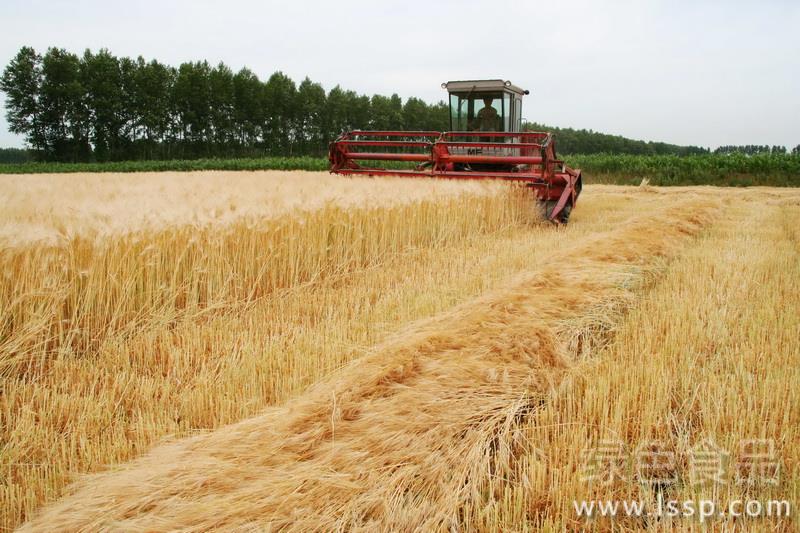
High-yield cultivation techniques for barley with drought resistance, cold tolerance and wide adaptability
High-yield cultivation techniques for barley with drought resistance, cold tolerance and wide adaptability
-
Dianthus acicularis is an excellent drought-tolerant, water-saving groundcover plant
Most parts of northern China are resource-based severely water-scarce regions, with per capita water resources of less than 300 cubic meters, only 1/8 of the national average, and far below the international water-scarcity threshold of 1,000 cubic meters per capita. With the vigorous development of landscaping, water consumption for greening is growing ever larger, and this contradiction with the scarce water resources of northern China is becoming increasingly prominent. Dianthus acicularis has good drought tolerance and is an excellent water-saving plant material in landscaping. According to calculations, Dianthus acicularis consumes only 0.
-
How to keep turtles safe through early spring? Key points for turtle care management
In early spring, turtles have just woken from hibernation and are very weak in activity. In addition, temperatures during this period are unstable, often fluctuating between high and low, making it a critical time for turtle care. So how can you care for turtles well during this period? (1) According to the turtle's physical condition, if heating is needed, raise the water temperature to about 25°C. (2) For feeding, follow the principle of small amounts and high quality. The amount for the first feeding should not be too much; 1% of the turtle's body weight is suitable, and feed twice a week. (3) When changing the water, the temperature difference between the new and old water should not exceed 5°C,
-
Hanyou No. 3 rice saves water and resists drought, high-yielding and easy to grow
Rice is high-yielding, but afraid of thirst; upland rice is drought-tolerant, but its yield is slightly inferior. Shanghai rice experts ingeniously merged the advantages of the high yield of rice and the drought tolerance of upland rice into a single grain of rice seed, breeding the world's first water-saving and drought-resistant hybrid rice, "Hanyou No. 3". The author recently saw the mature "Hanyou No. 3" bent over from "exhaustion": each panicle bears 110 grains, and the yield per mu is better than that of conventional rice, while the rice field saves more than 50% of water. The new rice can go on the market in Shanghai at the end of the month. According to testing by a professional department, the grain quality of "Hanyou No. 3" reaches the Ministry of Agriculture's second-grade high-quality rice standard, and
-
How to cultivate Gastrodia elata in indoor bed frames and troughs
① Bed frame setup: Basically the same as the bed frames used for cultivating mushrooms, generally the frame is 1.2 m wide, 2.5-3 m high, and 5.5 m long. The lowest layer can be cultivated on the ground, using the pit-style double-layer Gastrodia cultivation method. The spacing between each layer of the bed frame is 60 cm, and 5-6 layers can be planted. Either iron frames or wooden poles can be used to build the frame, as long as they are sturdy and durable. The bottom of each layer of the bed frame can use wooden boards, board scraps (preferably not pine or fir boards; if broadleaf tree boards really cannot be found, pine or fir boards can also be used as a substitute), wide slats, etc. If there are no wooden boards, bamboo
-
What are the technical measures for drought resistance and disaster mitigation in rice cultivation in Heilongjiang Province?
In response to the actual drought situation, the Rice Expert Guidance Group of the Ministry of Agriculture conducted in-depth research in drought-affected rice areas and proposed technical measures for scientific drought resistance and disaster mitigation to ensure increased rice production. 1. Strengthen the management and scheduling of irrigation water sources. Actively develop water sources, organize as much as possible the pumping of return flow and the use of water-lifting irrigation machinery to utilize rivers, lakes and groundwater, alleviating the contradiction of insufficient reservoir storage. For plots far from water sources, promptly dig supplemental water wells to ensure a safe water supply during severe drought seasons. Strengthen the management of existing water resources and the clearing, repair and film-mulching of main irrigation canals to prevent seepage and leakage. Scientifically regulate
条件筛选