-

Why is intercropping tree peony root bark with Gastrodia elata so profitable?
Tree peony root bark (the root bark of the tree peony) and Gastrodia elata are both precious Chinese medicinal herbs. Intercropping Gastrodia elata in tree peony root bark fields is a new high-yield, high-efficiency cultivation model that is worth promoting to herb growers in Chinese medicinal herb growing regions everywhere. The most notable features of intercropping Gastrodia elata in tree peony root bark fields are: first, it makes full use of the land; second, the two are complementary; third, it eliminates the trouble of having to weed the tree peony root bark field frequently. The cultivation method is described below: 1. Planting tree peonies. 1. Site selection: The tree peony field for intercropping Gastrodia elata requires fertile, deep soil, and a slight slope is best.
-
What causes boxwood root rot with a foul odor and yellow, withered leaves?
The boxwood planted in May this year developed root rot with a foul odor by the end of June this year, until the entire plant withered and died. Please, colleagues, advise on what caused this and how to solve it! Urgent, waiting, thank you... The planting environment is in a place with little sunlight exposure, and recently there has been relatively heavy rainfall. Reply: It should be that excessive rain caused waterlogging at the roots, the root system could not breathe, rotted, and died; at the same time, because the roots rotted, nutrients could not be supplied upward from the roots, causing the upper branches to wither and die. The key to summer planting lies in watering. Too much water, too little water, or improper watering can all cause plants to be unable to absorb water and die. Water accumulation in the tree pit must be strictly prohibited to prevent root rot; and loosen the soil frequently to keep the soil well aerated.
-
Symptoms and Control Methods of Root Rot in Impatiens
It occurs in all impatiens cultivation areas and can cause plant death. Symptoms mainly infect the root crown and lower parts of impatiens, with grayish-brown lesions appearing initially, which then rapidly expand, causing the roots to become slightly swollen and turn dark brown and rot; after the root crown tissue rots, it loses water and appears shrunken. The aboveground parts show sudden wilting of diseased plants, gradually worsening, resembling temporary water shortage, but this is irreversible after watering. Disease pattern: the pathogen is a fungus, Rhizopus arrhizus-like. The pathogen overwinters in the soil with diseased plant residues. Soil that is too wet, high temperatures,
-
Pigs rooting at the pen and gnawing at soil are not just mischief; the reasons behind it need to be understood
Pigs rooting at the pen and gnawing at wood and soil are not just playing around; it is an abnormal phenomenon that affects the pigs' normal growth and development. The main causes are: first, growing-finishing piglets lack the mineral feed needed for growth; lactating sows and pregnant sows use their own mineral elements for the normal growth of suckling piglets and fetuses, and the minerals in the feed are hard to meet the demand. Second, the feeding is unreasonable: too little feed is given, the pigs do not eat their fill, and no water is provided with the feed. Third, sick pigs also show pen-rooting and gnawing at wood and soil. Prevention methods: first, pay attention to the feed mixing ratio and add mineral
-
How to Propagate Lotus Root? A Detailed Explanation of Several Common Methods
-- Lotus seed propagation. Since lotus seeds are covered with a hard shell, first crack open the sunken end of the shell, then soak it in water at 26-30°C to promote germination. Once the sprout emerges, it must still be kept submerged in water to prevent dehydration and shriveling; when it grows to 4 leaves and 1 rhizome runner, it can be planted out in the field. Because lotus seed propagation grows slowly in the early stage, seedlings must be raised in a protected area 1 month in advance so that lotus roots of commercial value can form in the same year. -- Whole lotus root propagation. Plant the entire main lotus root together with its daughter roots and granddaughter roots at a certain row and plant spacing; the planting method is to insert the top end into the mud, with the tail tip exposed
-
Lotus Root Terminal Bud Seedling Raising and Transplanting Cultivation Technique
1. Terminal bud seedling raising: The area ratio of seedbed to transplanting paddy field is 1:10. In early to mid-April, apply 1800 kg of decomposed organic fertilizer per mu to the seedbed, deep plow 25 cm, then level it, and build ridges 30 cm high and 25 cm wide around the perimeter. Select plump, thick, pest-free seed lotus roots with intact terminal buds, cut off the terminal buds and gently press them into the seedbed by hand at a density of 1 plant per 8 sq cm, with the bud tips exposed above the bed surface, then fill with 2-3 cm of water to soak into the bed, then build arched frames 1 m high with bamboo strips, cover with plastic film, and press and seal the edges tightly. After 3 days, inside the seedbed
-
Detailed Explanation of Cultivation Techniques for Artificial Pond Lotus Root
I. Selecting Varieties Seed lotus roots are generally dug up just before planting, selecting whole lotus roots or larger daughter lotus roots that have typical varietal characteristics and a relatively thick rear stem node (i.e., the lotus tail). The daughter lotus roots on the whole lotus root must grow in the same direction, so that the extending lotus runners elongate in an orderly manner. If daughter lotus roots are used as seed, they must have at least two or more fully mature lotus root sections, with intact terminal buds, cut at 1.5 cm behind the second node stem; never snap them off by hand, to prevent muddy water from entering the lotus root holes and causing rot. The main varieties of seed lotus roots include early-maturing varieties Hua Ou, E Lian No. 1
-
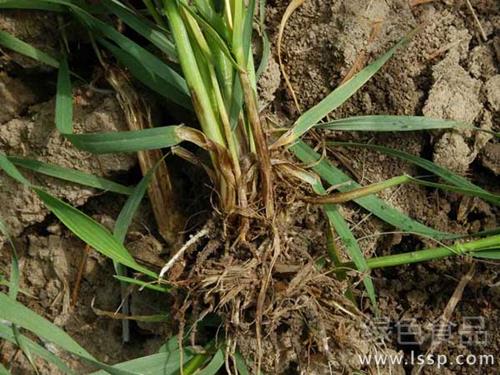
How to prevent and control wheat root rot? Identification of symptoms of root rot, stem blight and yellow leaves, and medication
How to prevent and control wheat root rot when roots rot, stems wither and leaves turn yellow
-
How to prevent and treat root rot in rhododendrons? These methods you need to master
Root rot is a serious threat to rhododendrons. Although its incidence rate is not high, the mortality rate after infection is very high, so the prevention and treatment of root rot must be taken seriously in the cultivation and management of rhododendrons. Root rot is a soil-borne disease caused by Fusarium fungi, mostly occurring at the root and stem parts of rhododendrons, because these parts are often moist with insufficient sunlight, and the Deuteromycetes Fusarium fungi are highly active there. Once they invade the cortex, rot soon follows, with water-soaked brown spots and soft rot appearing on the roots, followed by decay and peeling of the bark, the xylem turning dark brown
-
What are the basic facts about lotus root? A comprehensive guide
Lotus root is divided into three parts: the lotus head, the lotus body, and the rear section. The lotus head is the terminal bud of the swollen rhizome, possessing leaf buds and mixed buds, and is wrapped in a bud sheath to overwinter; the lotus body is the swollen rhizome of the 2nd to 3rd node near the lotus head, and is the main part of the product organ; the rear section is the last, slender rhizome node. According to the utilization value of the product organ, it can be divided into three types: lotus root lotus, seed lotus, and flower lotus. According to adaptability to water depth, it can be divided into shallow-water lotus root and deep-water lotus root. Shallow-water lotus root is suitable for cultivation in shallow ponds or paddy fields with a water depth of 30-50cm, and most are early-maturing varieties,
条件筛选