-

Causes and Solutions for Dry Air Roots on Phalaenopsis Orchids
A perfectly healthy Phalaenopsis orchid is growing along, and then suddenly those exposed aerial roots dry up. Some get all wrinkled like shriveled kelp, and others turn dark brown outright. Actually, there is no need to panic about this. First figure out why the aerial roots are drying up, then treat the problem accordingly. Why do aerial roots dry up? The most common reason is air that is too dry. Phalaenopsis
-
Reasons for Phalaenopsis root rot in summer and how to save it
In summer, with high temperatures and high humidity, Phalaenopsis orchids can easily develop root rot if you are not careful - the roots turn black and mushy, and the leaves turn yellow and soft, which is really distressing to see. In fact, as long as you act promptly, a Phalaenopsis with root rot can absolutely be saved! Today I will share the emergency rescue steps and follow-up care tips with everyone, so even beginners can handle it easily ~ 3 steps to rescue root rot
-

Is a wrinkled aerial root on a Phalaenopsis orchid a sign it has gone bad? What causes aerial roots on Phalaenopsis orchids to wrinkle?
Aerial roots that were once plump and white suddenly turn wrinkled, as if they have shrunk. "Is this root bad? Is my Phalaenopsis orchid about to die?" A wrinkled aerial root on a Phalaenopsis orchid is not necessarily a bad thing; the key is to figure out "why it is wrinkled." This plant is quite peculiar: its aerial roots are not only used to absorb water and
-

Can you leave aged orchid roots unpruned, or will they rot?
The roots of a Phalaenopsis look old, but they are not completely rotten. Is it okay not to prune them? If you do not prune them, will they rot even more? I believe many friends who grow Phalaenopsis have experienced this "old root anxiety": looking at wrinkled old roots, they always feel they are a "hidden danger", but they are also afraid that pruning wrong will cost more than it is worth. The healthy roots of a Phalaenopsis are plump and white with crystal tips.
-

Can a Phalaenopsis survive if its crystal head (root tip) rots? Here's the correct way to save it
When growing Phalaenopsis orchids, nothing is more distressing than seeing the crystal head (root tip) turn black and rot, but as long as you treat it promptly and adjust your care routine, there is a high chance it can be saved! Today I've put together the detailed treatment steps and follow-up care points, so even beginners can follow along. 1. Emergency root rot treatment If the crystal head has rotted, it means the root system is already infected, so you must act decisively to stop
-
Reasons for Root Rot in Water-Cultured Phalaenopsis and How to Care for It After Washing the Roots
Many gardening enthusiasts want to try growing Phalaenopsis (moth orchid) in water but always fail at the early stage. In fact, the problem often lies in the step of "washing the roots"! The core difference between water culture and soil culture is the change in the root environment. Roots that have not been treated still carry old potting medium and pathogens, and putting them directly into water easily leads to root rot and withering. Today we will share in detail the root washing for water-cultured Phalaenopsis.
-

How to Tell If a Phalaenopsis Orchid Has Root Rot and How to Treat It to Save It
Speaking of Phalaenopsis orchids, they are a favorite of many plant lovers, blooming with an elegant, fairy-like beauty. But as you care for them, the dreaded problem of root rot can strike. How can you tell if a Phalaenopsis has root rot? Unlike ordinary plants, Phalaenopsis roots are plump, semi-transparent aerial roots. When healthy, they feel firm to the touch and have a greenish or silvery-white color; look closely and you will see tiny fuzz on the roots, which are great helpers for absorbing nutrients and water.
-

The simplest way to grow a pineapple top in water, and how long until it roots?
Don't waste the pineapple top you bought at the supermarket! I tested it myself: in water it sprouts fuzzy white roots, and after moving it to soil it keeps pushing out new leaves, sitting on the windowsill looking fresh and soothing. The biggest surprise is that a pineapple you grow yourself at home smells 10 times stronger than one bought outside! Here is a step-by-step guide, from the pitfalls of root rot to a burst of roots, so even beginners can easily replicate it. These soul-searching questions:
-
What to do when a Phalaenopsis orchid has stem rot and only the roots are left, can it still be saved?
Gardeners who grow Phalaenopsis orchids have probably all experienced this kind of crushing moment: an orchid that was perfectly fine suddenly has roots that are rotten, black and slimy, falling off at the slightest touch, and when you lean in there is a sour, foul smell, the leaves droop limply downward, and the stem even has brown rotten spots... At this point many people think "it's hopeless" and just toss it into the trash. But the
-
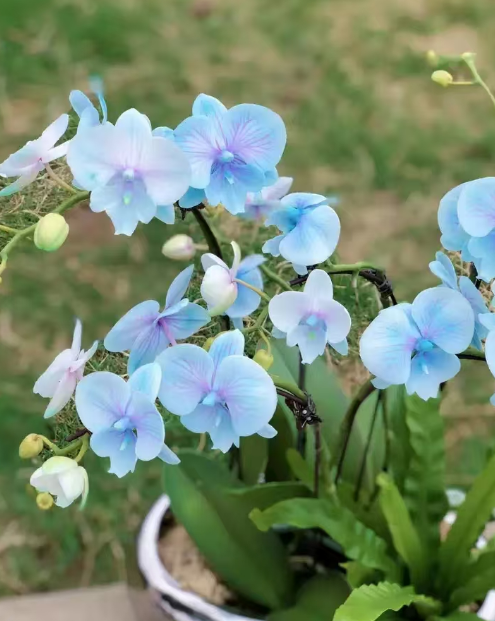
Should rootless side shoots on Phalaenopsis orchids be cut off? Here's the correct way to separate them
Once you've grown Phalaenopsis orchids for a while, you'll notice that old plants and new plants have completely different "temperaments" - they differ greatly just in watering, let alone flowering performance. So how should you care for this old-and-new pair in summer so they both grow smoothly? First, let's talk about the difference in watering. Old plants, well, their root systems are already established, and some old roots on the outside
条件筛选