-

Aerial Roots of Phalaenopsis: The Ins and Outs of Dry vs. Wet, and What Causes Them to Dry Out
Anyone who grows Phalaenopsis orchids is surely impressed by those few aerial roots sticking out of the potting medium -- either wrinkled like sun-dried preserved mustard greens, or plump like a sea cucumber full of water. So should these things be dry or wet? And if they dry out, how do you save them? Actually, the aerial roots of Phalaenopsis can't be too dry, nor should they be wet all the time; they need
-

Reasons Why Hydroponic Phalaenopsis Orchids Won't Grow Roots and an Analysis of Their Light Requirements
Have you ever tried growing Phalaenopsis orchids hydroponically? Do you watch other people's hydroponic orchids sending out roots at lightning speed while yours stays completely bare with not a single new root, and you're so anxious you're stomping your feet? Anyway, that used to be me -- I always thought hydroponics was simpler than growing in soil, but after all that fussing, my Phalaenopsis roots either stayed wilted and never emerged, or rotted away until only
-

Can a Phalaenopsis survive after all its roots have rotted? Let me show you how to deal with the woody root core
As quality of life improves, many people like to buy one or two good-looking plants at the flower market, and among them the Phalaenopsis is the flower most people choose. With more people buying them, more and more care problems have appeared too; yellow leaves and flowers withering early because of root rot are also common occurrences, and when you run into a similar situation
-
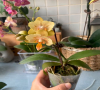
How to rescue a Phalaenopsis orchid after its roots are broken so it can survive?
As is well known, Phalaenopsis orchids have won the hearts of many flower lovers with their outstanding flower shapes. However, when it comes to care, not everyone knows how to do it. The most common problems are waterlogging caused by too much watering, and root suffocation caused by too strong a fertilizer dose. No matter what your current situation is, when dealing with rotten roots, you should immediately
-

Can Phalaenopsis aerial roots be buried in sphagnum moss without being prone to dying?
Those aerial roots that Phalaenopsis sends out from beside its leaves - can they actually be buried in sphagnum moss? It always feels awkward to just let them dangle outside, but I'm also afraid that burying them might end up killing the plant. First, you need to understand that Phalaenopsis aerial roots are not ordinary roots. If you look closely, you'll find that most of them are green or
-
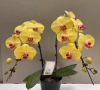
Root rot in Phalaenopsis (moth orchid) after repotting: should you trim the roots and disinfect, or repot again?
I believe many people who grow Phalaenopsis have run into the frustrating problem of root rot after repotting. You meant to give the plant a comfortable new environment, but instead the roots ran into trouble. Watching a once-vigorous Phalaenopsis gradually go limp is enough to make anyone anxious. In fact, as long as you deal with it promptly and adjust your care routine, there is a good chance the Phalaenopsis will recover.
-
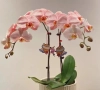
When growing Phalaenopsis (moth orchid) semi-hydroponically, water along the edge of the pot to prevent root rot; how should the watering frequency be set?
If there is a "lazy person's blessing" in Phalaenopsis care, semi-hydroponics definitely counts as one! You do not need to painstakingly remove the old potting medium, nor do you need to repot frequently, and the Phalaenopsis can still grow vigorously, making it especially suitable for beginners who dislike hassle. How exactly do you do it? It can be done in just a few steps, so let's go through it slowly. First, prepare these materials, all of which are common household items: none
-
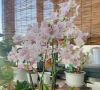
Phalaenopsis hydroponic acclimation tips and precautions for removing from pot and washing roots
Many gardening enthusiasts want to try hydroponic Phalaenopsis, thinking it is clean and easy to care for, but hydroponics is not simply moving a soil-grown plant into water. The roots must first adapt to the water environment, which is called "acclimation." This process is not hard to grasp; the key lies in the steps of removing from the pot and washing the roots, pruning and disinfecting, and water control adaptation. Done well, the Phalaenopsis can
-

Are aerial roots of Phalaenopsis still useful after being cut off?
Several plump white "little whiskers" have popped out from outside the Phalaenopsis pot. I looked it up and found out they are aerial roots. So can these things actually be cut? If they are accidentally broken off, are they still useful? The aerial roots of Phalaenopsis "can be cut, but it is not necessary to cut them, and you definitely should not cut them carelessly." You first need to understand what these aerial roots are for - Phalaenopsis in the wild originally grows on trees, not rooted in soil. These aerial roots are its "hands" and "nose": on one hand, they can grip the bark to anchor itself; on the other hand, they can directly absorb water and oxygen from the air, and even help with photosynthesis. So if the aerial roots are not damaged and are still green and plump, keeping them is only beneficial to the orchid, and there is no need to cut them at all.
-

Causes of Black Spots and Brown Patches on Phalaenopsis Roots and Related Diseases
After a Phalaenopsis (moth orchid) blooms, it is truly "unforgettable," so placing it casually anywhere in a home or shop instantly elevates the space. However, no matter how beautiful the flower, caring for it is never smooth sailing, and root rot is the most common problem! Once it starts developing yellow leaves, buds that refuse to open,
条件筛选