-

Control Methods and Technical Key Points for Angelica Root Rot
Angelica root rot, also known as root decay disease, is one of the main diseases during the growth and development period of angelica (Angelica sinensis), greatly affecting its yield and quality. 1. Damage symptoms: It harms roots and stems. The root tissue of affected plants initially turns brown, then rots into a water-soaked state, leaving only a fibrous hollow shell. The stem becomes brown and water-soaked, aboveground growth stops, and the plant becomes stunted. Elliptical brown patches appear on the leaves; in severe cases, the leaves wither, turn yellow, droop, and even the entire plant dies. 2. Pathogen: (Fusarium avenaceum (
-
What causes soybean root nodules to be few and small?
Soybean roots have root nodules that can perform symbiotic nitrogen fixation, which is an important source of nitrogen for legume crops. But in actual production, sometimes soybean root nodules are few and small. What causes this? Expert: When encountering particularly severe symptoms, the first thing to consider is that this may be caused by a deficiency of the trace element molybdenum. Since molybdenum is an essential trace element for nitrogen fixation by legume root nodules, the absolute content in general crops is at the level of one part per million, while soybean's requirement for molybdenum is dozens of times higher than that of other crops. The main role of molybdenum is to promote the formation of soybean root nodules
-
New high-yield techniques for lotus root: straw-fed lotus cultivation and lotus-fish polyculture
In April 2006, the Yindu Industry, Trade, Science and Technology Ecological Park in Wenshang County, Shandong Province, was completed and put into operation. Using waterlogged, saline-alkali and barren land, through scientific methods and the implementation of multi-component composite three-dimensional development, a science and technology ecological park was built integrating vegetable and forage cultivation - livestock and poultry breeding - straw-fed lotus cultivation - fish farming in lotus ponds - fishing and leisure - dining and entertainment, and other functions into a circular economy development model, achieving remarkable economic and ecological benefits. In particular, the new corn straw-fed lotus cultivation technique promoted by the park can achieve a lotus root yield of up to 6000 kg per mu.
-
Symptoms and Control Methods of Pythium Root Rot in Tulips
The disease can be caused by Pythium ultimum, Pythium irregulare, and Pythium intermedium, all of which are fungi belonging to the oomycetes. The pathogen overwinters in diseased bulbs, diseased roots, and soil, and often spreads with the movement of diseased soil. High soil temperature, delayed drainage after rain, and prolonged moisture retention make the disease more likely to occur. Symptoms: At the early stage of the disease, translucent water-soaked spots appear on the roots, and after expansion they cause browning of the vascular tissue, resulting in root rot. After the bulb is infected, gray spots appear around the base of the bulb with brown edges. In severe cases, the bulb becomes soft and rotted. Planting diseased bulbs
-
How to prevent and control soybean root rot? Detailed prevention and control techniques for Heilongjiang
Root rot occurs commonly in the soybean-producing areas of Heilongjiang Province. In the field, the usual rate of diseased plants is 30%-40%; in low-lying land and continuous-cropping land, the rate of diseased plants can reach more than 70%, and the highest seedling death rate is more than 15%. The eastern region is more severely affected than the western region, with the most severe occurrence in the moist-soil areas of the east. In an ordinary year, the rate of diseased plants in the early growth period of soybean (before the flowering stage) is about 75%, and the disease index is 35%-50%; in rainy years, the disease index can reach more than 60%. The occurrence of soybean root rot mainly depends on the bacteria in the soil
-
Control Methods for Fusarium Root Rot in Soybean
Symptoms: Fusarium root rot is one of the common root rots in soybean. It mainly occurs at the seedling stage. The roots and stem base of diseased plants develop elliptical brown, elongated to irregular sunken spots, which later expand into large patches encircling the main root, and some damage the lateral roots. The fungus mainly damages the cortex, causing diseased seedlings to emerge very slowly, cotyledons to lose green color, and lateral roots and fibrous roots to be few; in the later stage the roots turn black and the epidermis rots, the diseased plants turn yellow and become stunted, and the lower leaves drop early. The diseased plants generally do not die, but they set fewer pods and the seeds are small. Control methods should adopt comprehensive measures with prevention as the priority. (1) Select resistant
-
How to prevent and control soybean root rot? These methods you need to master
1. Choose disease-resistant varieties. 2. Rotate with non-host crops such as corn, foxtail millet, and sweet potato. 3. Apply farmyard manure, potassium fertilizer, phosphate fertilizer, etc. when sowing. 4. Apply metalaxyl granules when sowing so that soybean roots can absorb them to prevent root infection. 5. Before sowing, dress seeds with 35% metalaxyl powder at 0.3% of seed weight. 6. Strengthen field management, carry out timely deep plowing and intertillage hilling and weeding, and drain standing water promptly after rain to prevent excessive humidity. 7. When diseased plants are found, pull them out promptly, thoroughly remove the diseased plant residues, and apply quicklime to the planting holes and
-
How to prevent and control cotton root rot in northern Xinjiang? Understanding the patterns of occurrence is key
In 2007, northern Xinjiang suffered varying degrees of cooling and rainfall in April, May and August respectively, and cotton root rot occurred rather severely, with the disease incidence in cotton fields reaching 20%-50%, causing a certain impact on cotton yield in northern Xinjiang. 1. Disease symptoms The pathogen overwinters as chlamydospores on plant residues in the soil and germinates to infect the following year. After cotton is infected, the leaves shrink or wilt, and soon afterward the plant lodges and dies. The stem base and roots of diseased seedlings are purplish brown and gradually rot, with the cortex drying and rotting; when pulled from the soil, the roots are decayed brown.
-
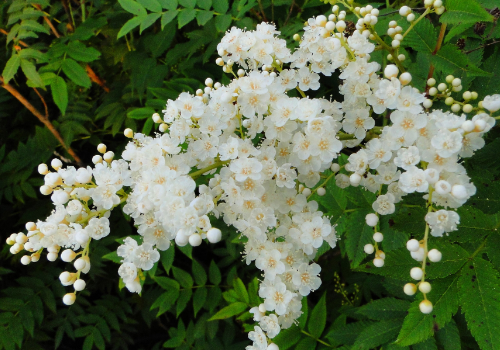
Watering Methods for Sorbaria sorbifolia and Root Rot Treatment Tips
Sorbaria sorbifolia can be seen in ordinary parks and is a fairly common flowering ornamental plant. How to water Sorbaria sorbifolia? How to deal with root rot: How to water Sorbaria sorbifolia: Water after repotting. Newly repotted Sorbaria sorbifolia needs watering, generally during the period from leaf bud break to flowering, watering 2-3 times a day, and it should be watered thoroughly.
-
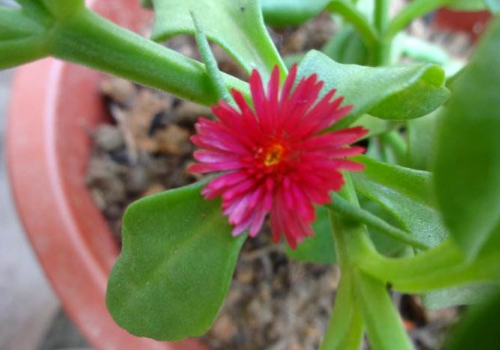
What to Do About Root Rot in Heartleaf Ice Plant? Detailed Explanation of Its Differences from Panax notoginseng
Panax notoginseng is a very precious medicinal herb in China, and it looks somewhat similar to the heartleaf ice plant. What should be done about root rot in the heartleaf ice plant? And what are the differences from Panax notoginseng: What to do about root rot in the heartleaf ice plant: pruning during the winter dormant period. Entering winter, the heartleaf ice plant enters its dormant period, and the leaves stop growing.
条件筛选