Key Technical Points and Detailed Explanation of Farming Methods for Raising Fish in River Channels
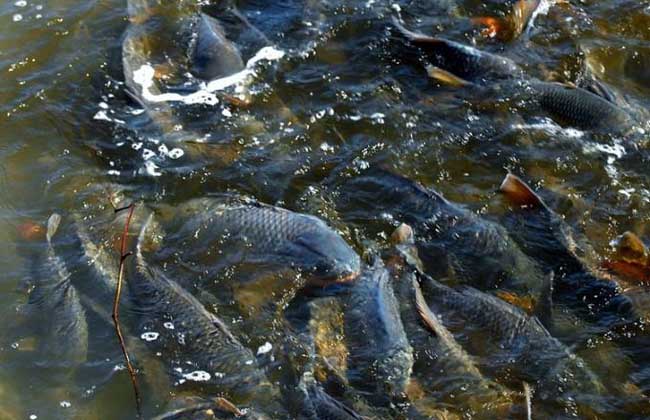
Fish farming in river channels refers to a mode of fish farming carried out by installing fish-blocking facilities in rivers and channels. As a new type of farming method, it is deeply welcomed by farmers because of its advantages of low investment (only 1/5 to 1/10 of pond fish farming), no occupation of cultivated land, low production cost and considerable economic benefits. Let's take a look at river channel fish farming technology below!
Site Selection
Generally, river channels suitable for fish farming should have water quality free of serious pollution, and the dikes on both sides of the river channel should be firm and unaffected by disasters such as floods. There should be few water inlets and outlets in the river channel, and it must be ensured that fish cannot escape through these inlets and outlets. In addition, the riverbed should be relatively flat to facilitate management and harvesting. The annual water level fluctuation should be small, preferably not exceeding 2 m, and the water depth during the fish farming season must not be less than 0.8 m. The water flow rate should not be too high, preferably within 0.5 m per second. The river channel or adjacent waters should have relatively abundant aquatic organisms that can be utilized conveniently. It is also necessary to understand the surrounding farmland irrigation, water storage, flood discharge and other conditions, and when building fish-blocking facilities and farming fish, resolve the conflicts between fish farming water use and water conservancy.
Fish-Blocking Facilities
Fish-blocking facilities for river channel fish farming are generally relatively simple, and sectional blocking and farming can be carried out according to local conditions. Select river sections with suitable conditions to raise fingerlings, solving locally the fingerlings needed for stocking in the river channel. In river sections with relatively open water surface, fertile water quality, quiet environment and convenient management, fish-blocking facilities can also be built to separate them from other parts for feeding artificial bait, carrying out intensive farming in the river channel and increasing fish farming output.
Enclosure Cleaning and Conditioning
The main purpose of cleaning and conditioning the river channel within the enclosure is to remove sludge and predatory fish. Bottom pollution can be removed with a dredger or a small mud-clamping boat, or manually dug out during dry or low-water seasons. Removing sludge improves the water environment conditions and prevents water quality deterioration. The main predatory fish in river channels are Culter alburnus, Culter mongolicus, Channa argus, etc., which can be cleaned up by drugs, hook fishing, repeated catching with nets and other methods to ensure the safety of stocked fingerlings.
Fingerling Selection
For river channel fish farming, river sections with relatively stable water level, relatively fertile water quality and less navigation are generally selected, and silver carp, bighead carp, common carp, crucian carp, grass carp, Wuchang bream, etc. are stocked, mainly relying on natural bait for the fish to grow. In river channels with smaller water surface and more convenient management, artificial bait may be appropriately fed, and at ordinary times the inspection and management of fish-blocking facilities must be strengthened to prevent fish escape due to damage.
Fingerling Size
Although river channel fish farming also pays attention to eliminating enemies, because it is in an open water area and river channels are interconnected, some predatory fish such as mandarin fish, Channa argus, Elopichthys bambusa, culter and bass are difficult to completely eliminate, and others such as eel, Monopterus albus and soft-shelled turtle can also swallow small fish. Therefore, if the stocked fingerlings are too small, they will suffer from enemies, affecting the survival rate and recapture rate of the fingerlings. Secondly, because fish-blocking facilities in river channels must adapt to water flow, the mesh size should not be too small. Fingerlings stocked in river channels should be above 13.2 cm, and above 19.8 cm is better. Stocking silver carp and bighead carp warm-water fish of about 0.25 kg has an even better effect. Grass carp is best above 19.8 cm, and 0.25-0.5 kg is better. Bream and triangular bream are generally above 9.9 cm, and common carp and crucian carp are above 6.6 cm.
Fingerling Stocking
For extensive-farming river channels, 200-300 fish are stocked per mu of water surface; for intensive-farming river channels, 300-500 fish are stocked per mu, and then adjustments are made according to the fish growth situation at the end of the year. River channels with relatively fertile water quality should mainly stock silver carp and bighead carp, usually accounting for 70% (bighead carp : silver carp = 6:4), and then be combined with 30% black carp, grass carp, bream and common carp (black carp and grass carp account for 5-10%, common carp, crucian carp and bream account for 10-15%). Stocking time is generally winter, because winter temperatures are low, fingerling transportation is convenient, and the stocking survival rate is high. In addition, natural food in river channels is abundant, and growth can be accelerated after stocking.
Equipment Management
Before stocking fingerlings and before the major winter harvest, special attention should be paid to checking whether the fish-blocking facilities have fish escape openings. At ordinary times, the height of the foil gate should be well controlled, and it must be ensured that it is regularly exposed 8-10 cm above the water surface. When the weather changes or there is a major flood, attention should be paid to adjusting the foil gate. At ordinary times, dirt in front of the fish-blocking facilities should be frequently removed to keep water flow smooth. The fish-blocking facilities should be checked and repaired at any time, and relevant repair materials should be kept ready at all times.
Sectional Fish Farming
River channel fish farming should, according to the characteristics of the water surface, suit measures to the water and carry out sectional fish farming, using net foil to divide the water surface into several sections. Each section can be dozens of mu, hundreds of mu or over a thousand mu, carrying out graded and zoned stocking. This facilitates uniform distribution of fingerlings, artificial feeding, feeding management and harvesting. To implement intensive farming in river channels, the sources of fertilizer and feed must be ensured. Pigsties can be built beside the river channel, ducks can also be raised in the river channel, and starch residue water or waste foot water from food factories can also be introduced.
Feeding Management
Bait feeding is generally the same as in ponds. The principle is to target the main cultured fish, take care of the mixed cultured fish, and reasonably combine natural bait and commercial bait according to different seasons. When feeding, the bait should be placed on feeding platforms, feeding grounds and in feeding frames, and all kinds of feed should be fresh. The size of pellet feed should be appropriate, and the content of various nutrients should meet the needs of the fish. Because the water in river channels is flowing, it is best to use pellet feed for feeding. Other kinds of commercial feed should be soaked in water before feeding. Concentrate feeding platforms should be built toward the water inlet end to reduce feed loss. In river channels suitable for fertilization, some manure, chemical fertilizer and fermented green manure, etc. may be applied to make the water fertile. When fertilizing, attention should also be paid to placing the fertilizer toward the water inlet end.
Disease Prevention and Control
Because river channel water exchange is frequent in river channel fish farming, the occurrence of fish diseases is lower than in ponds. However, with the increase of stocking density, fish diseases also occasionally occur in intensive-farming and high-yield river channels, and a policy of giving priority to prevention should be adopted to do a good job in prevention and control. At the same time, river channels are often drainage channels for various types of sewage, especially river channels near towns, where some toxic industrial sewage and waste residue enter the river channel and cause fish death. Therefore, preventing toxic sewage from flowing into river channels is one of the important management tasks of river channel fish farming.