-

Detailed Explanation of Button Mushroom Cultivation Techniques in Rice Fields (Part 5)
V. Integrated Pest and Disease Control. Integrated pest and disease control should adhere to the principle of prevention first, with prevention being more important than treatment, and to the principle of combining agricultural control, physical control, biological and ecological control, and chemical control. The use of highly toxic and high-residue pesticides must be eliminated, and no pesticides should be used during the mushroom harvesting period. Diseases and deformed mushrooms caused by environmental factors or improper technical management (such as red-foot mushrooms, landmine mushrooms, big-ball mushrooms, scaly mushrooms, etc.), as well as weed fungi (such as Coprinus mushrooms, etc.), should be controlled primarily through integrated measures. Main measures: First, the compost formula must be accurate, and the material
-
Detailed Explanation of Agaricus bisporus Cultivation Technology in Rice Fields
Cultivating Agaricus bisporus in rice fields is a "rice-mushroom-rice" cropping model in which, after the rice harvest, compost is spread directly on the rice field for spawning and casing soil cultivation to produce mushrooms. After the rice is harvested, the rice straw is dried on site, composted and fermented on site to make the growing substrate, and cultivated on site, with management provided by grass curtains, small plastic tunnel shelters, or plastic greenhouses, eliminating the need to build mushroom houses and transport raw materials, thus greatly reducing production costs. In addition, rotating the cultivated field each year can effectively control pests and diseases, enabling the mushroom products to meet pollution-free quality requirements. In addition
-
High-Yield Cultivation Techniques for Agaricus bisporus in Rice Fields
Cultivating Agaricus bisporus in rice fields is a planting method that uses rice straw and other materials as the main raw materials, which are composted and fermented into growing substrate, and takes advantage of the temperature and light resources and idle seasons of autumn, winter and spring to cultivate Agaricus bisporus in the open field in rice fields after the rice harvest. This method makes full use of resources, can create a net profit of more than 5000 yuan per mu, with an input-output ratio of 1:3, and can improve the soil, delivering excellent economic and ecological benefits. The technical experience is introduced below: 1. Mushroom field selection Generally, a middle-season rice field or single-crop rice field with higher terrain, fertile soil, convenient drainage and irrigation, close to a water source,
-
Growing button mushrooms (Agaricus bisporus) in winter-fallow rice fields delivers good returns
In 2004, our county carried out cultivation demonstrations of growing button mushrooms (Agaricus bisporus) in winter-fallow rice fields across 16 townships. After the late rice harvest, rice straw and other materials were used as the main raw materials and composted and fermented into growing substrate, making use of the winter temperature and light resources and the idle winter season of the rice fields; open-field cultivation of button mushrooms achieved notable returns. Chen Yeru, a farmer at the Lixian Institute of Agricultural Sciences, is a button mushroom cultivation demonstration household, with a family of 4 people and 2 laborers, and had never previously cultivated edible fungi. After technical training at the Lixian Edible Fungi Research Institute, he set up on his own contracted field
-
Detailed Guide to Intercropping Oyster Mushrooms in Rice Fields
During the growth and development of rice, intercropping oyster mushrooms using the spaces between rice rows and the special conditions under the shade of rice clumps can provide suitable temperature and humidity conditions for the growth of oyster mushrooms (large temperature difference between day and night, good shading, sufficient scattered light, etc.), enabling high yields of oyster mushrooms, filling the market off-season when few mushrooms are available in summer, enriching summer vegetable varieties, and increasing rice farmers' income. I. Crop rotation arrangement and field plot design: Rice varieties should be selected with strong lodging resistance, tall plants, thick stalks, and resistance to rice planthoppers. Sowing in late May, transplanting in late June, with a density where
-
Detailed Explanation of the Key Cultivation Techniques for Growing Golden Mushrooms in Rice Fields
In the townships of Dongchan, Fenshui, Shidong and others in Anju District, Mianyang, Sichuan Province today, when people mention "open-air mushrooms in rice fields," it can be said that everyone knows of them. "Growing mushrooms in rice fields is great! It doesn't affect the rice and brings very good returns." Uncle Yin from Shuangbaishu Village in Dongchan Town always speaks highly of field mushrooms, "Now, apart from growing mushrooms, I probably can't find any other cash crop that brings in more money than this." It is reported that "open-air mushrooms in rice fields" use wheat straw, rapeseed stalks, corn stalks, rice straw and other materials as raw materials,
-
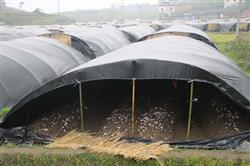
What are the methods for growing button mushrooms in rice fields?
How are button mushrooms grown in rice fields? Please explain. Button mushroom cultivation in rice fields is a planting method that uses rice straw and other materials as the main raw materials, which are composted and fermented to make the growing substrate, utilizes the temperature and light resources of autumn, winter and spring and the idle seasons, and adopts open-field cultivation of button mushrooms in rice fields after the rice harvest. 20...
条件筛选