-

What are the responses of soybean growth and development to light?
Soybean is a short-day crop, with a daylength range of 9-18 hours. The shorter the light, the more it promotes flower bud differentiation and advances flowering and maturity. When soybean grows its first compound leaf, it begins to respond to light. Generally, seedlings can complete the light stage after 5-12 days of short-day conditions. The appearance of flower calyx primordia on the plant marks the completion of the light stage. Due to long-term adaptation to light conditions in different regions, the short-day response of soybean varies considerably. Southern soybean varieties have a stronger short-day response, while northern soybean varieties are insensitive to daylength, so special attention should be paid when introducing varieties.
-
Induced biochemical responses in tea plant leaves after infection by the tea blister blight pathogen
The activities of enzymes such as phenylalanine ammonia-lyase, polyphenol oxidase and peroxidase, as well as the levels of proteins, proline and phenolic compounds in the leaves, were studied after tea plant leaves were infected by the tea blister blight pathogen. The study showed that in diseased leaves the activity of phenylalanine ammonia-lyase decreased, while the activities of peroxidase and polyphenol oxidase increased. Analysis of peroxidase isoenzymes by polyacrylamide gel electrophoresis using benzidine as substrate showed that healthy tea plant leaves had 4 isoenzymes, whereas
-
What to Do When Tea Plants Bloom? These Response Methods You Should Know
Yu Huaijiong from Guihua Village, Yuping Town, Hongya County wrote in saying: At present, local tea plants are blooming and fruiting heavily, consuming the tea plants' nutrients and affecting next year's tea yield. He asked what pollution-free pesticide could be used to remove the flowers and fruits produced by the tea plants, to ensure a bumper tea harvest next year. Liao Changli, a tea cultivation expert from Pujiang County, answered: This year's climate featured high temperatures and drought in the early period, increased rainfall in the later period, which caused waterlogging in some low-lying areas with poor drainage, as well as the recent warm winter - these three factors have led to tea plants blooming and fruiting in some areas of our province. This phenomenon will inevitably affect next year's tea yield.
-
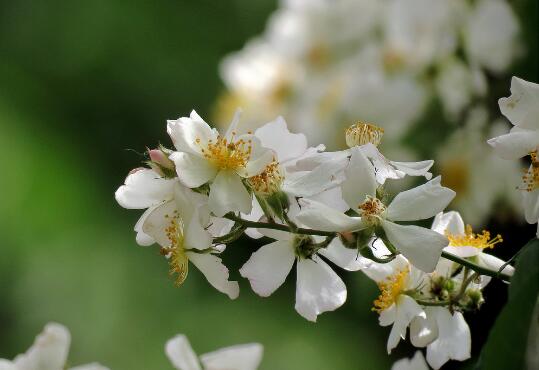
What to Do When the Rosa Rubus Gets Bugs: Pest and Disease Control and Response: 2 Pests, 2 Diseases
In the process of growing Rosa rubus, the last thing we want to encounter is pests and diseases. Such problems are extremely harmful to the plant, not only affecting its ornamental value, but in severe cases even causing the plant to wither and die. So what should you do when the Rosa rubus gets bugs? And how should pest and disease control for Rosa rubus be done?
条件筛选