-

Robinia hispida is a salt-and-alkali-resistant woody flowering plant.
Robinia hispida, also known as Jiangnan locust, is a deciduous shrub in the genus Robinia of the Fabaceae family. Its stems, branchlets, pedicels and petioles all bear red bristly hairs, hence the name Robinia hispida. Its leaves resemble those of black locust (Robinia pseudoacacia), with alternate odd-pinnate compound leaves and broadly elliptical leaflets. The papilionaceous corolla is pink or purplish red. The flowering period is in May, and the pods mostly do not develop. For propagation of Robinia hispida, black locust is commonly used as rootstock for "cleft grafting". Generally, high-branch grafting is chosen. After surviving, it grows very quickly, and the crown spreads outward in an umbrella shape, bearing flowers all over the tree in the second year, which is very beautiful. Artificially, Robinia hispida can be made to bloom twice a year by
-
Breeding and Application of Tianfengyou 269, a High-Yield, High-Quality, Multi-Resistant Hybrid Indica Rice
1 Breeding Process Tianfengyou 269 (formerly named Yanyou 269) is a new high-yield, high-quality, multi-resistant three-line hybrid indica rice combination bred in 2002 by the Institute of Agricultural Sciences of the Coastal Region of Jiangsu, by crossing Tianfeng A, developed by the Guangdong Academy of Agricultural Sciences, with the restorer line Yanhui 269, which was self-bred by our institute. The self-bred restorer line Yanhui 269 was produced in the summer of 1995 by making a cross with Yanhui 559 as the female parent and Yanhui 469 (an intermediate material of our institute) as the male parent, obtaining 26 hybrid seeds, which were brought to Sanya, Hainan in the winter of the same year for planting
-
Honeysuckle: An Excellent Greening Plant That Is Both Medicinal and Pollution-Resistant
Honeysuckle is widely distributed in our country, from Liaoning in the north, Shaanxi in the west, Hunan in the south, to Yunnan and Guizhou in the southwest. It is a woody vine, evergreen, fragrant flower that grows wild in the mountains and is widely cultivated in gardens. In small courtyards, they can climb walls and reach into the air, expanding green coverage; in summer they also bring fragrance throughout the courtyard, which can ease the restlessness of summer heat. Honeysuckle belongs to the genus Lonicera in the family Caprifoliaceae. Its paired, inch-long tubular axillary flowers bloom side by side; when they first open, both stamens and petals are white, as white as jade, and after two or three days they
-
The only standard water-saving and drought-resistant rice variety for the southern rice region has been bred in Shanghai
The Shanghai Academy of Agricultural Sciences announced on the 16th that Shanghai agricultural scientists have bred the only upland rice control variety for regional trials in the southern rice region and the first japonica-type upland rice variety in the southern rice region to pass national approval, and have built China's most complete rice drought-resistance identification and evaluation system and germplasm resource platform. Shanghai has become the country's main base for rice water-saving and drought-resistance research. According to Gu Xiaojun, vice president of the Shanghai Academy of Agricultural Sciences, the "Zhonghan No. 3" bred by scientists here is the first upland rice variety in China's southern rice region to pass national approval, and has been
-
Detailed introduction to the new multi-resistant cotton variety Duokang Wanza 40
The following variety was developed by Anhui Runhe Cotton Industry Co., Ltd. Duokang Wanza 40: this variety improved the parent lines of Wanza 40 into disease-resistant material through disease-nursery screening, then introduced the BT insect-resistance gene, and was bred into the new combination "Duokang Wanza 40". This combination not only maintains the high and stable yield of Wanza 40, but also has excellent traits such as insect resistance, disease resistance and strong stress resistance. Characteristics: the plant of this variety is tower-shaped, relatively compact, with a plant height of 100 cm. The whole growth period is 128 days, belonging to a medium-maturing variety, with medium-sized leaves, dark green leaf color, and bolls
-
Longjing Changye is a high-quality, early-sprouting, cold-resistant new Longjing tea cultivar
"Longjing Changye" is a new green tea cultivar bred by the Tea Research Institute of the Chinese Academy of Agricultural Sciences, with early sprouting, high quality, cold resistance and resistance to pests and diseases. It passed the appraisal of the National Tea Variety Approval Committee in 1994. 1. Quality characteristics: Suitable for making flat-shaped famous premium green tea and bulk green tea, with excellent quality. The Longjing tea made from it has a slender, upright, pointed and flat, smooth appearance, an emerald green color with a slight yellow tint, a prominent, high, fresh aroma, and a fresh, mellow taste. Its biochemical components: spring tea fresh leaves contain 4.1% amino acids and 18.6% tea polyphenols.
-
Detailed Explanation of Key Points for Cold-Resistant Cultivation Techniques of Jujube Trees
Jujube cultivation in Liaoning Province is mainly concentrated in the Chaoyang, Huludao and Jinzhou areas. In recent years, the high price of jujube, especially the high returns from superior new varieties, has driven many growers in many areas to successively introduce and plant on a large scale, but most failed due to freeze damage. New development areas are limited to Dalian and Yingkou, and the varieties are only Pear Jujube, Jinling Round Jujube and the like. Other areas still have scattered courtyard plantings, and mostly with old varieties. To enable better development of jujube production in Liaoning Province, the author believes that attention should be paid to cold-resistant cultivation of jujube. 1 Cold-resistant variety
-
Disease- and pest-resistant japonica rice successfully bred in Jiangsu
A breakthrough has been achieved in the "Breeding of New Multi-Resistant, High-Yield and High-Quality Japonica Rice Varieties" carried out through cooperation between the Bokun Agricultural Research Institute of Yixing City, Jiangsu Province, and the China National Rice Research Institute and other institutions. New high-yield, high-quality japonica rice lines such as 4701 and 4714 have been successfully bred with resistance to brown planthopper, rice blast and other pests and diseases. It is reported that the bred high-yield, high-quality japonica rice lines combine genes for resistance to brown planthopper, white-backed planthopper, rice blast and stripe leaf blight, as well as specific genes for high yield and high quality. Testing has shown that these high-quality japonica rice lines are resistant to brown planthopper,
-
Introduction to Longyuan Sweet Apricot, a New Cold-Resistant Apricot Variety
Longyuan Sweet Apricot is a new cold-resistant variety for fresh eating and kernel use, bred by crossing 79-7-1 (Northern No. 2 plum x Dajie apricot) as the female parent and 79-15-14 (631 apricot x Dajie apricot) as the male parent. In February 2006, it passed the approval of the Heilongjiang Provincial Crop Variety Approval Committee. The fruit is nearly round, with a yellow background color and a red blush on the sunny side. The average single fruit weight is 59.2 g. The largest is 75.5 g. The flesh is orange-yellow, relatively fine and soft, with few fibers and abundant juice. The flavor is sweet and sour, suitable 1:3, containing 13.90% soluble solids. The quality is excellent.
-
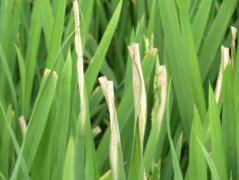
Success in Controlling Rice Bacterial Leaf Blight: Xingda Releases 2 Disease-Resistant Rice Varieties
Rice bacterial leaf blight, be gone! Xingda releases 2 disease-resistant rice varieties. Do you know which two rice varieties they are? Let's take a look. When farmers grow rice, what they fear most is encountering bacterial leaf blight, rice blast and sheath blight. The appearance of these diseases means reduced yields and affected rice qual
条件筛选