-
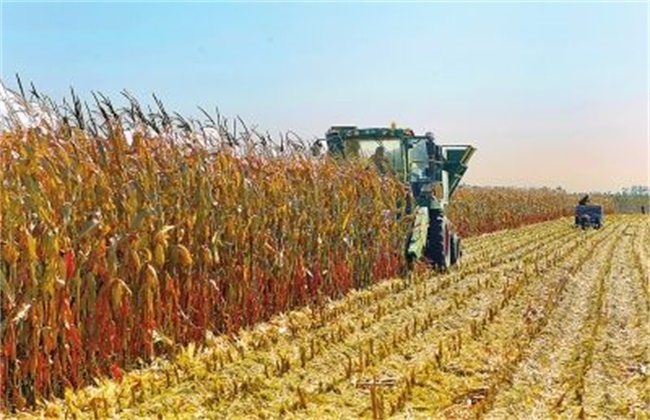
What are the drought-resistant measures for corn in the late growth stage
Drought-resistant measures for corn in the late stage
-

Intercropping insect-resistant cotton with potatoes: both crops can achieve high yields
In recent years, the model of intercropping potatoes with insect-resistant cotton has been welcomed by the people. According to surveys, this model not only enables cotton to achieve high yields (lint yield of 90-100 kg per mu), but also "freely" yields an extra 1500-2000 kg of potatoes per mu. The key cultivation techniques are as follows. I. Potatoes ① Seed selection and sprouting. It is advisable to choose early-maturing, short-stalked, high-yielding virus-free varieties, such as Holland No. 7, Jinyin No. 8, etc., using 80-90 kg of seed potatoes per mu. In mid-February, cut the seed potatoes into pieces (each kg cut into 40-50 pieces) and use a sunny cold frame or greenhouse
-
Rice cancer has met its nemesis: breeding of a disease-resistant new variety succeeds
Since the beginning of this century, rice stripe virus disease has continued to break out over large areas, in severe cases even causing rice farmers to lose their entire harvest. Rice stripe virus disease has been regarded as the "cancer" of rice. "Wuyujing 3", long recognized by the market as the main rice variety with the best taste and quality in Jiangsu Province and surrounding areas, has seen its planting area plummet in recent years because it is highly susceptible to rice stripe virus disease. Some stripe virus-resistant varieties either have shortcomings in yield and yield stability, or have not been fully recognized by the market for their rice quality. Rice farmers
-
How was the disease-resistant, fragrant and soft rice variety Jiuqi Xiang No. 1 bred?
I. Breeding process 1. Parent selection The internationally renowned rice variety Basmati, a superior rare fragrant-soft line obtained by mutation of Basmati original seed through solar radiation at this institute, and Xiangsimiao No. 2 were mixed and used as the male parent, with the conventional short-stalked, high-yielding, good-resistance and widely adaptable Qingzhen No. 8 as the female parent. 2. Progeny selection After a single plant was selected in the late season of 1991, various types of single panicles with medium-short stalks and plant-grain type similar to Xiangsimiao were selected respectively from the segregating materials of the F2 and F3 generations, then multi-generation selection and propagation and single-plant line comparative trials were carried out.
-
Insect-resistant potato bred first by Belarusian scientists
Scientists from the National Academy of Sciences of Belarus have announced a new research achievement: they have bred the world's first potato that can automatically kill pests. According to a report by Russia's Interfax news agency on August 7, to date, a pest known by the scientific name Colorado potato beetle has been the biggest headache for farmers, because it destroys large areas of potato fields every year and causes huge economic losses to agriculture. A new type of genetically modified potato recently bred by Belarusian scientists can specifically poison this beetle to death. A
-
New disease-resistant, high-yield rice variety launched by Bayer CropScience
On May 14, 2008, Bayer CropScience announced the launch in India of ArizeRDhani, the world's first hybrid rice variety resistant to bacterial leaf blight. Compared with conventional varieties, this new variety can increase yields by 20%-30% and provides the crop with strong protection against the highly destructive bacterial leaf blight. "Rice is a staple food in many developing countries and emerging markets. Although global demand for this crop continues to grow, the occurrence of diseases can greatly affect harvests and threaten food supply.
-
Multiple high-yield, multi-resistant, high-quality hybrid japonica rice varieties successfully bred in Tianjin
After several years of research, the Rice Research Institute of the Tianjin Academy of Agricultural Sciences has successfully bred 9 new high-yield, multi-resistant, high-quality hybrid japonica rice varieties. At present, 6 of the new varieties have been designated as nationally approved high-quality hybrid japonica rice varieties, with an annual promotion area of more than 1 million mu, accounting for 20% of the total hybrid japonica rice area in China. It is understood that the Rice Research Institute of the Tianjin Academy of Agricultural Sciences, through independent innovation, successfully solved the worldwide problem of hybrid japonica rice breeding, and was the first in China to establish a hybrid japonica rice breeding technology system and seed production system, raising hybrid seed purity
-
Breeding and Application of Tianfengyou 269, a High-Yield, High-Quality, Multi-Resistant Hybrid Indica Rice
1 Breeding Process Tianfengyou 269 (formerly named Yanyou 269) is a new high-yield, high-quality, multi-resistant three-line hybrid indica rice combination bred in 2002 by the Institute of Agricultural Sciences of the Coastal Region of Jiangsu, by crossing Tianfeng A, developed by the Guangdong Academy of Agricultural Sciences, with the restorer line Yanhui 269, which was self-bred by our institute. The self-bred restorer line Yanhui 269 was produced in the summer of 1995 by making a cross with Yanhui 559 as the female parent and Yanhui 469 (an intermediate material of our institute) as the male parent, obtaining 26 hybrid seeds, which were brought to Sanya, Hainan in the winter of the same year for planting
-
The only standard water-saving and drought-resistant rice variety for the southern rice region has been bred in Shanghai
The Shanghai Academy of Agricultural Sciences announced on the 16th that Shanghai agricultural scientists have bred the only upland rice control variety for regional trials in the southern rice region and the first japonica-type upland rice variety in the southern rice region to pass national approval, and have built China's most complete rice drought-resistance identification and evaluation system and germplasm resource platform. Shanghai has become the country's main base for rice water-saving and drought-resistance research. According to Gu Xiaojun, vice president of the Shanghai Academy of Agricultural Sciences, the "Zhonghan No. 3" bred by scientists here is the first upland rice variety in China's southern rice region to pass national approval, and has been
-
Disease- and pest-resistant japonica rice successfully bred in Jiangsu
A breakthrough has been achieved in the "Breeding of New Multi-Resistant, High-Yield and High-Quality Japonica Rice Varieties" carried out through cooperation between the Bokun Agricultural Research Institute of Yixing City, Jiangsu Province, and the China National Rice Research Institute and other institutions. New high-yield, high-quality japonica rice lines such as 4701 and 4714 have been successfully bred with resistance to brown planthopper, rice blast and other pests and diseases. It is reported that the bred high-yield, high-quality japonica rice lines combine genes for resistance to brown planthopper, white-backed planthopper, rice blast and stripe leaf blight, as well as specific genes for high yield and high quality. Testing has shown that these high-quality japonica rice lines are resistant to brown planthopper,
条件筛选