-
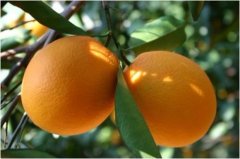
Origin of the orange tree and the characteristics and differences of bitter orange, sweet orange, navel orange and blood orange
The orange tree originally grew in China and was cultivated in Asia for more than 4000 years, and was later introduced by the Arabs to Persia, Egypt, Spain and North Africa. In fact, the word orange was transformed by the Arabs from the Sanskrit nagarunga narandj. Today the orange is already one of
-

Orange Honey Fragrance Cherry Tomato Variety Introduction: Detailed Explanation of Shape and Taste Characteristics
The lovely name of the Orange Fragrance Honey Cherry Tomato variety: orange, fragrance, honey, explains that it possesses the charming qualities of beautiful color, fragrant fruit, and sweet deliciousness - color, aroma, and taste all in one! The external appearance of the Orange Honey Fragrance Cherry Tomato. The Orange Honey Fragrance Cherry Tomato is also known as the Orange Honey Cherry Tomato or Clear Honey Cherry Tomato, orange
-
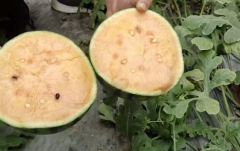
Introducing the Characteristics of New Orange-Fleshed Watermelon Varieties and Their Carotene Content
Do you like eating watermelon? There are more and more new open-field watermelon varieties on the market now, and many different watermelons are being sold. Previously there were golden watermelons with two flesh colors, and now there is the carrot watermelon. The carrot watermelon is called by this name because
-
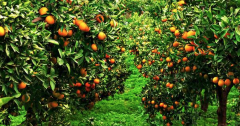
Introduction to Common Types of Oranges, Their Seasons, and Nutritional Value
Oranges (orange, 40 kcal (cal) per 100 grams) are said to have been introduced to the mainland from central India, and then brought to Taiwan, China via the mainland. They have now become one of the main fruit tree industries in Taiwan, China, and have also become the most popular fruit for festivals and holidays. Difference between red-fleshed oranges and yellow-fleshed oranges. That's enough.
-
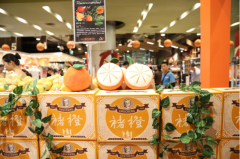
Chu Orange's listing plan postponed by one year: can a fruit-growing company successfully land on the capital market?
Recently, according to a report by The Paper, Chu Yibin, general manager of Chu's Agriculture, the company behind Chu Orange, revealed the company's listing ideas and plans at a press conference. According to Chu Yibin, 4 advisory institutions have already moved in, but due to the impact of the epidemic, the listing plan will be delayed by one year
-

A Detailed Explanation of the Key Points of Year-Round Cultivation and Management Techniques for Mandarin Oranges
Mandarin orange is a famous and high-quality variety of citrus, with high nutritional value, and coupled with its sweet-and-sour taste, it is much loved by people. It is also one of the citrus varieties with stable and high yields; generally, planting for 3 years can bear fruit, and after 5 years it enters the full production period. So, mandarin orange cultivation techniques
-
How Long Does It Take for an Orange Tree to Bear Fruit from Planting? Plus Courtyard Planting Techniques
The orange tree is an evergreen tree with few or nearly no thorns on its branches. It is planted in various places and is mostly propagated by grafting. So how long does it take for an orange tree to bear fruit from planting? Can it be planted in a courtyard? What are the planting techniques? 1. How long does it take for an orange tree to bear fruit from planting
-
What Are the Prospects for Growing Jinqiu Shatang Mandarin? Key Points of Cultivation Techniques Explained
Shatang mandarin is a very popular fruit, delicious and extremely sweet, seedless, with a delicate texture and rich in nutrients, and it is widely welcomed by the market. So how does growing Jinqiu Shatang mandarin fare? What are the cultivation techniques? 1. How does growing Jinqiu Shatang mandarin fare?
-
Why do free-range chickens need fine sand spread for them and why do they eat sand?
As life gets better and better, there are more and more ways to raise chickens, but cage rearing and net rearing are still not as good as free-range chicken farming. However, raising free-range chickens requires spreading a layer of fine sand. Why do free-range chickens need fine sand spread for them? What is the purpose of the fine sand? 1. Why
-
What Are the Prospects for Ehime Orange Cultivation in 2020? With Detailed Cultivation Techniques
Ehime orange is a hybrid citrus variety introduced from Japan. Because of its tender, melting flesh and refreshing fragrance, it is loved by a large number of consumers, and it is also called "jelly orange" since it tastes just like jelly. So what are the prospects for cultivating Ehime oranges in 2020? 1.
条件筛选