-

How should watering times for flowers in winter be arranged more reasonably?
Many flowers need less watering in winter, and many flower lovers cannot get the timing of winter watering right. This article briefly introduces the timing of watering flowers in winter, for the reference of flower lovers. First, flower lovers should know not to water flowers too much in winter, because water evaporation is low in winter
-
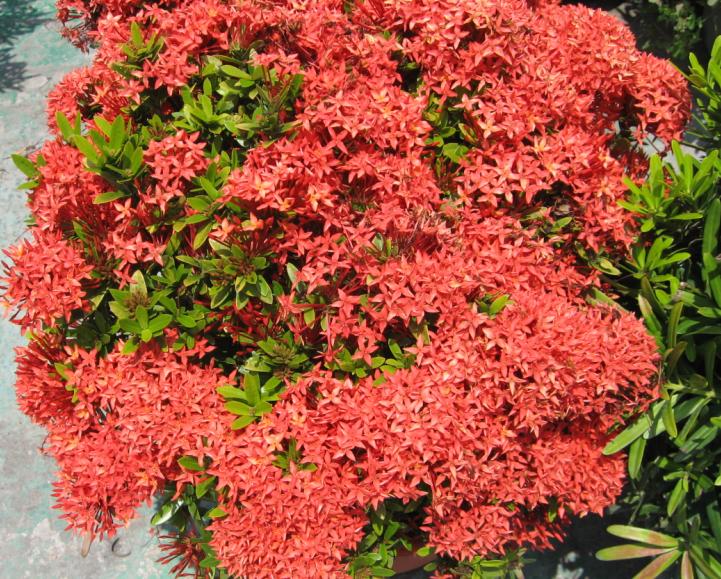
How to grow Chinese ixora (red hydrangea)? Cultivation methods and precautions
Chinese ixora is a common woody flowering plant; it can be found in parks, courtyards and other green spaces. Although the flowers of Chinese ixora are not large, they win by sheer quantity. Regardless of the variety or flower color, when in full bloom you see only round clusters of flowers hanging on the branches, with the leaves almost entirely submerged in a sea of flowers. Chinese ixora is native to tropical Asia
-

Taichung Flora Expo Flower Wishing Bridge invites the public to arrange flowers every weekend in January
Autumn and winter are the blooming season for lilies and dancing-lady orchids. To promote local flowers, the Taichung City Agriculture Bureau, starting yesterday (the 1st) for four consecutive days, is not only displaying floral art in the atrium of the Huizhong Building of the City Hall, but has also planned the second-floor sky bridge of the Lenong Hall in the Waipu area of the Flora Expo as a "..."
-

What are the methods for repotting and pruning hydrangea?
Potted hydrangeas generally need to be repotted and have their soil changed once a year. Repotting and soil changing are best done in early March. The new soil is prepared in a ratio of 4 parts leaf mold, 4 parts garden soil and 2 parts sandy soil, with an appropriate amount of decomposed cake fertilizer added as a base fertilizer. When changing pots, the plant's root system should be pruned, cutting off rotten roots, decayed roots and overly long root fibers.
-

How to raise ecological free-range chickens? Master these 6 key breeding points
1. Choosing a site: Generally, choose woodland, tea gardens, orchards and hillside land. For woodland, natural forest is the best, and artificial economic forest is second only to natural forest. Hillside land requires a gentle slope, shelter from the wind and facing the sun, and a sufficient water source. The surroundings of the chicken farm must have no major pollution sources, and must be more than 1 km away from residential areas, hospitals and slaughterhouses. 2. Selecting good breeds: Dual-purpose chicken breeds for both eggs and meat, male chicks of layer breeds, and rural free-range chickens can all be used as ecological chicken breeds. 3. Preparing feed: The feed for raising ecological chickens must
-
Tea Farmers' August Tea Garden Farming Management Arrangement Guide
August brings hot weather, which favors the occurrence of pests and diseases. At present, the focus of tea farming is the prevention, rescue and pest and disease control of drought and heat damage in tea gardens. Prevention and rescue of drought and heat damage. Under attack by high temperature and drought, tea trees will show symptoms of drought and heat damage such as scorched spots, scorched leaves, and shrinkage of terminal buds and young stems after about 8~10 days, especially in young tea gardens, where it is more serious. Prevention measures: First, timely hoeing and cultivation. Timely weeding can reduce evaporation of surface soil moisture and is an effective measure to prevent drought. Production practice has proved that before hot weather begins, if drought is likely to occur, weeds should be hoed and the soil loosened immediately when the weather improves after rain. Never do this during a drought period, causing tea trees (especially young ones) to suddenly be exposed to the sun and die. Second, mulching with grass. Spread grass on both sides of the tea trees to lower ground temperature, keep the soil moist, store water, and suppress weeds. This is a good way to prevent drought and retain water. Rescue measures: For tea trees that have already suffered drought and heat damage, active rescue measures should be taken. For example, for the dead branches and dry leaves of damaged tea trees, after the drought disappears, pruning of varying degrees should be carried out according to the degree of damage. Apply quick-acting nitrogen fertilizer and potassium fertilizer in a timely manner to cultivate autumn shoots and restore the vitality of the tea trees.
-

How to manage navel oranges during the fruit expansion period? Key technical points explained in detail
How should navel oranges be managed during the fruit expansion period
-
What is the suitable water temperature range for mud carp to grow?
Mud carp has high requirements for the water temperature of its living environment. The optimal temperature required for reproduction is 26-30°C, and the optimal temperature for feeding is 14.6-29.4°C, at which mud carp has a strong appetite. If the water temperature is too high or too low, the feeding intensity will decrease. Mud carp has poor cold resistance, and when the water temperature drops to 6-7°C, it will die in large numbers. Therefore, overwintering and heat preservation measures must be taken when farming mud carp, and the areas where mud carp can be farmed are limited by temperature.
-
Method for trial-producing rutaceous tea from mandarin orange flowers
Mandarin orange flowers contain sugars such as fructose and glucose that aid digestion and promote health; phosphorus, which has a stimulating effect on the nerves; multiple vitamins that resist capillary fragility; large amounts of rutin and aromatic oils that soothe the liver and purge the lungs and help regulate qi and resolve phlegm, as well as starch and other substances, making them highly nutritious. At the Shili orange orchard in Liangshitang, Shaodong County, we watched as nearly 300 dan of flowers removed from more than 100,000 young Wenzhou mandarin orange trees not yet intended for production were wasted for nothing, which was truly a pity. After repeated trials, we roughly produced some "rutaceous tea." "Rutaceous tea" is simple to make. Take 9 parts tea leaves
-
Processing Methods and Technical Points for Mandarin Orange Peel Food Products
Mandarin orange peel accounts for about 20% of the total weight of the fruit. In China at present, aside from a small amount used as traditional Chinese medicine, dried tangerine peel, and for extracting essential oils, most of it has not yet been utilized. In fact, mandarin orange peel contains large amounts of vitamin C, carotene, protein, sugars and various trace elements that are beneficial to human health, has high nutritional value, and can be processed into many kinds of health foods or food ingredients, making it an important food resource. Orange peel jam: take mold-free orange peel, wash clean, soak in clean water, then remove and drain, chop and put into a pot with water to soak, bring to a boil over high heat, then switch to low heat
条件筛选