-
How to Prune a Jade Plant: A Detailed Guide to Pruning Methods
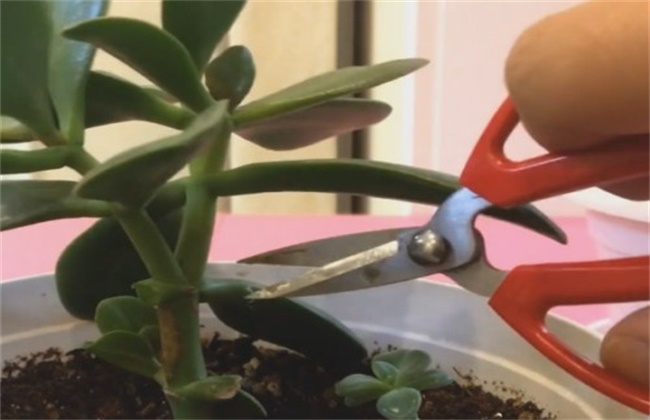
How Should a Jade Plant Be Pruned? Pruning Methods for Jade Plants
-
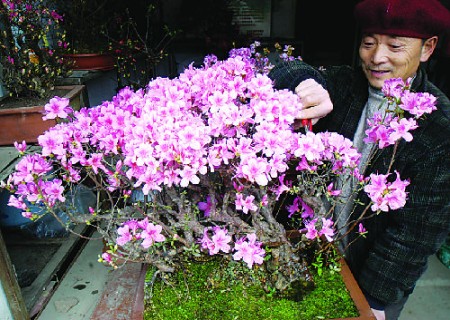
A Detailed Guide to Post-Bloom Pruning and Flowering Regulation Methods for Azaleas
Early summer is the best season to admire azaleas, as the flowers of all their varieties are blooming in competition. If you also keep potted azaleas on your balcony, then while enjoying the flowers in this season you need to do a good job of rain protection, because azaleas should avoid rain during their flowering period
-

Pinching and Pruning Methods for Cut-Flower Carnations
1. Pinching Techniques for Cut-Flower Carnations The purpose of pinching cut-flower carnations is to increase the number of branches, raise the flower yield per plant, regulate the flowering period, and ensure a balanced, timely supply of flowers. (1) Pinching time The first pinching of carnations is generally carried out about 30 days after planting, when the main stem of the seedling has 6 to 7 pairs of leaves unfolded. When the main stem has 5 to 6 nodes, the apical growing point is removed; depending on the branching characteristics of different cultivars, 1 to 2 nodes more or fewer may be retained as appropriate, and cultivars that branch poorly may be left with higher nodes.
-
Pruning Methods and Key Technical Points for Jasmine
In southern China, jasmine grown under normal cultivation conditions sprouts 6-8 batches of new branches each year. As the branches grow older, they continuously increase in number, grow taller, and gradually age. Branches that are too old and too long hinder the transport of water and nutrients, and plants that are too tall also affect field work such as flower picking. Pruning is an important production technique for rationally adjusting the layout of branches and leaves and promoting robust plant growth. The most important pruning task of the year is spring pruning. In Hengxian, Guangxi, jasmine branches
-
Boxwood Ball Shaping and Pruning Methods and Techniques
The following content guides nursery growers on how to prune a potted boxwood into a ball about 30 cm tall. Boxwood planted in the ground can also be pruned using the same method. Materials needed: 1 unpruned potted common boxwood (Buxus sempervirens), about 45 cm in height and circumference, growing densely and evenly. Sharp pruning shears. Pruning method: 1. In early summer, place the potted boxwood in a spot with plenty of light. 2. Carefully observe and estimate how many times you need to prune to get a boxwood about 30 cm
-
Pruning Methods and Trimming Techniques for Azaleas
The best time to prune azaleas is after the flowers fade. The reason is that azaleas bloom first and grow leaves afterward; they already consume a large amount of nutrients when flowering, and after the flowers fade they send out new branches and grow new leaves, which consumes even more nutrients. At this time, insufficient nutrient supply often results in few new branches and weakened growth. Pruning after flowering greatly reduces the plant's nutrient consumption, giving it a period of rest to store up nutrients so it can grow vigorously later. In addition, all plants show apical dominance; when the branch tip is cut off, it loses apical dominance,
-
Detailed Pruning Methods for Bamboo Bonsai
During the growing season, the bamboo (Bambusa multiplex) will continuously send up tender culms from the root zone. If any become too tall and disrupt the overall composition, the excessively tall portions can be cut away. Bamboo bonsai places great emphasis on posture and spirit; its branches and culms must have both upright and cascading forms, with a balance of density and openness and a pleasing variation in height. When there are too many stems, the plant takes on a dense, suffocating look that detracts from the bonsai's ornamental effect, so the crowded branches and culms should be thinned according to the growth situation, with particular attention paid to cutting out the weak, declining culms.
-
Privet Tree Shaping and Pruning Methods and Key Technical Points
1. Transplant pruning: When transplanting in the nursery, the trunk should be cut back by 1/3. Below the cut, only one strong bud should be selected and kept to develop into the trunk extension shoot; the other bud opposite it must be removed. To prevent the formation of competing shoots at the top, the 1st to 2nd pairs of buds below the cut should also be destroyed. 2. Planting pruning: Before planting, cut back the 1-year-old extension shoot of the central trunk of large saplings by 1/3, keep a strong bud at the cut bud, and at the same time remove 1 bud from the first pair of buds below the cut to ensure the apical dominance of the selected bud. To prevent the formation of competing
-
Pruning Methods and Technical Key Points for Cut Rose
Roses (Rosa spp.) are deciduous or evergreen shrubs of the Rosaceae family, with large, abundant blooms, graceful flower forms, rich colors, and varied fragrances, making them deeply loved by people and one of the four major cut flowers on the international market today. Roses grow and bloom continuously throughout the year, consuming large amounts of nutrients within the plant. If allowed to grow naturally, old branches will quickly die back. To prevent roses from aging, extend the peak flowering period, and harvest large quantities of high-quality cut flowers, it is essential to regulate them through training and pruning. Through pruning, main branches and flower branches can be developed, tree vigor can be regulated, and ventilation and light conditions can be improved.
-
Detailed Explanation of Azalea Shaping and Pruning Methods and Techniques
Q: How should azaleas be shaped and pruned? A: Azaleas have a very strong ability to sprout and send out branches, so pruning is necessary to regulate and control the distribution of nutrients within the plant, so that it grows vigorously, forms a reasonable and beautiful tree shape, and can bloom abundantly with bright, vivid colors. During the seedling stage, the main pruning method is pinching, that is, pinching the current year's branches when they grow to 4 or 5 cm, in order to encourage branching. After pinching, 2 or 3 lateral buds will sprout from the upper end of the remaining branch. In this way, through 2 or 3 years of cultivation, a good
条件筛选