-

Detailed Guide to Loofah Cultivation, Pruning Techniques and Planting Seasons
Organic Loofah and Angled Loofah Cultivation and Management Techniques Loofah planting season: Loofah is a vegetable variety that can be planted in all four seasons, and its requirements for season are not strict, but it does have certain requirements for planting time. Note that loofah should not be planted during the transition between seasons, so it is generally started around February in spring or in late May in summer, in early September for autumn, and for winter it is not recommended to plant.
-

How to grow kalanchoe so it bursts with blooms? A full guide to pruning and care techniques
Kalanchoe, just hearing the name makes us wonder how long this flower can live, why it is called kalanchoe, and is it really because this flower is long-lived? This flower is loved by many gardening enthusiasts, and generally in a gardening enthusiast's home, a pot of kalanchoe will be planted, so how do you grow it so that the kalanchoe bursts with blooms?
-
Sann Yueh Hong Lychee Cultivation Management Techniques, Pruning and Training Tips, and Pest and Disease Control
The trunk of the Sann Yueh Hong lychee is smooth and grayish-brown, with thick, relatively sparse branches and brittle wood. The leaves are smooth, leathery, dark green on the surface, and new shoots are dark reddish-brown. The flower panicles are thick and short, with reddish-brown branches. The fruit is oval or lopsided-heart-shaped, with dark red, relatively thick and crisp skin, and flat tubercles.
-
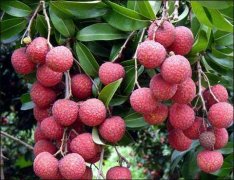
Detailed Guide to Lychee Pruning Techniques: How to Prune and Control Winter Shoot Growth
Lychee Cultivation Techniques: What does the basic framework pruning of a lychee tree look like, and how should it be pruned for better results? Would you like to find out? Then let us take a look together! Basic Framework Pruning. The framework of a lychee tree consists of the trunk, main branches, sub-main branches and lateral branches. At 50 cm above the ground on the trunk, begin to train 3~4 main branches, with the main branches forming an angle of about 80 degrees to the horizontal. On each main branch, train 2~3 sub-main branches; the sub-main branches should be attached at an angle of about 10~20 degrees to the horizontal, and the distance between sub-main branches should preferably be about 50 cm. Sub-main branches on different main branches should not cross each other, and sub-main branches on the same main branch should not be retained in the same direction. On each sub-main branch, train 3 lateral branches.
-
What are the spring pruning and fertilizing methods for Rhodiola?
Rhodiola is a widely used medicinal herb with beauty and skin-care effects. It can be used as a skin-care product and can also be eaten, so it is loved by many women. Spring is the season for pruning and fertilizing Rhodiola, so what are the spring pruning methods for Rhodiola?
-
When to Prune the Sichuan Pepper Tree? A Detailed Guide to Pruning Techniques
The Sichuan pepper tree is a widely planted plant that is very drought-tolerant and loves sunlight. Its seeds, Sichuan peppercorns, can not only be used as a seasoning but also as medicine, with effects such as dispelling cold and killing parasites. During the cultivation of Sichuan pepper trees, pruning is often needed to increase yield.
-
Detailed Explanation of the Correct Methods and Techniques for Pruning Branches
Whether fruit trees, landscaping trees, or bonsai, they need to be pruned after growing for a certain period of time to improve their ornamental value and fruiting rate. So what are the methods for pruning branches? 1. What are the methods for pruning branches? 1. Twisting shoots is done at the semi-lignified part of a relatively vigorous upright new shoot, twisting it by hand so that the xylem and phloem are both injured at the same time without breaking. The injured new shoot droops or is pulled flat. Generally, when the new shoot is about 30 cm long, twist the young shoot at a point 15 cm from the base. Twisting shoots can transform vigorous water sprouts into fruiting branches, improve light conditions, moderate tree vigor, and prevent excessive vegetative growth.
-
A Detailed Explanation of Shaping and Pruning Methods and Key Technical Points
Whether saplings or bouquets, once they have grown to a certain extent, they must be pruned to improve their ornamental value and growth vigor. So what are the shaping and pruning methods? 1. Thinning refers to cutting branches off from the base. Thinning can remove diseased and pest-infested branches, dead and dry branches, useless water sprouts, overly dense crossing branches, and branches that conflict with municipal facilities. Thinning can improve ventilation and light conditions, enhance leaf photosynthetic efficiency, increase nutrient accumulation, and benefit growth and flower bud differentiation. Thinning weakens the overall growth vigor of the whole tree; the growth vigor of branches above the wound is relatively weakened, but the growth vigor of branches below the wound is relatively enhanced. This is the so-called "suppress the top and promote the bottom" effect.
-
Pruning Methods and Technical Points for Young Navel Orange Trees
Pruning navel orange trees is one of the important techniques in citrus cultivation. It is also the most effective method for shaping fruit trees to promote high citrus yields and improve fruit quality. It can also encourage the tree to form a high-yielding structure, allowing good ventilation and light penetration through the canopy, reducing pests and diseases, and enabling the production of premium quality fruit.
-
A Detailed Guide to the Pruning Methods and Key Techniques for Chicken-Heart Fruit
Chicken-heart fruit is a plant in the family Stemonuraceae (formerly placed in Icacinaceae) and the genus Platea, generally growing in forests, villages, grasslands and other areas at altitudes of 1150-1770 m, so what are the pruning methods for chicken-heart fruit? 1. Growth habits of chicken-heart fruit. Chicken-heart fruit is also called manban tree, narrow-calyx pouch fruit, etc.
条件筛选