-

"Rural Vision" Episode 1 Lin Sheng-feng: For Taiwan to progress, the focus at this time should be on rural areas
"Rural Vision" 01 | Lin Sheng-feng: If Taiwan is to become a progressive country, the focus at this time should be on rural areas
-

The fourth benefit of ginkgo leaves: it can slow the progression of diabetes
In recent years, many patients have developed diabetes, and what causes patients the most suffering is not the symptoms of the disease itself, but the complications caused by diabetes. The components in ginkgo leaf extract can protect nerve cells, preventing them from cell hypoxia and necrosis caused by poor blood circulation. Although ginkgo leaf tablets are a very good health product
-
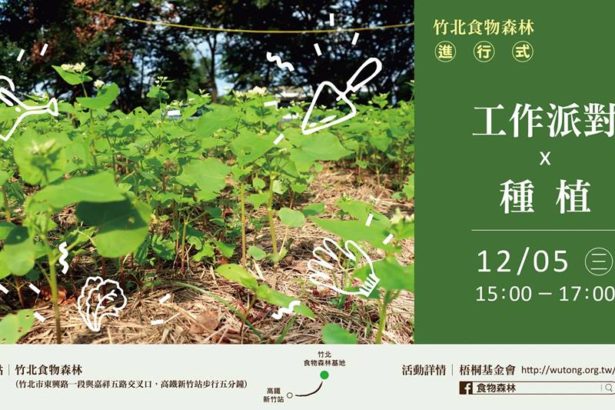
Zhubei Food Forest in Progress: Work Party Planting Together
[Zhubei Food Forest in Progress] Work Party x Planting
-
Research progress on the mechanisms by which porcine circovirus type 2 infection causes immunosuppression
Circovirus infection is a newly discovered infectious disease. The disease has a relatively high infection rate in pigs and occurs widely throughout the world, having become one of the infectious diseases that seriously affect the development of the pig industry. Circovirus mainly attacks the pig immune system, interfering with and destroying the body's production and maintenance of immune antibodies against disease, resulting in reduced resistance and making pigs susceptible to secondary or concurrent other diseases. In recent years, scholars at home and abroad have conducted a great deal of research on the mechanisms by which porcine circovirus invades the immune system, and certain progress has been made in the virus replication mechanism, its effects on cytokines and lymph
-
Overview of Research Progress and Current Utilization of Propolis
Propolis is a resinous substance collected by honeybees from tree buds, bark and other parts of plants, mixed with secretions from the bees' hypopharyngeal glands, wax glands and other glands, and processed and transformed by the bees. Propolis is an opaque solid, brown, reddish-brown or grayish-brown in color, sometimes with a greenish tinge, and in a few cases nearly black. Natural fresh propolis has a resinous fragrance and is sticky and malleable. It begins to soften at 36°C, becomes hard and brittle and can be pulverized at 15°C, and melts into a viscous liquid at 60-70°C. Propolis is a resinous substance, highly soluble in ether, chloroform, acetone,
-
Smooth progress in the application of the cotton "two-ization" technology
The cotton factory seedling raising and mechanized transplanting technology (abbreviated as the "two-ization" technology) has the characteristics of modern agriculture. It is an intensive and large-scale production technology, and also a resource-saving and environmentally friendly technology. Its core technologies are substrate seedling raising and bare-seedling transplanting. It passed appraisal by the Ministry of Agriculture in 2004 (Ministry of Agriculture achievement registration number: Nongkeguojianzi [2004] No. 0056), ranks at the international leading level among research of the same kind, has obtained multiple national invention patents, has achieved productization and serialization of the technology, entered production demonstration last year, and this
-
Latest Research Progress on Porcine High Fever Syndrome
The "high fever syndrome" that first broke out in southern China in the summer of 2006 has not yet subsided, and it is currently the issue of greatest concern to us pig farmers. Some readers have also called our editorial office to inquire about research progress on the disease! At the "Beijing Animal Husbandry Association Pig Industry Annual Meeting", Academician Chen Huanchun of Huazhong Agricultural University and Professor Yang Hanchun of China Agricultural University were invited to each express their personal views on the currently prevalent "high fever syndrome". 1 Epidemic situation First, geographically
-
Research and Development Progress of Functional Rice and Its Food Products
Functional rice refers to rice products that regulate human physiological functions, are suitable for consumption by the general population, and are not intended for the treatment of diseases. In addition to containing the seven major nutrients necessary for human growth and development - protein, fat, carbohydrates, vitamins, minerals, water and fiber - functional rice also contains certain special components that regulate and balance human physiological functions. It can enhance physiological defense mechanisms, prevent specific diseases, delay aging, and control physical strength and energy status. 1. Processing of functional rice
-
Review of Research Progress on Pig Disease-Resistance Breeding Technology
High-yield objectives usually lead to reduced pig resistance. At the same time, pig farm diseases, especially viral infectious diseases, severely threaten pig health. Although vaccination has played an important preventive and control role, it has not been able to completely control and eliminate the prevalence of infectious diseases. In the long run, adopting genetic methods to improve pigs' resistance to pathogens at the genetic level, and carrying out disease-resistance breeding, has a fundamental effect. In the 1930s, some scholars reported that different chicken breeds differed in susceptibility to Marek's disease, and in the subsequent
-
Detailed Explanation of Research Progress on Low-Pollution Pig Diet Technology
[Abstract] Maximizing the production performance of each pig has always been a common goal pursued by producers and nutritionists. Therefore, general diet formulation gives little or no consideration to nutrient excretion, resulting in excessive nutrients (mainly nitrogen and phosphorus) being excreted with feces and urine. In recent years, public concern for the environment has grown increasingly strong. Through nutritional technology, improving the feed conversion efficiency of pigs and reducing waste (feces and urine) has become a hot topic in current swine science and nutrition research. By supplementing synthetic amino acids,
条件筛选