-

Detailed explanation of the production process for canned braised fish: Methods for making seasoned aquatic canned products
The processing of canned braised fish mainly adopts the braising technique characteristic of Chinese cooking. The fish pieces may first be fried and then canned with seasoning liquid poured in; or dehydrated and then canned with seasoning liquid poured in; or directly packed raw and then filled with seasoning liquid; or the fish pieces may be braised and roasted together with the seasoning liquid, then canned and an appropriate amount of seasoning liquid poured in, etc. Depending on the cooking method, the product name also differs. Examples include crispy, braised, and oil-braised. The finished product generally has a relatively large amount of broth, a deep red color, and the flavor of braised fish. Common varieties include canned braised chub mackerel, canned braised common carp, canned braised mixed fish, crispy yellow croaker,
-
Detailed Explanation of Mulberry Leaf Tea Production Techniques and Processing Steps
According to experts at the Japanese Institute of Health, mulberry leaves contain 17 amino acids, as well as fats, vitamin C, B1, B2, folic acid, carotene, calcium, phosphorus, iron, manganese, sodium, and more. These nutrients are at their highest levels in mulberry leaves after the first frost. Mulberry leaf tea is a natural health product for maintaining health and strengthening the body, and is especially suitable for long-term drinking by patients with diabetes and high blood pressure. Its production process is as follows: Leaf picking and handling. It is best to pick leaves from the middle and upper parts of late-autumn mulberry trees that are free of pollution, pests, and diseases. In the Qian'an area of Hebei, mid-September is
-
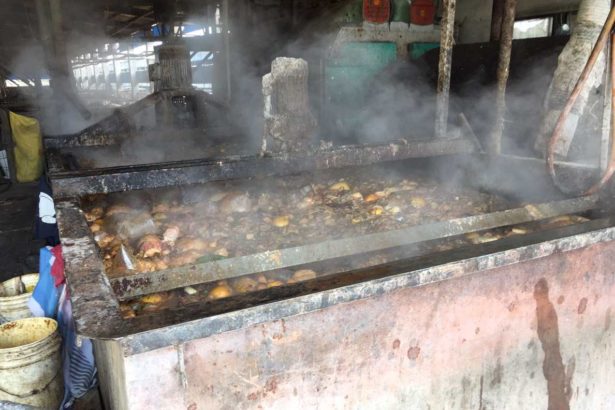
Comprehensive Inventory of Kitchen Waste Production and Disposal Capacity in Yunlin and Pingtung, and Epidemic-Prevention Kitchen Waste Processing
The Battle of Epidemic Prevention and Kitchen Waste 07"(Yunlin and Pingtung) Taiwan-wide Comprehensive Inventory of Kitchen Waste Production and Disposal Capacity (Yunlin and Pingtung)
-
Full detailed guide to the production process of Sichuan pepper oil
Production method 1. Cleaning and selection: The Sichuan pepper seeds are cleaned by screening, the Sichuan pepper stems and other impurities are removed, then they are roasted in a household rice cooker over heat until they taste fragrant and are not burnt. 2. Crushing: After roasting, the Sichuan pepper seeds are crushed with a stone roller or stone mortar until they become powder (the finer the particles, the better). 3. Boiling the oil: Place the roasted and crushed black powder into a pot of boiling water, then immediately stir it with an iron shovel or wooden stick (about 2.5 kg of water to 1 kg of cooked fine Sichuan pepper seed powder). At the same time, continue heating over low heat and keep it warm for about 1 hour, so that most of the
-

Large volumes of dragon fruit but no production-sales imbalance; Council of Agriculture promotes pizza and dessert processing to add value
Council of Agriculture: dragon fruit volumes are high but there is no production-sales imbalance; creative processing into pizza and soft-filled desserts boosts value
-
What problems exist in the production process of creep feed?
Let's discuss the problems in the production process of creep feed.
-
Detailed Explanation of the Production Process for Canned Small Fish
Small fish are found in enormous quantities in rivers, streams, lakes and ponds. Under traditional processing methods, they are mostly used for feed processing or eaten fresh. Used as feed, this results in a waste of resources; eaten fresh, consumption is not large due to seasonal influences and differences in people's dietary habits. Made into canned products, however, they have enormous potential and broad market prospects. 1. Raw material requirements and handling: Select small fish with intact bodies, normal odor, elastic flesh and good freshness. Squeeze out the internal organs of the small fish completely, rinse thoroughly, ensure no internal organs remain, and wash off the small scales as much as possible.
-
Production Techniques and Processing Methods for Mushroom Beverages
1. Ingredients: 420 g of cull mushrooms or dried mushroom stems, 150 g of milk powder, 160 g of white sugar, 50 g of glucose, 46 g of citric acid, 2 g of sorbic acid, 0.5 g of the food colouring carmine, 2 mL of food flavouring, and 10 L of purified water. 2. Preparation: (1) Wash the cull mushrooms and mushroom stems from the mushroom production and processing stages in a 0.05% sodium sulfite solution to remove mud, sand and impurities, then remove them. Soak them in a 0.1% sodium sulfite solution to preserve colour, then rinse with water, and then sun-dry or oven-dry.
-
Detailed Explanation of the Development Method and Production Process of Oyster Mushroom Yogurt
Oyster mushroom is an edible fungus that is easy to cultivate, has high yield, and is deeply loved by the general public. Oyster mushroom has tender flesh, a delicious taste, and rich nutrition. Every 100g of dried mushroom contains 23-28g of protein and 1.42-2.87g of fat; the protein contains 18 kinds of amino acids, and the 8 essential amino acids for the human body and 2 semi-essential amino acids (arginine, histidine) account for about 40-50% of the total amino acid content. It also contains trace elements such as phosphorus, potassium, iron, zinc, and copper, as well as rich Vc. Oyster mushroom has very high medicinal value
-
Production Process and Detailed Steps for Making Soy-Sauce Garlic
Garlic is the bulb of plants in the genus Allium of the lily family (commonly known as "garlic head"). Every 100 grams of fresh garlic contains 4.4 grams of protein, 0.2 grams of fat, 23 grams of carbohydrates, 0.2 grams of crude fiber, 1.3 grams of ash, and 70 grams of water, and also contains calcium, iron, phosphorus, thiamine, riboflavin, nicotinic acid, ascorbic acid, and selenium, among others. In addition, garlic also contains substances that kill bacteria, treat disease, promote health, and prevent cancer, and has relatively high physiological and medicinal value. When garlic is used to prevent and treat disease, it is mostly effective only when eaten raw, but after a brief dormancy garlic does not store well,
条件筛选