Large volumes of dragon fruit but no production-sales imbalance; Council of Agriculture promotes pizza and dessert processing to add value
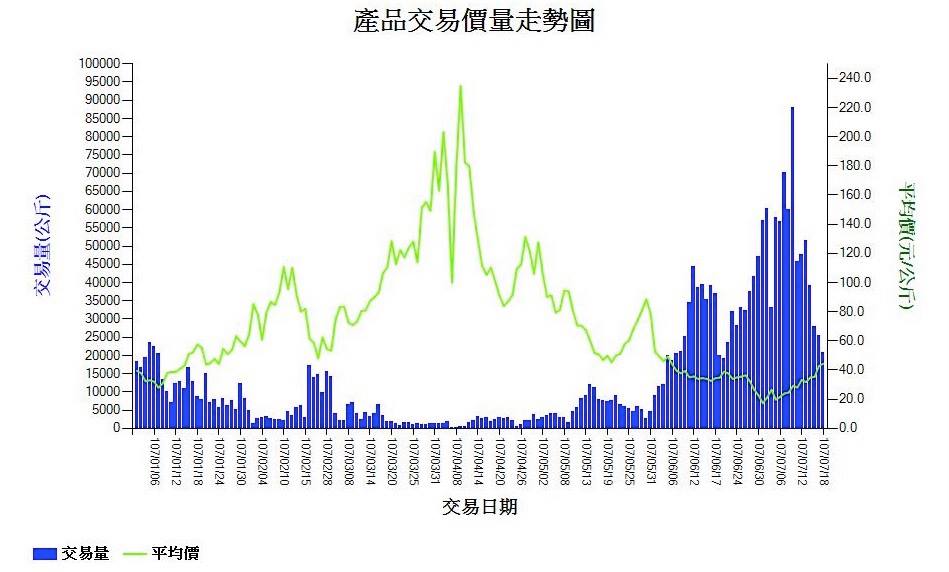
In response to outside views that red dragon fruit will be the next fruit to crash, Chen Chi-chung, deputy minister of the Council of Agriculture, said bluntly, "There is simply no problem of production-sales imbalance." Although there was a downward trend in early July, the current price at the Taipei Fruit and Vegetable Wholesale Market is 42 yuan per kg, and top-grade fruit can even reach more than 100 yuan. However, faced with an 8% increase in red dragon fruit production this year, the Council of Agriculture is also guiding processing businesses to purchase medium and small fruit to make dried fruit, fruit filling, jam, juice, cakes and pastries, and more.
Chen Chi-chung: red dragon fruit volumes are high but there is no production-sales imbalance; high-quality red dragon fruit still commands high prices
At a press conference today (the 18th), Chen Chi-chung pointed out that the planted area of red dragon fruit has increased from 1,100 hectares five years ago to 2,800 hectares now; production has also risen from less than 30,000 metric tons five years ago to more than 71,000 metric tons now. Chen stressed that even with increased production, there is no problem of production-sales imbalance, and high-quality red dragon fruit all sells for more than 100 yuan per kg. Some low-priced red dragon fruit is low-priced because heavy rain affected quality. Looking at prices at the Taipei Fruit and Vegetable Wholesale Market, prices have gradually stabilised, reaching 42 yuan per kg, and top-grade and medium-grade fruit account for more than 70%.
Agriculture and Food Agency: 2,000 tons of dragon fruit to be processed within half a year
"The goal is to process 2,000 tons of red dragon fruit within half a year." Hu Chung-yi, director-general of the Agriculture and Food Agency, said that although these red dragon fruit products are not yet on the market, future sales will be very large, such as cakes and pastries, popsicles, and fruit crisps. After they are launched, there may not even be enough red dragon fruit for processors to use.
Hu stressed that with increased production this year, prices will naturally fall, but processing extends the shelf life from one or two weeks for fresh eating to half a year or a year for processed foods. "We are confident we can maintain prices."
However, in response to outside views that many kinds of fruit have already reached the upper limit of planted area, Hu explained that farmers follow price increases and invest in planting. In the future, the hope is to establish an agricultural production and sales information platform so that both producers and consumers understand production conditions, prices, and more. Next, they will also actively guide farmers to switch to different crops, or use new varieties to adjust the production period, so that prices can stabilise.