-

Current Status, Existing Problems and Future Development Directions of Sericulture in Guizhou
1 Current Status of Development As a traditional export industry of China, the cocoon and silk industry, since entering the "10th Five-Year Plan" period, has adhered to a market-oriented approach, taken development as its theme, and relied on reform, opening up and scientific and technological progress as its driving forces. By comprehensively applying the state's reform and development policies, strengthening macro-control, and intensifying structural adjustment, it has effectively overcome the phenomenon of "drastic fluctuations," enabling the entire industry to emerge from the trough and basically maintain sustained and steady development. The quality of economic operation has improved markedly, with production capacity, efficiency and export earnings surpassing the best historical years. "Chinese silk
-
Analysis of the Current Status and Existing Problems of Upland Rice Production
Upland rice, also known as dryland rice, is a type of cultivated rice with strong drought resistance, tolerance to poor soil, and suitability for dryland direct seeding and dryland management. It can be planted in any soil suitable for growing major dryland grain crops such as wheat and corn. It does not require water layer management throughout the entire growth period, and its irrigation volume is only 1/4 to 1/10 that of paddy rice. Upland rice is more drought-tolerant and barren-tolerant than paddy rice, and has the water-saving characteristics of low input and high output. I. Overview of World Upland Rice Production Currently, the world's upland rice planting area is 0.18 billion hectares. In West Africa, upland rice accounts for more than 75% of the rice growing area, and in
-
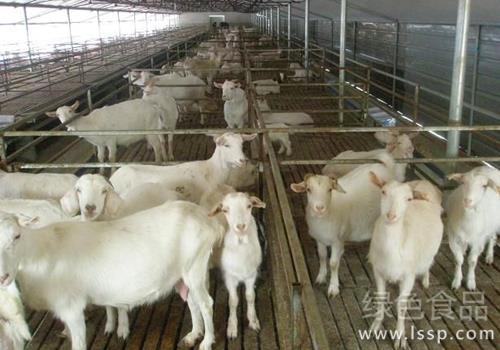
Key points of goat barn feeding technology, solving the problem of limited environments for traditional grazing
Technical points of goat barn feeding due to environmental restrictions on traditional grazing
-
Technical Problems and Solutions for the "Two No" Cotton Cultivation Technique
The "Two No" cotton cultivation technique refers to cotton seedling raising in soilless substrate and transplanting of bare-root seedlings without carrier. From 2004 to 2005, after demonstrations at more than 80 county sites across the country, some technical problems were found, and the following solutions are proposed: 1. Excessive seedbed density Main causes: First, rows were not marked out at 10 cm row spacing and 3 cm plant spacing; second, the sowing rate was too high with too many seeds; third, after emergence, seedlings were not thinned in time, resulting in leggy or spindly seedlings. Solutions: First, mark out rows at 10 cm row spacing and 3 cm plant spacing; second, sow according to plant spacing,
-
Common problems and countermeasures during the black fry stage of Japanese eel
At the turn of spring and summer, Japanese eel farming in various regions is mostly in the black fry stage, and it is commonly reported that there are phenomena such as a decline in feeding rate and a tendency for gill rot and tail rot syndrome to occur, seriously affecting the healthy, sustainable, and steady development of Japanese eel farming. The main problems existing in the black fry stage of Japanese eel farming are now analyzed, and some corresponding countermeasures are proposed for reference. 1. Decline in feeding rate: In Japanese eel black fry farming, the phenomenon of a decline in feeding rate or difficulty in increasing the feeding amount occurs, and the main triggering factors are
-
How to solve the weeding problem in dry Pinellia ternata? An analysis of practical methods
Dry Pinellia ternata is a dicotyledonous plant. In the cultivation process of this medicinal material, the weeding problem is rather tricky, and there is currently no clear and effective method; it is still mainly manual weeding, and no herbicide weeding trials have been conducted. It is said that an expert specializing in Pinellia once used glufosinate after sowing dry Pinellia, with slight effect, but we do not know the specific dilution concentration. You might try using glufosinate starting from a low concentration (100-fold solution), testing in a small area with a gradient of ratios, and after observation, once it is confirmed that the herbicide has a clear killing effect on other weeds and
-
The plane tree fluff problem is expected to be solved: Huazhong Agricultural University has cultivated hairless plane trees
It was learned from Huazhong Agricultural University that the university has cultivated hairless plane trees, which is expected to solve the problem of plane tree fluff pollution. The scientific name of the French plane tree is "Platanus", and it has advantages such as fast growth and a large, dense canopy, and is known as one of the "world's five major street trees." But from April to June each year, the seed balls of Platanus scatter and the pappus flies about, not only polluting the environment but also affecting people's health. For this flying fluff pollution, chemical pruning is mostly used in China, that is, spraying chemical agents to promote early shedding of the seed balls. But this method is labor-intensive and time-consuming, and is not easy to promote on a large scale.
-
Detailed Explanation of Common Problems in Phalaenopsis Cultivation
1. Key points for post-blooming care: After a Phalaenopsis blooms, it can still continue to bloom. Once the flowers fade, promptly cut off the flower stalk growing from the base of the plant to prevent nutrient consumption. 2. The flowers are pale and not vivid because the plant has been kept in a dark indoor place for a long time, resulting in poor ventilation and insufficient light. The frequency of ventilation must be increased, and sufficient light must be provided. 3. Drooping and soft leaves are mainly caused by insufficient light; the duration and intensity of light need to be gradually increased, and the leaf surface should be kept clean. Usually, when cleaning the leaf surface, do not wash or wipe it with water
-
Common Problems and Countermeasures in Wheat Aphid Control
Problem 1: Controlling too late. Some farmers do not control according to the control threshold for wheat aphids, but instead control after the wheat aphids have covered the wheat ears. This not only harms the wheat, but also, because control is too late, affects the control effect. Countermeasure: The control threshold for wheat aphids is 500 aphids per 100 ears. Fields that reach the control threshold must be treated with pesticides immediately. Problem 2: Not updating the pesticide used. Not updating the pesticide used will cause wheat aphids to develop resistance to the pesticide used, and the control effect will be extremely poor. Countermeasure: In the early stage of aphid occurrence, per mu
-
Analysis of the Development Results and Existing Problems of the Edible Mushroom Industry
I. Development Status. Edible mushroom production is an emerging industry to which all countries in the world today attach great importance, and it is also an important industry in our country's agricultural economy and an advantageous project for farmers to become wealthy. Yongchang County has a vast territory, superior natural conditions, abundant labor resources, and outstanding regional planting advantages, and possesses unique conditions for developing off-season edible mushroom production. In 2002 it was listed by the county Party committee and county government as a characteristic industry for key development. After repeated investigation and demonstration by county leaders and business departments, in 2003 the county Party committee and county
条件筛选