-

How to prevent and control cucumber downy mildew? The latest technical method tutorial is here
Cucumber downy mildew is the most common and most serious disease in protected cucumber cultivation, commonly known as "running horse dry" or "dry leaves", etc. Both seedlings and mature plants can be affected, damaging leaves and stems, with tendrils and flower stalks less affected. The disease comes on fiercely, causes severe infection and spreads quickly, if
-
How to prevent and control downy mildew in Welsh onions? The latest control methods are here
Downy mildew in Welsh onions is a very common disease of Welsh onions. It occurs easily under cool and humid conditions, mainly affecting leaves and flower stalks. Infected plants become stunted, and leaves become deformed or twisted. When humidity is high, a large amount of white mold grows on the surface, seriously affecting the normal growth of Welsh onions,
-
How to prevent and control downy mildew in watermelon? A detailed guide to the latest control methods
Watermelon downy mildew tends to occur in the middle and late stages of watermelon plant growth. The disease mainly harms the leaves. At first, water-soaked light green small spots appear on the leaves, then they gradually turn yellow, and the lesions keep expanding and change from yellow to light brown. Because they are restricted by the leaf veins, they appear as irregular polygonal
-
How to prevent and control downy mildew in Welsh onions? What is the best medicine to use?
Welsh onion is one of the main crops grown in northern regions and is relatively rare in southern regions. It is understood that some diseases occur when growing Welsh onions, among which the most common disease is downy mildew, and once downy mildew occurs it will affect the growth of Welsh onions. So
-
How to prevent and treat downy mildew in zinnias? A detailed guide to practical methods
Zinnia is also known as zinnia and step-up-high, among other names, and is an annual herbaceous flower of the genus Zinnia in the Asteraceae family. It originated in Mexico. The flowers are relatively large, richly colored, distinctive in shape, and have a long flowering period, and it is now cultivated in various places. In zinnia breeding research and cultivation production practice, new
-
How to effectively prevent and control downy mildew in edamame
Introduction to edamame downy mildew: [Symptom characteristics] Mainly damages leaves. Irregular small spots ranging from yellowish-white to yellow appear on the leaf surface, and corresponding gray loose mold signs (sporangiophores and sporangia) appear on the underside of the leaves. In severe cases, the leaves dry up and fall off. [Pathogen and disease characteristics] Pathogen
-

How to prevent and control downy mildew in loofah? Farmers share their growing experience
Click to follow us, we update agricultural planting techniques every day, helping you achieve high yields and get rich. Symptoms: Loofah downy mildew mainly damages the leaves. In the early stage of the disease, on the leaves...
-
How to prevent and control rose downy mildew? These methods you need to master
Downy mildew is a fungal infectious disease. Rose downy mildew develops quickly and is extremely harmful, making it a devastating disease. It mainly affects new shoots and leaves in the middle and lower parts of the plant. In the early stage, chlorotic spots appear on the underside of the lower leaves, and the spots are irregular and covered with a frost-like mold layer. Later they turn dark purple, resembling water-soaked areas, until they become brown. The spots are polygonal and gradually become scorch-like. When the damage is severe, all the leaves drop and the plant dies. Control measures 1. Plant at a reasonable density, no more than 12 plants per square meter, and
-
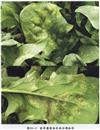
How to prevent and control downy mildew in spinach? Detailed explanation of prevention and integrated treatment methods
The disease is caused by a fungus called spinach downy mildew. It mainly affects the upper surface of the leaves; the lesions are pale yellow, irregular in shape and varied in size, with a diameter of 3-17 mm and indistinct edges. After the lesions expand, they join together into patches, and in the later stage they turn brown and the leaves die; on the underside of the leaves, a grayish-purple mold layer forms on the lesions. The disease spreads from the outer leaves...
-
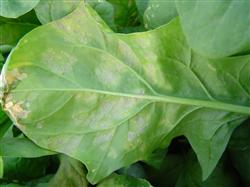
A Detailed Guide to the Prevention and Integrated Treatment of Spinach Downy Mildew
The disease is caused by a fungus called spinach downy mildew (Peronospora farinosa f. sp. spinaciae). It mainly affects the upper surface of the leaves; the lesions are pale yellow, irregular in shape, vary in size, measure 3-17 mm in diameter, and have indistinct edges. After the lesions expand, they join together into patches, and in the later stage turn brown and die, while a grayish-purple mold layer forms on the lesions on the underside of the leaves. The disease spreads from the outer leaves...
条件筛选