-
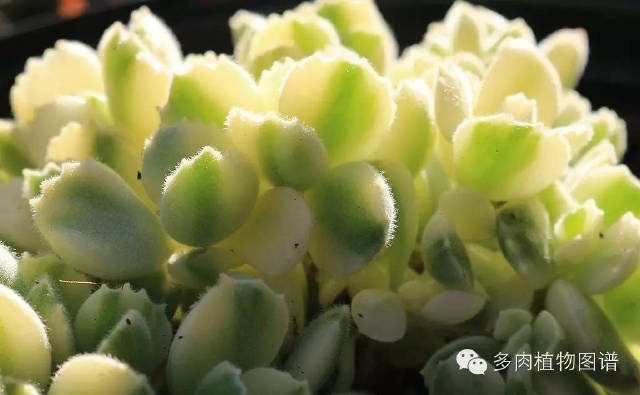
Your succulents do poorly at home? It turns out these wrong practices are the reason
Why do your succulents do poorly at home? It turns out these wrong practices are the reason!
-

What are the good practices behind the bumper melon and vegetable harvest in Qingyuan?
The "good practices" behind the bumper melon and vegetable harvest in Qingyuan
-
The practice of relying on chemical fertilizers to boost crop yields has been severely overstretched
The practice of relying on chemical fertilizers to boost crop yields has been severely overstretched
-
How to Develop Rural E-commerce? The Practice of a Member of the Doctoral Service Corps
A Member of the Doctoral Service Corps' Rural E-commerce Practice
-
Innovative Practices and Path Exploration in the Professionalization of Chinese Farmers
Innovative Practices on the Road to Professionalizing Chinese Farmers
-
Drying ponds in winter has many benefits, and farmers should pay attention to this management practice
During a recent visit to rural areas of Xingyang in our province, the author found that many fishermen friends rush to disinfect and remove debris from their fish ponds right after selling their marketable fish, and then stock fingerlings in matching proportions. They believe this allows the fingerlings to adapt to the pond environment sooner, so they can start feeding and growing earlier in spring. Actually, this is not the case. It would be better to use the winter to expose and dry the fish pond, especially aged ponds, through alternate freezing and sun-drying. In aged fish ponds, fertilizer and feed residues, fish feces, sediment and impurities accumulate over time, and various pathogenic microorganisms multiply in large numbers, causing the ponds to age further and directly affecting
-
Introduction to Tylosin (Tylan), a Commonly Used Macrolide Antibiotic in Duck Clinical Practice
Source and properties: This product is extracted from the culture broth of Streptomyces fradiae. It is a white crystalline substance, weakly alkaline, and slightly soluble in water. Its salts are readily soluble in water. Tylosin tartrate, tylosin hydrochloride, and tylosin phosphate are commonly used in clinical practice. Actions and uses: This product is an antibiotic specifically for livestock and poultry, with antibacterial activity against Gram-positive bacteria and some Gram-negative bacteria, such as Staphylococcus aureus, Streptococcus pyogenes, Mycoplasma, and Spirochetes, all of which it inhibits, and it is especially effective against Mycoplasma. However, its effect against Gram-positive bacteria is not
-
Six key management practices to focus on after transplanting spring eggplant in a large arch shed
I. Temperature control For spring eggplant cultivated in a large arch shed, from transplanting until the seedlings recover, the shed should be kept closed to retain heat, keeping the temperature inside the shed at 28°C-30°C during the day and 15°C-20°C at night as much as possible. After the seedlings recover, attention should be paid to ventilation, keeping the shed temperature at 23°C-25°C during the day, generally not exceeding 33°C. II. Fertilizer and water management Under conditions of good soil moisture, water as little as possible before the first eggplant reaches the size of a walnut, to raise soil temperature and prevent flower and fruit drop. When the first eggplant reaches the size of a chicken egg, apply 10 kg of urea per 667 sq m along with watering. After that, appropriately increase the frequency of watering according to soil moisture.
-
Detailed Explanation of the Code of Practice for Pollution-Free Breeding of Domestic Fish
I. Pollution-Free Management and Cultivation of Broodstock 1. Requirements for the breeding base: no pollution from the three types of waste; the atmospheric environment must comply with the requirements of "GB3095-1996 Ambient Air Quality Standard"; the soil environment must comply with the requirements of "GB15618-1995 Soil Environmental Quality Standard"; and the aquaculture water must comply with the requirements of "NY5051-2001 Pollution-Free Food Freshwater Aquaculture Water Quality Standard". 2. Broodstock ponds should have an area of 5-15 mu and a water depth of 1.5-2.5 m. The ponds should be exposed to the sun and then strictly disinfected with quicklime and other substances before use.
-
Dust bathing has many benefits for chickens; poultry farmers should not overlook this practice
Giving chickens a "dust bath" is good. A "dust bath" is when chickens bathe in sand to remove dirt from their skin. This habit is a type of animal behavior. Every kind of poultry has certain fixed behaviors. Just as people feel very uncomfortable without bathing, chickens are the same - they like to bathe in sand, and "after bathing" they feel refreshed, comfortable, invigorated, and relaxed, just like people. People bathe with water; why do chickens like to bathe with sand? According to research, the ancestors of the red jungle fowl belonged to the bird family and lived in dry, sandy
条件筛选