-

Technical Service Information for Tea Plant Frost Resistance and Post-Disaster Recovery
I. Remedial measures for tea plants after a disaster: 1. Scientific pruning: Because tea gardens with different varieties, different altitudes, and different slope aspects have different degrees of frost damage to their tea plants, generally tea gardens with large-leaf varieties, high altitude, and north-facing slopes suffer more severe frost damage to the tea plants. Timely and reasonable pruning should be carried out according to the degree of frost damage. After the temperature rises and stabilizes, observe the frost damage to the tea plants. For lighter frost damage, use light pruning, that is, cut about 3 cm below the leaf surface. For more severe frost damage, carry out deep pruning, cutting off 1/2-1/3 of the plant. For particularly severe frost damage
-
Post-harvest management of peach trees must be done promptly, and sooner is better than later
Pruning to promote balance. Peach trees grow multiple times a year, which easily makes the canopy dense, with poor ventilation and light penetration, affecting flower bud formation. Therefore, after harvesting peaches, the crossing branches, overlapping branches, diseased and pest-infested branches within the canopy, and the vigorous water sprouts in crowded areas should be thinned out. For bare and empty areas, ringing (girdling) should be done to promote new shoots to fill the space and increase next year's yield. Thorough orchard cleaning and emphasis on prevention. Combined with shaping and pruning, clean up the peach orchard, remove the pruned branches from the orchard, and at the same time spray once with Jinlishi 6000x solution, 40% Guolong 12000x solution, and amino acid 3
-
Don't relax post-harvest management of apricots; these key points are essential
There is still a fairly long period from apricot harvest to leaf fall. Strengthening management during this period plays an important role in reducing the occurrence of pests and diseases, restoring tree vigor, and increasing the number and quality of flower buds. Appropriate pruning for mature fruiting trees mainly involves adjusting the density of branches and removing diseased and pest-infested branches, crossing branches, overlapping branches, weak slender branches, and water sprouts within the canopy, so as to reduce tree consumption, increase the accumulation of photosynthetic products, and promote flower bud formation. Fertilizer and water management: After apricot harvest, fertilizer should be applied in a timely manner, especially for trees with weak vigor and
-
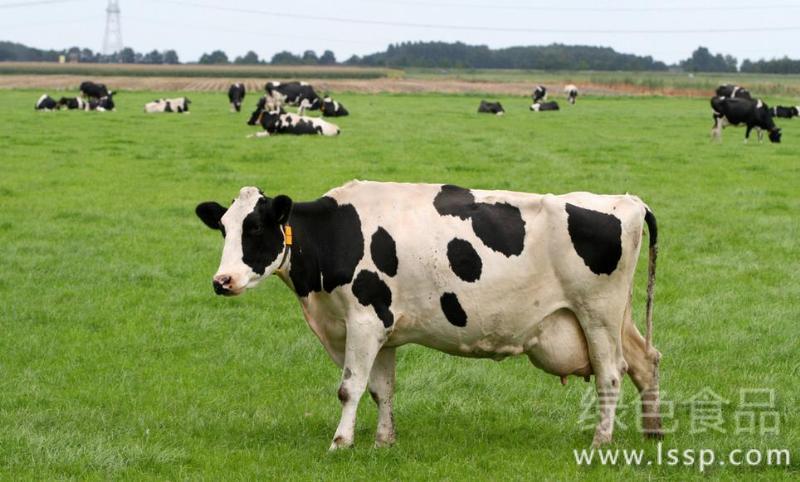
What to Do About Postpartum Udder Edema in Dairy Cows? A Detailed Guide to Prevention and Treatment
What to Do About Postpartum Udder Edema in Dairy Cows and How to Prevent and Treat It
-
Postpartum hypocalcemia in female dogs should not be ignored, and dog owners need to take it seriously
Postpartum hypocalcemia in female dogs, also known as postpartum eclampsia, postpartum tetany or lactation eclampsia, is a serious metabolic disorder in female dogs after giving birth. This disease is mainly characterized by hypocalcemia and muscle tonic spasms caused by abnormal excitation of motor nerves, accompanied by symptoms such as increased respiratory rate. This disease is paroxysmal and mostly occurs in small dogs or medium-sized high-yielding female dogs 10 to 20 days after delivery. At present, domestic techniques for diagnosing and treating this disease are relatively mature, and the treatment results are also relatively satisfactory. The basic approach is symptomatic treatment and calcium supplementation. The author, while treating 5 cases
-
Detailed Explanation of Post-harvest Handling Techniques for Liatris
1. Main characteristics of cut flowers: The leaves deteriorate faster than the flowers. This cut flower is sensitive to gray mold. Liatris is suitable for making dried flowers. 2. Harvesting and cutting development stage: Generally harvested when about 1/2 of the florets on the upper part of the inflorescence have opened. Cut flowers harvested at the bud stage can develop and gradually open in a preservative solution. 3. Vase life: The vase life in a preservative solution is 7-12 days. 4. Preservative treatment methods (1) Pulse treatment solution: Add 200 mg of 8-hydroxy
-
What to Do When Cotton Is Killed by Rainwater? A Detailed Guide to Post-Disaster Remedial Measures
Drain waterlogging and clear silted ditches in time. After a cotton field is flooded, the soil's physical and chemical properties change, humidity becomes too high, and air is lacking, which can suffocate the cotton plants to death. Even if they do not die, they are prone to disease, and root penetration is hindered. The waterlogging must be drained as quickly as possible, and at the same time the clogged perimeter ditches, waist ditches and bed ditches should be cleared to lower the groundwater level and create a good ecological environment for the cotton seedlings so they can resume growth. Straighten and wash the seedlings in time, washing them as the water recedes. Clean the silt off the cotton leaves and stems so the leaves can quickly recover
-
Key Technical Points for Jujube Fruit Harvesting and Post-Harvest Management
The harvesting period of jujube varies greatly depending on the intended use of the fruit and the cultivar. 1. Fruit used for candied jujubes: the white-ripe stage is the suitable time for harvest. During this stage, the fruit stops increasing in volume; the green color of the peel fades, turning milky white or greenish-white; the peel is thin and soft in texture, and after boiling it does not easily separate from the flesh; the flesh is relatively soft, with little juice and low sugar content, but it is rich in protopectin and highly resistant to boiling. The processed product is yellow-orange and crystalline, appearing amber and semi-transparent, chewy and smooth with no skin residue when eaten, offering a distinctive flavor.
-
A Detailed Guide to Post-Bloom Care Methods and Key Maintenance Points for Phalaenopsis Orchids
Post-bloom care for Phalaenopsis orchids is extremely important, as it has a direct impact on surviving the summer safely and blooming the following year. After years of practice, the author has summarized a set of post-bloom care methods, presented below: 1. Removing the flower spike: After all the flowers of the Phalaenopsis have faded, the flower spike should be promptly cut off from the base to reduce nutrient consumption. Some people keep the flower spike to let it bloom a second time; this method is highly inadvisable. This is because the probability of a second bloom is not high, and even if it does bloom, the quality is poor, with small flowers and few in number, and Phalaenopsis that bloom a second time have poor flowering quality the following year
-
Correct Methods and Technical Key Points for Returning Wheat Straw Compost to the Field
Choose a flat spot at the edge or corner of a field close to a water source, and firm the ground. Chop the wheat straw short, soak it with water, and then build the pile. First spread a layer of wheat straw about 25 cm thick, press it firm, then pour on human and livestock manure and urine, or for every 100 kg of dry wheat straw add 0.5 kg of urea and 2 kg of superphosphate, and spread a layer of pond mud 10 cm thick on top. Then spread another layer of straw, pour on fertilizer, and cover with pond mud. Build up layer by layer in this way until the pile reaches 1.5-2 m high. Finally seal the pile with thin mud. After 30 days, turn the pile and add an appropriate amount of water. After 2 months in summer, or 3-4 months in winter, it will be
条件筛选