-
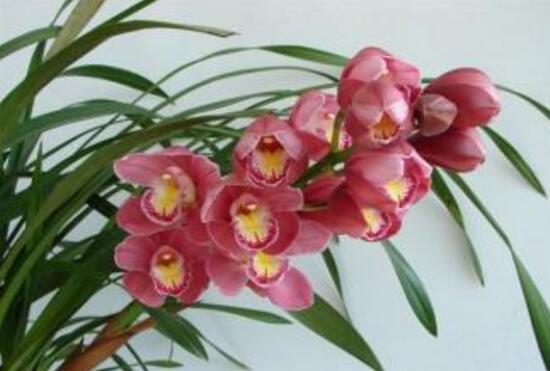
How to prune the flower spikes of Cymbidium orchids? A detailed guide to post-bloom pruning methods
Cymbidium orchids, a hybrid orchid with a great many varieties, have developed nearly 1000 varieties to date. Their blooms are large and their colors rich, making them deeply loved by flower enthusiasts. During the blooming period of Cymbidium orchids, we can fully enjoy their beauty, but once the flowers fade, they need to be pruned
-
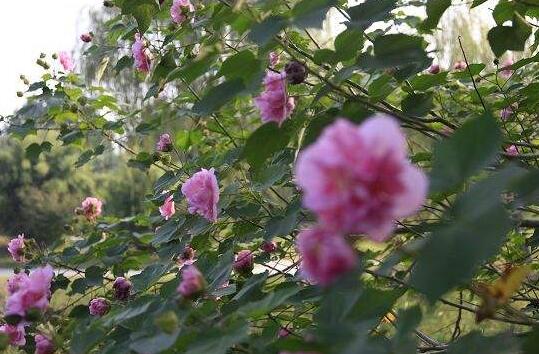
How to prune Hibiscus mutabilis? Master the pruning time, methods, and post-bloom care
When growing many plants, pruning is very important, and Hibiscus mutabilis is certainly no exception. Pruning can promote the sprouting of flowering branches and new buds, and also maintain a beautiful plant shape, so every flower lover should learn the correct pruning method
-
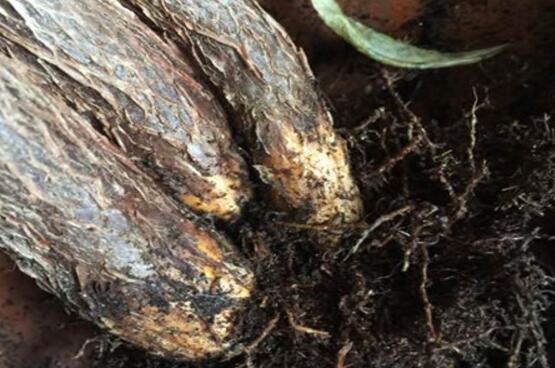
How to Rescue a Money Tree with Root Rot: Soil Disinfection, Removal of Rotten Roots, and Post-Care Are Key
As a plant with a sturdy, handsome form and beautiful emerald leaves, the money tree (Pachira aquatica) is loved by a wide audience and kept in many homes. However, many flower enthusiasts report that their money trees often develop root rot. Why is that? How do you rescue a money tree with root rot? On this topic,
-

How to care for Phalaenopsis orchids after blooming? A detailed guide to post-bloom care
How to care for Phalaenopsis orchids after blooming mainly involves two aspects: first, whether to cut off the flower spike; second, how to care for the plant after blooming. This article focuses on analyzing these two aspects of post-bloom care for Phalaenopsis orchids. 1. Whether to cut the flower spike after Phalaenopsis orchids finish blooming. After a Phalaenopsis orchid finishes blooming, the flower stem can be cut
-
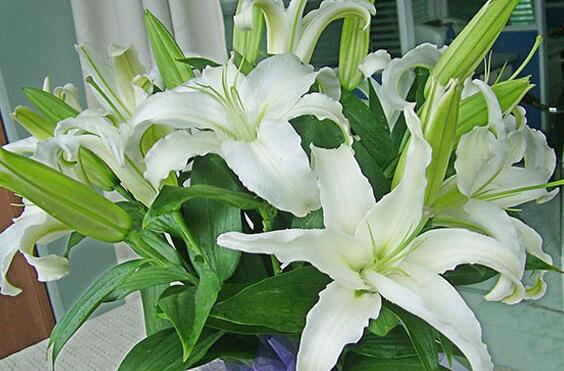
Lily is both ornamental and medicinal: its benefits, effects and contraindications, and why postpartum women should not use it
Lily - anyone who has seen it will remember it well. Its flower shape is beautiful and its colors are rich; it is a very beautiful flower with strong ornamental value. Of course, if you only treat it as an ornamental plant, then you have greatly underestimated the lily. It is said that the benefits and effects of lily are astonishing - not only does it have a beauty effect
-

A Detailed Guide to Post-Harvest Handling and Processing Methods for Wine Cap Mushroom
Wine cap mushroom, also known as King Stropharia, is a domesticated wild mushroom species, and in recent years there has been a trend of gradual expansion. Its mushrooms have a delicate fragrance, crisp and tender flesh, good palatability, high yield, high selling price, and very considerable economic benefits. However, its fresh products have a short storage time and are not easy to preserve. If not sold fresh in time, huge losses will be caused. In order to ensure that economic benefits are not lost, the salting processing and dried product processing techniques for wine cap mushroom are now introduced. 1. Salting processing of wine cap mushroom. 1. Harvesting. The mushroom bodies of wine cap mushroom used for salted export should be at 6-7
-
Detailed Explanation of Key Post-Season Management Techniques for High-Quality Wheat
After wheat turns green, sustained high temperatures and drought have caused the jointing, stem elongation, and flag leaf stages to occur 5-7 days earlier than usual. Currently, the wheat seedling condition is close to normal, but growth varies between plots. Therefore, it is recommended to strengthen the late-stage management of high-quality wheat: 1. Carry out booting and heading fertilization and irrigation management as soon as possible: this fertilization and irrigation can not only promote floret development, increase floret fertility rate and increase grain number per spike, but also promote nitrogen uptake and conversion in the later stage of wheat, making it one of the very important measures to increase wheat yield, protein content and wet gluten content (mandatory indicators for national standard strong-gluten wheat
-
Detailed Explanation of Key Post-Harvest Handling Techniques for Dendrobium Orchids
1. Scientific name: Dendrobium spp. 2. Main characteristics of cut flowers: Very sensitive to ethylene; pollination of the flowers should be avoided, as it stimulates the production of large amounts of ethylene. 3. Harvest maturity stage: Cut when most of the flowers on the inflorescence have opened, with only a small number of flowers at the top of the inflorescence still in the bud stage. 4. Vase life: The vase life in water is about 14 days, and longer in preservative solution. The vase life of Dendrobium varies with the season. 5. Preservative treatment method: Use a preservative
-
Post-Bloom Management Methods and Care Tips for Azaleas
The warm spring has arrived, and most of the Chinese New Year flowers placed in your home have finished blooming. Are you worrying about how to deal with these flowers that no longer look their best? Are you asking around for advice on how to care for them? If you hope they will bloom beautifully again next year, then please pay attention here. Starting with this issue, we have carefully prepared a series of articles on "Post-Bloom Management of Chinese New Year Flowers" for you, and we hope they will be helpful. If you have care experience in this area, please also write to us and share it with flower lovers everywhere! 1. Pruning and shaping
-
Correct Methods and Technical Key Points for Returning Wheat Straw Compost to the Field
Choose a flat spot at the edge or corner of a field close to a water source, and firm the ground. Chop the wheat straw short, soak it with water, and then build the pile. First spread a layer of wheat straw about 25 cm thick, press it firm, then pour on human and livestock manure and urine, or for every 100 kg of dry wheat straw add 0.5 kg of urea and 2 kg of superphosphate, and spread a layer of pond mud 10 cm thick on top. Then spread another layer of straw, pour on fertilizer, and cover with pond mud. Build up layer by layer in this way until the pile reaches 1.5-2 m high. Finally seal the pile with thin mud. After 30 days, turn the pile and add an appropriate amount of water. After 2 months in summer, or 3-4 months in winter, it will be
条件筛选