-

Chartering a Plane to Sell Lychees: Returning Home to Start a Business, a Maker Helps Internet Plus Brand Agriculture Take Off
Returning Home to Start a Business, He Charters a Plane to Sell Lychees, Letting "Internet Plus Brand Agriculture" Take Off
-
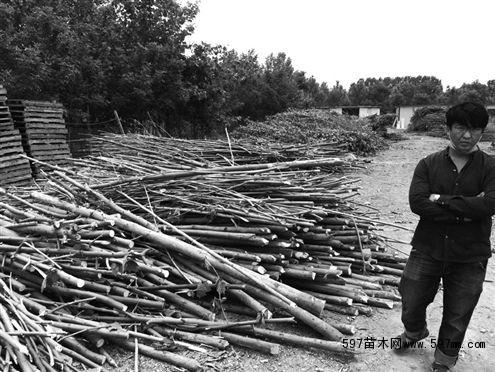
Plane tree sapling prices plummet, the former money tree reduced to worthless firewood
Sapling prices plummet: plane trees go from "money tree" to worthless firewood
-

Farmer's homemade plane successfully takes to the sky in Jing County
Young farmer's self-built plane successfully takes to the sky in Jing County
-
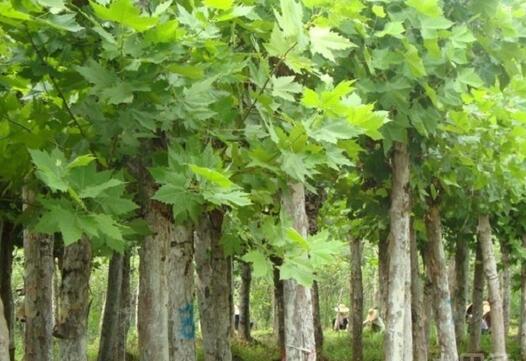
Is growing London plane seedlings profitable? Farmers blindly following the trend drives prices down
Is growing London plane seedlings profitable? Farmers blindly following the trend in planting London plane trees drives prices down
-
Combining Points, Lines and Planes to Tackle the Problem of Unpaid Wages
"Point, Line and Plane" Approach to Tackling Unpaid Wages
-
Key Points of Winter Pruning Techniques for London Plane
London plane, commonly known as plane tree, is a large deciduous tree that can reach 30 m in height. It is a famous shade tree and street tree species, cultivated throughout China, generally used as a street tree. Winter shaping and pruning have an important effect on the growth and tree form of London plane. Without timely and reasonable winter pruning, the tree form will become chaotic, with long main branches, few leaves or low bushy growth, greatly reducing its ornamental value and shading effect. Timely and reasonable pruning can, within a short period, give the tree a majestic, upright, tall and graceful form, with branches well-spaced and orderly, many well-proportioned lateral branches, dense dark green foliage, and enhanced natural immunity of the tree.
-
Planting methods and care tips for the London plane tree
Morphology: 20-30 m tall, crown broadly bell-shaped; bark grayish brown to grayish white, peeling off in thin flakes. Young branches and young leaves densely covered with brown stellate hairs. Leaves palmately 5-7 lobed, deeply lobed to the middle, lobes longer than wide, leaf base broadly wedge-shaped or truncate, leaf margins toothed, palmately veined; stipules ring-shaped. Inflorescence head-like, yellow-green. Most nutlets clustered into whole-leaf spheres, 3-6 spheres in a string, persistent style long, bristle-like, fruit stalk long and drooping. Distribution: native to Europe; also distributed in India and Asia Minor. Habits: highly adapted to urban environments
-
What is the difference between French plane tree, paulownia, and Chinese parasol tree?
The Chinese parasol tree is a deciduous tree of the family Sterculiaceae. It is not related to the tung tree (Euphorbiaceae), the paulownia of the family Scrophulariaceae, or the French plane tree (Platanaceae), despite sharing the name "tong." The Chinese parasol tree is tall and imposing, with a trunk free of knots that rises straight upward, holding aloft a great emerald-green umbrella of foliage with a spirited bearing. Its bark is smooth and jade-green, its leaves dense, and from trunk to branch it is lush throughout, appearing exceedingly elegant and clean - no wonder people also call it "qingtong" (green paulownia). "A single green jade stands upright, a thousand leaves like green clouds piled up" - these two lines of poetry capture to the fullest the charm of the Chinese parasol tree's green leaves and jade trunk, and the graceful shade it casts.
-
The plane tree fluff problem is expected to be solved: Huazhong Agricultural University has cultivated hairless plane trees
It was learned from Huazhong Agricultural University that the university has cultivated hairless plane trees, which is expected to solve the problem of plane tree fluff pollution. The scientific name of the French plane tree is "Platanus", and it has advantages such as fast growth and a large, dense canopy, and is known as one of the "world's five major street trees." But from April to June each year, the seed balls of Platanus scatter and the pappus flies about, not only polluting the environment but also affecting people's health. For this flying fluff pollution, chemical pruning is mostly used in China, that is, spraying chemical agents to promote early shedding of the seed balls. But this method is labor-intensive and time-consuming, and is not easy to promote on a large scale.
-
Differences Between London Plane, Chinese Parasol Tree and Paulownia - A Quick Guide to Telling Them Apart
In the vigorous development of urban greening and landscaping, identifying and selecting tree species is an important task. The London plane, paulownia and Chinese parasol tree may look like three sisters in urban landscaping, but in fact they belong to different families and genera, and differ greatly in morphology. The London plane is a large deciduous tree of the genus Platanus in the family Platanaceae. Its name comes from its leaves resembling those of the Chinese parasol tree; it was introduced from abroad in old China and was first planted in the French concession of Shanghai, hence the name "fa tong" (French plane). The London plane is actually a collective name for Platanus orientalis and Platanus acerifolia of the genus Platanus. Platanus orientalis reaches 30 m tall, with dark gray bark that peels off in thin flakes, revealing a greenish-white inner bark. Young branches are covered with yellow-brown stellate hairs. Leaves are 8 to 16 cm long and 9 to 18 cm wide, with 5 to 7 deep lobes reaching to or below the middle, the lobes narrow and long, covered with gray-yellow stellate hairs when young and later shedding. The common stalk bears spherical fruit heads 2 to 2.5 cm in diameter, with spiny styles 3 to 4 mm long; flowering in May, fruiting in September to October. Platanus acerifolia is a hybrid of Platanus orientalis and Platanus occidentalis, bred in London, England. It reaches 35 m tall, with bark peeling off in thin flakes and a pale greenish-white inner bark. Young branches and leaves are densely covered with pale brownish-yellow stellate hairs. Leaves are 10 to 24 cm long and 12 to 25 cm wide, with a flat or slightly heart-shaped base, 3 to 5 deep lobes, the middle lobe nearly equal in length and width, with entire or sparsely coarse-toothed margins. Fruit heads are about 2.5 cm in diameter, with spiny styles 2 to 3 mm long. Flowering in April to May, fruiting in September to October.
条件筛选