-

Large amounts of land sit idle for long periods, with government causes accounting for over 50%
Large amounts of land have been left idle for long periods, breeding various economic and social problems, and have therefore drawn great attention from leaders at all levels and the competent departments. The 2014 China Land and Resources Bulletin released by the Ministry of Land and Resources on April 22 states: from 2009 to 2013, among the construction land already supplied nationwide,
-
Six Periods Converge: How Agriculture Enters the 13th Five-Year Plan - An Interview
2016 is the opening year of the 13th Five-Year Plan. How can we accurately grasp the development situation of agricultural and rural economy during the 13th Five-Year Plan? What characteristics will the development of agricultural and rural economy present? A reporter interviewed Minister of Agriculture Han Changfu on this matter. Han Changfu stated that at present, both the internal and external
-
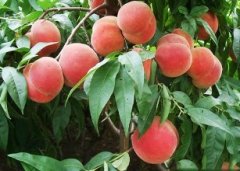
What Is the Sweetest Peach Variety in Japan: Hana Yome, Hakuhō, and Shimizu Hakutō Flavor and Harvest Periods
Okayama Prefecture is known nationwide as the hometown of "Momotarō," and the peach blossom has also become Okayama Prefecture's "prefectural flower." The grafting time and method for peach trees in Japan differ from the grafting time and method for peach trees in our country. Peach cultivation in Okayama Prefecture began in Meiji 8, after
-
How to prevent and control late spring cold snaps in vegetables? You need to seize these 3 key periods
A late spring cold snap is a weather phenomenon in which early spring temperatures are lower than the same period in a normal year, and crops often suffer frost damage because of it. This kind of dramatic turn in the weather is very unfavorable to agricultural production, and if precautions are not taken in time, it is very easy for crops to be frozen. So what measures are there for preventing and controlling late spring cold snaps in vegetables
-
When Is the Best Time to Apply Foliar Fertilizer? You Cannot Spray During These Periods
Abstract The relatively suitable time to apply foliar fertilizer is: when the tea plants of each round in spring, summer, and autumn sprout new shoots and grow one bud and one leaf at the initial unfolding stage. However, note that spraying should be done on a windless sunny morning or in the evening, and foliar fertilizer must not be sprayed during the crop seedling stage and flowering stage, or in high-temperature and rainy weather.
-
How to manage bitter melon during high-temperature periods? These key points you need to master
Bitter melon is a vegetable that people love. Bitter melon, also known as bitter gourd, is a plant of the Cucurbitaceae family and an annual climbing herb. The stems, branches, leaf stalks and flower stalks are covered with soft hairs, with axillary tendrils. The leaves reach 3 to 12 cm in diameter, have 5 to 7 palmate deep lobes, and the lobes are oval
-
Detailed Explanation of Fertilizer Amounts and Fertilization Periods for Dragon Fruit Cultivation
Fertilization is an important part of integrated management. The full effectiveness of fertilizer depends on soil and water; only good soil structure and physical and chemical properties can promote microbial activity, accelerate nutrient decomposition, and enhance root absorption. The decomposition of fertilizer and the absorption, transport,
-
What months does goji berry bloom and bear fruit? A detailed explanation of the flowering and fruiting periods
Goji berry is a plant of the Solanaceae family and the genus Lycium. In our daily life it is often used to make infused water. In fact, the goji berries people eat daily and use medicinally are mostly the fruit "goji berry" of Ningxia goji (Lycium barbarum). Today we are going to talk about knowledge related to goji berry. What are the habits of goji berry's blooming
-
Several Key Periods in Yellow Catfish Farming
I. Broodstock Cultivation Period 1. Broodstock Collection As broodstock, the fish are required to have bright body color, a plump body shape, a robust physique, and no disease or injury; they should be over 2 winters old, with males over 14.8cm and females over 11.7cm, at a male-to-female ratio of 1:1.5. In
-
Key Technical Points for Feeding and Management of Turkeys During Brooding, Growing, and Laying Periods
Brooding Stage: After hatching, poults are moved to a brooder box 24 hours later for rearing. They are encouraged and trained to start eating, and given clean warm boiled water at about 20°C. Newly hatched poults should be fed high-protein feed, with crude protein in the diet reaching about 25%. At the same time, various vitamins should also be supplemented
条件筛选