-
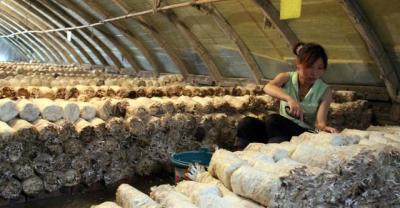
Mushroom Talk (Part 1): Understanding the Basics of Edible Fungi
When it comes to edible fungi, the mere mention of the term may make you think they are simply the shiitake mushrooms, enoki mushrooms, shaggy mane mushrooms, and so on that we eat. Actually, the requirements are not...
-
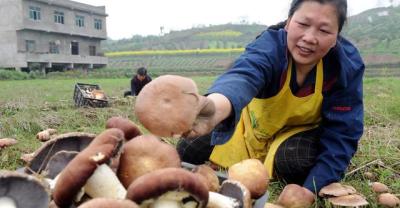
Mushroom Talks Part Two: Introducing the World of Fungi
The Morphological Structure of Edible Mushrooms We know that edible mushrooms are macrofungi, composed of two main parts: the mycelium and the fruiting body. Edible mushrooms rely on mycelium to absorb...
-

Detailed Explanation of Button Mushroom Cultivation Techniques in Rice Fields (Part 5)
V. Integrated Pest and Disease Control. Integrated pest and disease control should adhere to the principle of prevention first, with prevention being more important than treatment, and to the principle of combining agricultural control, physical control, biological and ecological control, and chemical control. The use of highly toxic and high-residue pesticides must be eliminated, and no pesticides should be used during the mushroom harvesting period. Diseases and deformed mushrooms caused by environmental factors or improper technical management (such as red-foot mushrooms, landmine mushrooms, big-ball mushrooms, scaly mushrooms, etc.), as well as weed fungi (such as Coprinus mushrooms, etc.), should be controlled primarily through integrated measures. Main measures: First, the compost formula must be accurate, and the material
-
Detailed Explanation of Mushroom Cylinder Cultivation Technology in Cold Greenhouses (Part 1)
I. Sowing Time: In the Xinbin area, from March 20 to April 10, preferably completed before Qingming Festival. When the temperature inside the greenhouse reaches above 5°C, cylinder production and cultivation can begin. II. Ingredient Mixing and Sterilization. Formula 1: Broadleaf sawdust 87%, wheat bran 8%, rice bran 8%, cornmeal 3%, gypsum 1%, with a moisture content of 58%-62%. Formula 2: Broadleaf sawdust 50 kg, wheat bran 10 kg, gypsum 1 kg, with a moisture content of 58%-62%. 1. Mixing: The mixed material should be sterilized promptly and must not be left for more than 2-3 hours, to avoid the growth of contaminant bacteria that could result in incomplete sterilization.
-
How to cultivate the growing blocks in shiitake mushroom block cultivation (Part 1)
A well-cultivated growing block does not grow mold, its mycelium grows vigorously, and its color quickly changes from pale yellow to white, then from white to reddish-brown with a glossy sheen. This is the foundation for a high shiitake yield. 1. Mycelial healing stage: Because the mycelium is damaged to some extent when the bottles are dug out and pressed into blocks, there must be a process of recovery and healing. The key management points at this stage are: maintain a suitable temperature (around 24°C), humidity and fresh air, and prevent mold from occurring. The key is to control the timing and frequency of ventilation according to changes in air temperature. Ventilation includes two
-
Six-Part Series on Autumn Mushroom Production, Part Three
3. Disinfection and treatment of new mushroom sheds, establishing the concept of "prevention": this means emphasizing the prevention principle of "prevention first, combining prevention and treatment." Inside the shed, drugs such as Baibing Quwuzong and phoxim can be used. The general dosage is 1 bag of Baibing Quwuzong mixed with 50 grams of phoxim, sprayed over about 30 sq m. The targets of application are the ground, walls, and support columns, etc., and carpet-style spraying is required. Then seal the mushroom shed, roll up the grass mats to sun the shed, and after 2 days of sealing, bags can be brought in for spawn running or fruiting; for preventive medication during spawn running and fruiting, spray mushroom
-
The Second of the Six-Part Series on Autumn Production of Edible Mushrooms
First, select good spawn. The main varieties used this autumn are: 1) Oyster mushroom: "8359" and "Nongke 12" -- suited to fruiting in spring and autumn; spawn-running temperature 5-36°C, optimum 24-28°C; fruiting temperature 5-25°C, best 18-20°C; clustered or imbricate overlapping growth, small thick caps, large clusters, cap grey to dark grey, stipe slender and short, gills white and fine, cluster shape compact, flesh firm, good market quality; these two strains have strong resistance to contaminants and diseases, and in general production they do not become infected with diseases such as yellow mushroom disease
-
Detailed Guide to High-Yield Cultivation of Nameko Mushrooms (Part 2)
V. Management During the Fruiting Body Stage 1. Unwrapping and Scoring the Blocks Once the spawn-running stage of the blocks is complete and the blocks have formed, fruiting management should be carried out according to temperature conditions. In late August, as temperatures gradually drop, open the plastic sheeting on the mature blocks and place them on the fruiting racks. The mycelial film that grows on the blocks is too thick, which is unfavorable for the emergence of fruiting bodies, so a bamboo knife or iron nail should be used to score lines on the surface of the blocks, cutting crisscross into squares about 2 cm wide. Score through the mycelial film, with appropriate depth, generally 1 cm deep is sufficient. Scoring too deep makes the blocks prone to breaking. Then place them flat on the racks, spray water, and adjust the room temperature
-
Detailed Cultivation Techniques for Tricholoma lobayense (Part 1)
Tricholoma lobayense, also known as the giant tricholoma, the large white tricholoma, or the Lobay tricholoma, is a rare new variety of edible mushroom. It is cultivated on a small scale in southern China and Taiwan, China. I. Characteristics and Traits. The fruiting bodies of Tricholoma lobayense grow singly or in clusters, with a small cap and a thick, large stalk. The cap is initially hemispherical, white, and smooth, with a diameter of 3-8 cm; the flesh is white and relatively thick; the gills are grayish-white, dense, paired, and of unequal length; the stalk is club-shaped to bulbous, circular in cross-section, firm and meaty, with a length of 5-10 cm and a thickness of 1.5-4
条件筛选