-
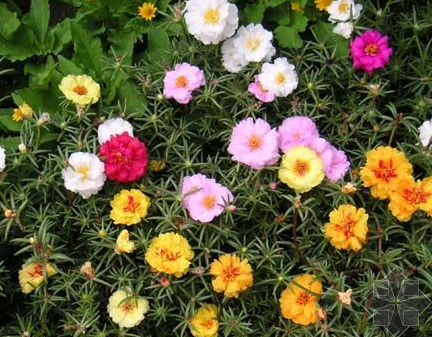
How to grow Scutellaria barbata so it spills over the pot? Explaining the origin of the alias "Hanxin grass"
Scutellaria barbata is also called "die-bu-liao" (cannot die), and its flowers are small but very pretty. When growing Scutellaria barbata, if you can get it to fill and spill over the pot, it is sure to be beautiful. Scutellaria barbata is a plant in the Lamiaceae family, with functions such as clearing heat and detoxifying, invigorating blood and removing stasis, reducing swelling and relieving pain, and anti-cancer.
-

Is 6.8 yuan per jin for Hami melon normal right now? Name origin and market analysis
**Hami melons make their maiden flight to Guangdong to celebrate the Mid-Autumn Festival
-
Introduction to the Nanshui Pear variety: a pear variety originating from Japan
In Japan in 1973, it was crossed from Echigo and Shinsui, sown and raised as seedlings, selected in 1983, and tested and observed for characteristics as Nannong Pear No. 1, and obtained legal variety registration in June 1990. Late-maturing variety. The fruit is oblate, with an average fruit weight of 360g, and the fruit shape is uniform. The skin is yellow-red, the fruit dots are medium, and the fruit surface is smooth. The flesh is white, the soluble solids content is about 15%, the taste is sweet and sour, and juicy. It matures from mid-September to early October, basically the same as Shinshin. No heart rot, fruit cracking, or water core symptoms
-
Jindou No. 29 (Soybean, original name: Fendou No. 53)
Characteristics: Purple flowers, brown pubescence, round leaves, indeterminate pod-setting habit. Average growth period 106.5 days, plant height 71.9 cm, effective branches 2.6, effective pods per plant 38.1, seeds per plant 91.3, 100-seed weight 17.6 g. Seed coat yellow, light brown hilum, round seeds. Average crude protein content 38.1%, crude fat content 22.11%. Yield performance: In 2002, it participated in the summer soybean variety regional trial in the central Huang-Huai-Hai region, with an average yield of 170.93 kg per mu, an increase of 10.71% over the control Ludou No. 11
-
The original name of the rice variety Fengyou 191 is Fengyuan A/191.
Characteristics: This variety is an indica three-line hybrid rice. Grown as a double-cropping late rice in the middle and lower reaches of the Yangtze River, its average whole growth period is 121.7 days, 0.6 days later maturing than the control Shanyou 46. Plant height is 97 cm, plant and leaf form is good, the population is uniform, the flag leaf is erect, growth is luxuriant, and color turns well at maturity. The number of effective panicles per mu is 182,000, panicle length is 23.3 cm, total grains per panicle is 124.2, seed setting rate is 82.1%, and 1000-grain weight is 30 g. Resistance: rice blast grade 9, bacterial leaf blight grade 5, brown planthopper grade 9.
-
Introduction to the Origin Characteristics and Quality Features of Hongze Lake Crab
Jinshui brand Hongze Lake crab has delicate, tender meat, a delicious flavor and rich nutrition. Compared with other crabs or other aquatic products, it contains less water and is especially rich in nutrients such as protein, fat, carbohydrates and vitamin A. Before eating crab, it is best to choose a crab that is large, has all its legs and is strong and active. Dead crabs must never be eaten. Because the protein in dead crabs decomposes, the flesh spoils and deteriorates, and bacteria multiply rapidly; eating them can be severely life-threatening. "A beggar eating dead crabs finds every one 'fresh'" is used to describe certain people who do not understand the way of eating and are rather casual about what they eat; it does not mean that beggars are so poor that they have no choice but to eat dead crabs.
-
Characteristics and Origin of the Laizhou Limei Apricot Variety
Laizhou Limei Apricot: In 1984, the Laizhou City Agriculture Bureau of Shandong Province conducted a general survey of apricot resources throughout the city. The Laizhou Limei Apricot was selected from a Limei Apricot orchard in Xiguanmen Village, Zhacun Town, Laizhou City. At that time, the tree of this variety was 23 years old, and its mother tree was first planted in a farmer's courtyard in Xiguanmen Village; its origin is unknown. In 1985, block planting began, and in June 2002 it passed the variety identification organized by the Yantai City Science and Technology Bureau of Shandong Province. At present, the cultivated area in Laizhou City has reached about 660 hm2.
-
Characteristics and Origin of the Tancheng Xingmei Plum Variety
Native to Tancheng County, Shandong Province. The fruit is nearly round, with an average single fruit weight of 48.8 g and a maximum fruit weight of 73.7 g. The fruit apex is flat or slightly pointed, the suture is shallow, and the two sides are asymmetrical; the stalk cavity is broad and deep. The ground color of the fruit surface is orange-yellow, turning orange-yellow when ripe, with fine hairs, and the skin is relatively thick. The flesh is orange-yellow, dense and fairly fine in texture, juicy, sweet and tart and palatable, with an apricot aroma, and of superior quality. The soluble solids content is 13.3%, total sugar content 6.7%, titratable acid content 1.7%, and 100 g of fresh flesh contains
-
Introduction to the rice variety II You Xiang 13, originally named Nei Xiang You 13
Characteristics: This variety is an indica three-line hybrid rice. Grown as a single-season mid-season rice in the upper reaches of the Yangtze River, its average whole growth period is 156.8 days, 3.6 days later in maturity than the control Shanyou 63. The stems, leaf margins, and leaf-node glume tips are all purplish-red. The plant type is moderate, cold tolerance is medium, panicle-grain weight is relatively well balanced, and color turns well at maturity. The effective panicle number per mu is 160,000 panicles, plant height is 116.4 cm, panicle length is 25.6 cm, total grains per panicle is 161.6, seed-setting rate is 81.8%, and 1000-grain weight is 27.9 g. Resistance:
-
New intensive cultivation technology for small oyster mushrooms originated in South Korea
The small oyster mushroom belongs to the subdivision Basidiomycotina, order Agaricales, family Pleurotaceae, genus Pleurotus. It is rich in protein, sugars, vitamins, iron, calcium and the 8 essential amino acids for the human body. Its flesh is plump and tender, with a fresh and pleasant taste, and it has high edible and health-care value, making it highly favored by consumers. It is a mushroom with relatively large production and consumption in South Korea. Because small oyster mushrooms are not easy to transport over long distances or keep fresh, very few fresh mushrooms are imported from abroad, and production is mainly domestic in South Korea. Compared with conventional oyster mushroom cultivation, the biological conversion rate of small oyster mushrooms is relatively low, only 50%-80%, and moreover, grading
条件筛选