-

Detailed Explanation of Key Operational Points for Peach Quick-Freezing Processing Technology
(1) Process flow: raw material selection → pitting and color protection → blanching and cooling → peeling → packaging and syrup injection → pre-cooling → quick-freezing → frozen storage. (2) Key operational points: Raw material selection. After peaches are harvested, ripe ones must be processed immediately; hard, unripe fruits need to be ripened. Properly ripened peaches have bright color, rich flavor, and are easy to pit and peel. Pitting and color protection: after the raw materials ripen, remove the pits with a small knife or a pitting machine, and immediately place the flesh into cold water to avoid contact with air and prevent discoloration. The pitting machine has flesh fragments attached,
-
A Detailed Explanation of Tuna Fishing Methods and Operational Procedures
There are quite a few methods for catching tuna, and the most popular one today is longline fishing. Longline fisheries are divided into three types: surface longline, bottom longline, and midwater longline. Tuna longline fishing gear is mainly composed of a main line, branch lines, floats, float lines, and hooks, that is, a tool for catching tuna by hanging several hooked branch lines from an extended main line. Several floats are tied to the main line, and the float lines between the main line and the floats as well as the length of the branch lines serve to adjust the fishing depth. The hooks need to be baited. The bait mainly includes frozen saury, squid, sardine
-
Detailed Explanation of the Key Operational Points of Top Grafting Technology for Jujube Trees
Due to variation arising from long-term cultivation of varieties, the quality of jujube trees currently planted in various regions differs considerably. In the case of the golden silk jujube (Ziziphus jujuba 'Jinsixiaozao'), there are dozens of phenotypes in Jinghai, Tianjin alone, and the size and shape of their fruit vary greatly; determination of their contents has shown that the differences are also considerable. The harvested jujube products have poor uniformity in appearance. This greatly lowers their commercial price and reduces farmers' economic income. To effectively solve this problem and make the fruit of the same jujube orchard attain uniformity
-
Detailed Explanation of Garlic Irradiation Preservation Technology and Key Operational Points
After garlic matures, it begins to sprout and enters the reproductive growth phase of cell division, which results in cloves scattering, shriveling, and loss of nutrients during storage, rendering it unfit for consumption. During the dormant period, Y-ray irradiation processing is used, utilizing radiant energy to damage the sprout buds of garlic cloves, inhibit their normal growth, prevent sprouting, reduce nutrient consumption during storage and transport, ensure commodity quality, and meet hygienic standards for safe storage. This is what is commonly known as garlic irradiation preservation technology. Garlic harvesting and pre-treatment. Garlic
-
What precautions should be taken when processing snake venom? A full breakdown of the key operational points
1. Pay attention to safety when extracting and processing snake venom. To strictly prevent venomous snakes from injuring people, the movements for releasing the snake during and after venom extraction must be quick. When returning a snake that has been milked to its cage, first place the snake's body inside, and when the snake's head approaches the edge of the container opening, let go quickly. If you cannot withdraw your hand in time when releasing the snake, you can easily be bitten by the snake striking back. 2. Venom extraction equipment must be strictly sterilized. 3. If the venomous snake clamps onto the vessel and will not let go, you may gently swing the snake's trunk; if it still will not release its bite, you may gently twist its neck, or use a small stick or your finger to stimulate the snake's cloaca. Never pull hard
-
Correct Methods and Key Operational Points for Tail Docking in Dogs
Tail docking in dogs has been performed more frequently in clinical practice in recent years. The purposes of docking vary. Some dogs undergo docking because of gangrenous tail injuries that are difficult to cure with conservative treatment; some are docked for cosmetic purposes due to show requirements; some owners dislike white hair at the tail tip and curling of the tail end and therefore request docking; some breeds have a docking tradition, such as the Rottweiler, which requires leaving 1 to 2 caudal vertebrae to give the dog's back a sense of elongation; and some dogs suffer from self-mutilation syndrome and require docking to cure the stubborn condition. 1 Methods of Tail Docking 1.1 Restraint and Anesthesia The tail of dogs has a relatively large
-
Detailed Explanation of Silverfish Processing Technology and Key Operational Points
Through processing, silverfish can be turned into high-quality fish products that sell well in domestic and international markets, increasing the value of silverfish and thereby enabling the fishery to achieve high economic returns. Therefore, processing is an important component of silverfish and the fishery industry. Because silverfish have a relatively high protein content, the catch spoils easily, requiring that ice be used to keep it fresh during the purchasing and processing stages. At present, silverfish products in China are mainly processed according to export standards into packaging units of 1000 grams, and there are also domestic-sale products processed into 500-gram, 250-gram, and 1
-
The correct method and key operational points for plucking bristles from live pigs
Plucking bristles from live pigs is best done in summer, as this is precisely the molting and bristle-shedding period. Five minutes before the first plucking begins, feed the pig some distillers' grains type feed, so that the pig's pores are dilated. Then, while the pig is eating or lying quietly, use one hand to gently stroke the pig's body, and with the other hand gently pull a bristle to test whether it comes off with a light tug. If the hair root is already loose, it means this is the most suitable time to pluck. When it is determined that the hair roots are loose, a fine wooden comb can be used to comb the pig's bristle ridge area from back to front. The bristles can then be combed off, sorted, put into a pre-prepared paper bag, and stored
-
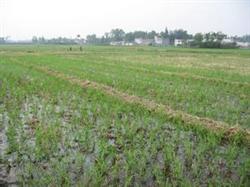
Key Operational Points for No-Till Rice Seedling Broadcasting Cultivation Technology
No-till rice seedling broadcasting refers to a new rice tillage and cultivation technique in which, after harvesting the previous crop, without any plowing or harrowing of the paddy field, herbicide is first applied to kill weed plants and shed-grain seedlings and to wither rice stubble, then the field is irrigated and fertilized for retting, and after the water layer naturally drains or shallow water is released, plastic-tray seedlings or paper-tube seedlings are broadcast-transplanted into the main field...
-
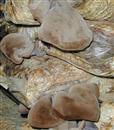
Detailed Explanation of Wood Ear Mushroom Inoculation Techniques: Master the Key Operational Steps
There are many raw materials suitable for bag cultivation of Auricularia polytricha (hairy wood ear), such as mixed wood sawdust, cottonseed hulls, broken cottonseed, bagasse, mulberry branches, cassava stalks, rice straw, soybean stalks, peanut vines, and so on. Except for mixed wood sawdust, cottonseed hulls, broken cottonseed, and bagasse, the remaining raw materials must be crushed into powder before they can be used for production. The bag cultivation process for Auricularia polytricha is similar to that for golden needle mushroom (Flammulina velutipes) bags...
条件筛选