-

Diagnosis and Treatment Methods for Grass Carp Diseases Explained
Abstract Red skin disease: When the disease occurs, the fish scales fall off and there is inflammation. The prevention and treatment method is to disinfect and sterilize with bleaching powder and feed sulfathiazole. Enteritis disease: When the disease occurs, the fish abdomen swells, the intestinal wall becomes congested, and appetite decreases. The prevention and treatment method is to disinfect with bleaching powder and feed Yukang
-
Control Methods for Downy Mildew in Isatis indigotica (Dyer's Woad) Cultivation
Symptoms: On diseased leaves, yellowish-white lesions with rather indistinct edges appear on the leaf surface, gradually enlarge, and, constrained by the leaf veins, become polygonal or irregular in shape. On the corresponding underside grows a layer of grayish-white downy mildew-like substance, namely the pathogen's sporangiophores and sporangia exposed outside the host body.
-
Symptoms and Control Methods of Eleocharis Leaf Blight
Eleocharis, also known as water chestnut, water nut, shao, fuci, wuyu, puji, dili, belongs to the monocotyledonous family Cyperaceae, is a perennial herbaceous plant with persistent roots, oblate, pointed at the top, smooth and glossy surface, purplish-red or dark brown, grows in ponds and marshes, with dark green aboveground
-
What causes gray mold in garlic chives? Introduction to prevention and control methods
Garlic chives are a very vigorous vegetable that can grow well even in harsh environments, which is why they are also called the lazy person's vegetable. During the cultivation of garlic chives, they are easily attacked by gray mold. Below is a detailed look at the causes of the disease in garlic chives and an introduction to prevention and control measures.
-
Symptoms and Control Methods of Black Rot in Chinese Cabbage
Chinese cabbage is a very common vegetable, cultivated in all parts of our country, and there are many ways to eat it. Whether stir-fried plainly or pickled, it has its own unique flavor. Chinese cabbage has low requirements for the growing environment and is easy to manage. A common disease of Chinese cabbage is black rot,
-
Symptoms and Control Methods of Crown Gall Disease in Fruit Trees
Crown gall disease in fruit trees is a very common disease. If it is not controlled in time, it may reduce yields and even cause the death of fruit trees. Therefore, fruit growers must do a good job of prevention and control. So what are the symptoms of crown gall disease in fruit trees? How should it be controlled? I. Main symptoms of crown gall disease
-
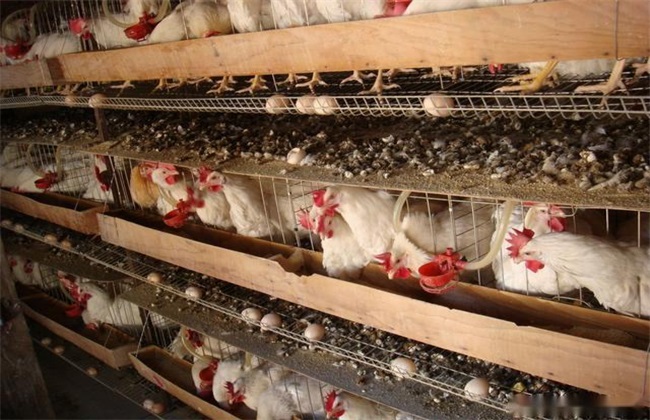
What causes late onset of laying in laying hens
What are the reasons for late onset of laying in laying hens
-
Detailed Explanation of the Main Symptoms and Onset Patterns of Eel Hyperactivity Disease
Caused by Eel Coronavirus-like Virus. Main symptoms: 1) Diseased eels dart erratically up and down in the water at the pond edge, or roll and spin, or swim backwards, with occasional paroxysmal spasmodic trembling or twisting of the head, mouth open, followed by death shortly after. There are no obvious external lesions, though slight congestion or ulceration may sometimes be seen in the oral cavity, anal fin, and pectoral fin areas; necropsy may reveal swelling of the liver or kidney. 2) In the early stage of onset, a small number of eels swim irregularly at the pond edge, swimming weakly, with intermittent head twitching, spinning and rolling, or backward movement. After a few days, a large number of eels show similar symptoms, with paroxysmal trembling of the head, and after frantic swimming at the water surface they die quickly; newly dead eels are rigid with the mouth open. The body surface of diseased fish is intact, but the lower jaw shows varying degrees of ulceration or congestion. Some diseased fish have congestion or ulceration in the oral cavity, anal fin, and tail. Most diseased fish have bright red gill filaments and pale red liver, and some have swollen kidneys. In diseased eels, red blood cells, hemoglobin, and serum chloride ions are significantly elevated, while blood urea nitrogen content is significantly decreased, and serum cholinesterase is reduced. At present, because understanding of this disease is still lacking, diagnosis can only be based on the above main symptoms. It mainly occurs in European eels and African eels, with the high-temperature summer period as the peak epidemic season, hence it is also called European eel summer hyperactivity disease. From the start of onset to the peak period is about 7 days, and mass mortality occurs about 15 days after onset; the speed of spread and transmission is very fast, and it readily forms outbreaks and epidemics.
-
Diagnosis and Control Methods for Acute Onset of Toxoplasmosis in Dogs
From September to December 1997, certain kennels in Jiangsu, Anhui and other places successively experienced outbreaks of a disease characterised by acute death in dogs, sudden acute pulmonary oedema, difficulty breathing, and bloody foam-like fluid flowing from the mouth. Based on necropsy changes, histopathological examination, and toxicological, virological and bacteriological analyses, it was confirmed as an acute outbreak of canine toxoplasmosis. The report is as follows. 1. Incidence: A kennel in Nanjing kept more than 100 German Shepherd Dogs, another kennel kept more than 10 German Shepherd Dogs, and An
-
A Detailed Explanation of the Onset Patterns of Fusarium Wilt in Japanese Euonymus
Onset patterns of Fusarium wilt in Japanese euonymus: the pathogen is Fusarium existing in the soil. The fungus mostly invades through wounds on the roots, but can also directly invade the plant. It generally begins to develop in mid-May, with July and August being the peak period of onset; some plants go from onset to death in no more than a week.
条件筛选