-
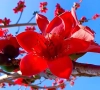
Detailed Explanation of Why the Silk Floss Tree Has Thorns and Its Blooming Time
Hello everyone, today I will give you a thorough introduction to the silk floss tree. The silk floss tree, also known as the beautiful silk floss tree, beauty tree, or wine bottle silk floss tree, is a deciduous tree in the Malvaceae family, genus Ceiba. It is native to Brazil and Argentina in South America, and later widely cultivated around the world, especially in Guangdong, Guangxi, Fujian, Hainan and other places in our country. The silk
-
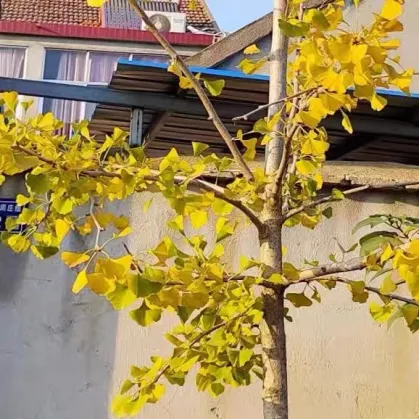
What are the implications and symbols of the ginkgo tree?
The ginkgo tree is a very distinctive ancient tree species. The ginkgo tree is a deciduous tree of the genus Ginkgo in the Ginkgoaceae family. It has a
-

Which bonsai has the highest value? What are the best bonsai tree species for beginners to grow?
For veteran gardening enthusiasts, they generally like to grow bonsai, because bonsai are easy to care for and are mostly evergreen year-round. So which evergreen bonsai are the most popular on the market? Below are several recommendations for beginners that are favorites of many veteran gardening enthusiasts. Jade plant. The jade plant is a succulent, with an upright overall plant shape and fleshy emerald-green leaves. If well cared for, it is said to live for more than 20 years, and it can even bloom.
-

Money Tree vs. Malabar Chestnut: Ease of Care Comparison and How to Tell If Cuttings Are Healthy
Among the many indoor ornamental plants, the Money Tree and the Malabar Chestnut are often loved for their auspicious meanings. However, for many friends who want to grow these two plants, a key question is: which is easier to grow, the Money Tree or the Malabar Chestnut? Let's look at the Money Tree first. It has strong drought tolerance and needs relatively little water.
-
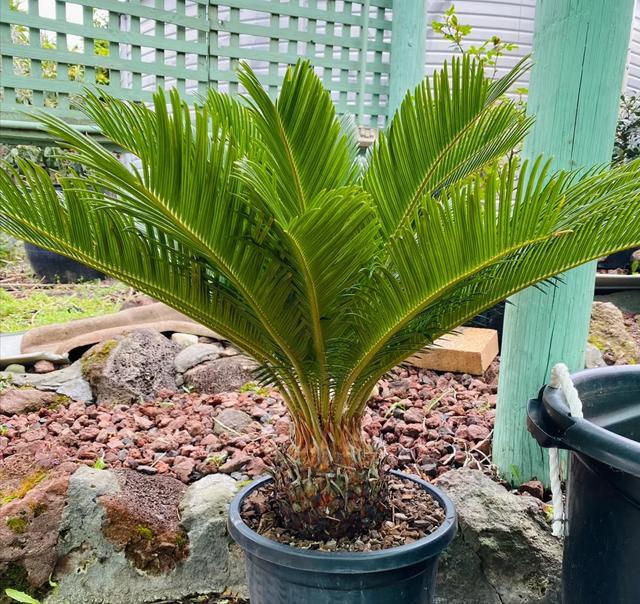
Cycad and Jade Plant: Photo Comparison and Whether the Jade Plant's Shape Is the Same as a Tree
Characteristics and Symbolism of the Cycad. The cycad, also known as the sago palm (Cycas revoluta), is an evergreen tree notable for its distinctive pinnate compound leaves and tough trunk. The cycad's characteristics are mainly reflected in its tenacious vitality, growing stubbornly even in harsh environments. This trait has made the cycad a symbol of resilience and unyielding...
-

What ecological conditions are needed for the growth and development of walnut trees?
Different walnut species and cultivars vary greatly in their ability to adapt to rainfall. In the distribution area of Yangbi walnut, the annual rainfall is 800-1,200 mm, while introducing early-bearing walnuts to areas with rainfall above 6,00 mm makes them prone to disease. Walnut tolerates dry air, but is relatively sensitive to soil moisture conditions; soil that is too dry or too wet is unfavorable for the growth and fruiting of walnut.
-
A Detailed Explanation of the Fertilizer Requirements for the Growth and Development of Walnut Trees
Walnut trees like fertilizer, but the amount of fertilizer needed varies at different ages and different phenological periods. The fertilizer requirements of walnut differ at different ages. The individual development of a walnut tree can be divided into four stages, namely the young age period, the early fruiting period, the full fruiting period and the aging period. In the young age period,
-
Walnut Chapter: Detailed Interpretation of the Tree-Grown Nut Engineering Project
Adopting the "company + base + farmers" model, by introducing improved varieties suited to domestic and international market demand, combined with the latest achievements in forestry research, and scientific planting, Weite Company is developing a 200,000-mu high-quality walnut base in Shanxi, thereby achieving variety optimization
-
Precautions for Applying Photosynthetic Microelement Fertilizer to Walnut Trees
Pictured: Walnut. Photosynthetic microelement fertilizer is a nutritional foliar fertilizer. In addition to containing the three essential elements for plants - nitrogen, phosphorus, and potassium - as well as various trace elements such as calcium, magnesium, sulfur, iron, manganese, zinc, aluminum, and copper, it also contains a photorespiration inhibitor (namely photosynthetic fertilizer), and has the effect of improving
-
What varieties of London plane are there? What are the market prices? Is the London plane a Chinese parasol tree?
In late autumn, the street trees along the roads begin to shed their leaves one after another. There is one kind of tree whose leaves look like a plump palm, and whose bark also peels off in small pieces. This tree is today's "protagonist" - the London plane. The London plane, also called the cut-leaved plane, is
条件筛选