-
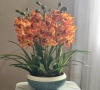
Reasons for Softening Leaves in Phalaenopsis Orchids and How to Handle It
Today I will teach you how to effectively solve the problem of Phalaenopsis orchid leaves suddenly going soft during care, so that your Phalaenopsis orchid regains its vitality and blooms with beautiful flowers. 1. Soft rot Soft rot is a common disease of Phalaenopsis orchids, and once it strikes, it spreads quickly. Symptoms: small water-soaked spots first appear on the leaves, and within just a few days they will
-

How much sphagnum moss is appropriate for Phalaenopsis, and how often should it be fertilized?
In the care of Phalaenopsis, the amount of sphagnum moss used and the frequency of fertilization are two crucial factors. When growing Phalaenopsis with sphagnum moss, is it better to use more or less? And if you grow it with sphagnum moss, how often should you fertilize? Today let's talk about this practical, solid information! Many beginners think that stuffing the sphagnum moss in tightly can give the Phalaenopsis a sense of security,
-

Should Phalaenopsis orchids be given nutrient solution in summer, and how often should it be sprayed?
In summer, as temperatures rise and Phalaenopsis growth speeds up, its nutrient needs increase accordingly. So, do Phalaenopsis orchids need nutrient solution in summer? And how should the spraying frequency of the nutrient solution be determined? We all know that summer is hot and stuffy, and people lose their appetite - Phalaenopsis orchids are pretty much the same! At this time
-

Should Phalaenopsis grown in sphagnum moss be exposed to sunlight often? How is the best way to do it?
Many flower lovers find growing Phalaenopsis in sphagnum moss clean and convenient, but a new question arises: sphagnum moss has strong water retention, so can a Phalaenopsis grown in it take more sunlight? How should it be sunned so it is not easy to kill? Phalaenopsis cannot be exposed to blazing sun, but it absolutely needs sunlight! The Phalaenopsis's original home is the tropical rainforest, where it is used to scattered light filtering through gaps in the leaves.
-
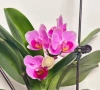
How often should you water a Phalaenopsis in autumn? Master the frequency and techniques to grow orchids in autumn without root rot!
Many friends who grow Phalaenopsis start worrying when autumn arrives: as temperatures gradually drop, they fear root rot if they water too much, but worry about drying out the plant if they water too little. So how many days apart should watering be? In fact, watering Phalaenopsis in autumn has its own rules: you cannot blindly fix a set number of days, and you also need to adjust based on its growth state. Below, we cover the autumn watering frequency, timing
-

What Happens If You Repot a Phalaenopsis Too Often? A Detailed Guide to the Best Repotting Time
As more people grow Phalaenopsis orchids, care problems have also increased, giving many people the false impression that Phalaenopsis orchids are hard to care for and sticking them with the label of "delicate plants." In fact, Phalaenopsis orchids are not hard to grow; people simply have not found the right care method. And the most common way they die is from excessive fussing, always repotting too frequently.
-

What kind of plant is a cactus? An introduction to plants in the cactus family
Cacti are distributed worldwide in many species, with roughly more than two thousand species in the world. They most often grow in deserts and other dry environments, and are called the "hero flower of the desert"; they are a common type of succulent plant.
-
What are the characteristics of Selaginella uncinata? A complete guide
Selaginella uncinata (peacock moss) has stems that creep along the ground and trail, extremely slender and soft, with adventitious roots often growing at the branching points, and many branches. The small leaves are ovate, and the sporophylls are ovate-triangular. The leaf color is blue-green, its main stem is slender and brownish-yellow, and the lateral branches that grow out bear tiny scale-like leaflets.
-
Kalanchoe is a succulent plant in the Crassulaceae family.
Kalanchoe is the most common succulent plant. From a distance, it looks like a group of dancing little butterflies, quite whimsical. Families often keep it as a potted plant, placing it on windowsills and desks for decoration, small and compact yet elegant.
-
What plant is pokeweed? Introducing the herbaceous plant pokeweed
As a child, I often saw a kind of purple-red fruit around the front and back of the house, and girls would also use it to dye their nails. This beautiful plant has a very artistic name, called pokeweed. Come and get to know this plant with the editor.
条件筛选