-

What environmental factors affect the appearance quality of bag-cultivated Ganoderma (reishi)?
Ganoderma, as a medicinal fungus, has its medicinal value and commercial value directly related to the quality of its fruiting bodies. Cultivating fruiting bodies with well-developed caps and good maturity is the ideal goal of medicinal Ganoderma producers. Ganoderma fruiting bodies are quite sensitive to environmental factors such as temperature, humidity, aeration and light. If conditions are unsuitable, deformed mushrooms are very likely to appear. Strictly regulating environmental factors is a necessary measure to improve the finished-product rate and appearance quality of Ganoderma. 1. Temperature factor. Ganoderma fruiting body primordia can form in large numbers at 25-30°C, form less and grow slowly below 22°C, and although they can form above 34°C, they very easily form nodular protrusions after primordium formation and stop developing; Ganoderma caps grow faster at 28-30°C, with sparser concentric rings and lighter surface color, while at 24-26°C the growth period is longer, more active ingredients accumulate, and the texture is harder, so Ganoderma grown at this temperature has better quality. To balance growth time and fruiting body quality, the room temperature during the primordium differentiation and growth stage is best controlled at (28±1)°C, and during the cap growth stage at (26±1)°C. In cultivation practice, the temperature control methods are: (1) arrange the mushroom emergence time appropriately according to local natural temperature conditions; in central and southern Hebei, early June to early September is more suitable; (2) when the temperature is 30°C, appropriate shading, sprinkling well water on the ground combined with ventilation, etc. can lower the room temperature by about 1-3°C; (3) production units with the means can use automatic temperature control equipment, for better results.
-
What are the processing technologies for reishi (Ganoderma lucidum) products?
Reishi milk powder I. Raw material formula: fresh milk 300kg, whey powder 25.2kg, refined vegetable oil 10kg, high-fructose corn syrup (70%) 15kg, reishi 8kg, vitamin A 1.2g, vitamin C 60g, vitamin E 1.2g, calcium lactate 5kg, ferrous lactate 62g, zinc gluconate 87g, lecithin 1.2kg. II. Process flow: whey powder, high-fructose corn syrup, vitamin C, etc. -> dissolve -> filter -> vegetable oil VA, VE
-
How to Control Termites in Ganoderma lucidum Cultivation? Detailed Methods
Termites, also called white ants, belong to the order Isoptera, family Termitidae. Termites occur mainly in hilly and mountainous areas, and are less common in plain areas. Termites are a large family, most abundant in tropical and subtropical regions. In the cultivation of Ganoderma lucidum and other edible fungi, ants mainly bore into and feed on log segments. Damage characteristics: termites bore into and feed on log segments, causing the bark and wood of the log segments to separate, inhibiting the growth of Ganoderma lucidum mycelium and the formation of fruiting bodies. This in turn reduces Ganoderma lucidum yield. Morphological characteristics: winged adults are 27-29.5 mm long, with a wingspan of 45-50 mm, head
-
Detailed Explanation of the Processing Technology for Ganoderma Health Tea
Developing Ganoderma health tea can enhance the competitiveness of tea. A brief introduction to the processing technology of Ganoderma health tea is given below. Its process flow: Ganoderma slicing, extraction, filtration, concentration, spray blending (tea leaves must first be re-fired), drying. 1. Ganoderma slicing: Considering overall benefits and the use of mid-to-low-grade tea, it is ideal to select mid-to-low-grade Ganoderma without deterioration as the raw material. After washing the Ganoderma clean with water, cut it into thin slices of about 5 mm, and set aside. 2. Extraction and filtration: Take the prepared thin Ganoderma slices, at a ratio of 100 grams of Ganoderma to 10
-
Symptoms and Control Methods of Aspergillus Disease in Lingzhi (Ganoderma lucidum)
Aspergillus belongs to the Deuteromycotina, Hyphomycetes, Moniliales, Moniliaceae, genus Aspergillus. There are many species of Aspergillus, and the most widespread harmful ones are Aspergillus flavus (A. flavus Link) and Aspergillus niger (A. niger Van Tieghem). 1. Morphological characteristics: The hyphae are colorless, septate and branched, shorter and thicker than those of Mucor. The conidiophores arise from specialized thick-walled swollen foot cells of the hyphae, unbranched, with the apex swelling into a vesicle. The surface of the vesicle produces radial
-
What is the Ganoderma disease pathogen Peziza badia?
Peziza badia Pers. belongs to the subdivision Ascomycotina, class Discomycetes, order Pezizales, family Pezizaceae, genus Peziza. 1. Morphological characteristics The apothecium is bowl-shaped, sessile, dark brown, 3-6 cm wide. The upper part of the ascus is cylindrical, gradually tapering downward into a stalk. The spores are arranged in a single row in the upper part of the ascus, elliptical, with obvious small protrusions. The paraphyses are pale yellow. 2. Disease occurrence pattern (1) Transmission route The spores are spread by airflow and wind, and can also be introduced with the culture substrate and casing soil to cause the disease. (
-
Identification and Control Methods for Dactylium cobweb disease in lingzhi (Ganoderma)
DactyliumdendroidesFries belongs to the subdivision Deuteromycotina, class Hyphomycetes, order Moniliales, family Moniliaceae, genus Dactylium. 1. Morphological characteristics: The hyphae are pure white and cottony. The conidiophores are slender and sparse, with whorled branches arranged in a radiating pattern. The conidia are oblong, colorless, borne at the tips of sterigmata, solitary or in small clusters, mostly with 4 cells. 2. Disease development pattern (1) Transmission route: Dactylium lives in soil and is widely distributed in soils rich in organic matter.
-

-
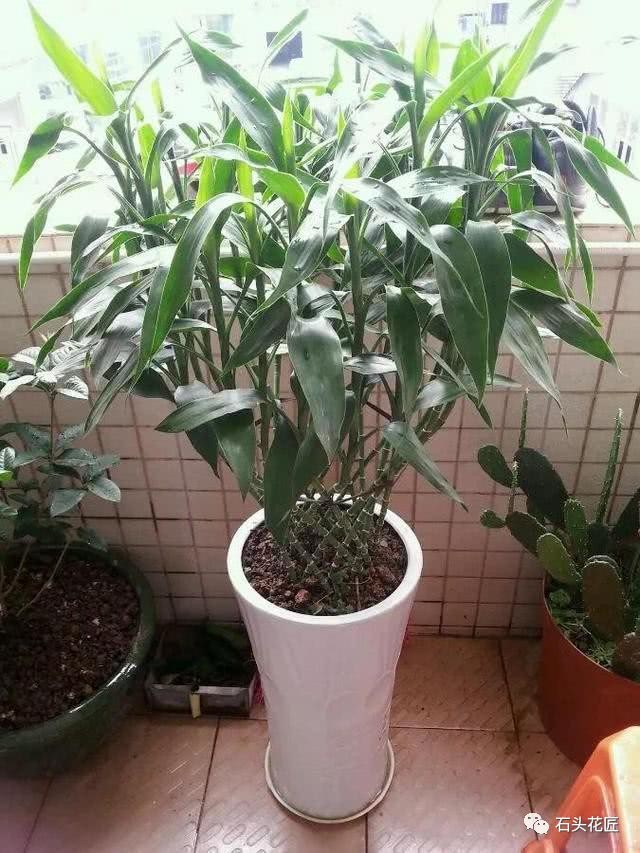
Growing Lucky Bamboo for 10 years, an old gardener adds a little something every year, stems thick and leaves green, growing taller node by node
An old gardener has grown "Lucky Bamboo" for 10 years, adding a little "something" each year so it grows taller node by node, with thick stems and green leaves. More and more people love growing flowers, and many friends keep all kinds of plants and flowers at home, like Lucky Bamboo, Kalanchoe blossfeldiana, and Clivia miniata - these are...
-
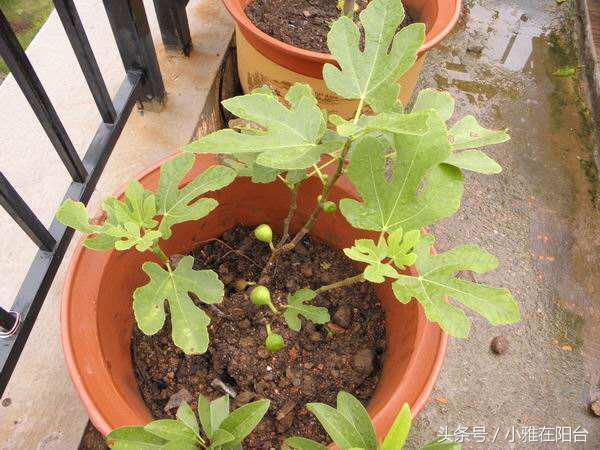
Getting few figs? Master this trick and the branches will be loaded with fruit, one fig per node
Figs taste sweet and delicious and are very nutritious, and they are even said to help prevent cancer. In fact, we can grow a potted fig ourselves at home, on a balcony or terrace. The method is simple, and even someone who has never grown a flower can keep one healthy. Some...
条件筛选