-

Which plants are poisonous to the touch and which flowers are harmful to human health?
It is well known that growing plants can purify the air and at the same time is ornamental, which is good for the family's health. But did you know that some flowers are not suitable for keeping at home, because their flowers are poisonous and in serious cases may even bring a cancer risk? The candelabra cactus (Euphorbia neriifolia) belongs to the genus Euphorbia in the family Euphorbiaceae and is a mutated variety
-

Is the Japanese Charm Blue Phalaenopsis dyed? Is the Japanese Charm Blue Phalaenopsis a large-flowered type?
Japanese Charm Blue Phalaenopsis: first of all, it should be noted that the Japanese Charm Blue Phalaenopsis commonly seen on the market is very likely dyed. The natural colors of Phalaenopsis usually do not include blue, and this Phalaenopsis with a charm-blue color usually has a base color of white or another lighter color. When it blooms, it is watered with a dye
-

What fertilizer concentration is suitable for Phalaenopsis orchids? You should know the harm of over-fertilizing
The Phalaenopsis orchid, known as the aristocrat among orchids, draws people's attention with its elegant bearing and unique flowers. However, to keep this "aristocrat" in its noble and charming state, fertilizing in spring and summer is especially important. During these two seasons, Phalaenopsis grows vigorously, and its demand for nutrients increases accordingly,
-

Is it normal for orchid sphagnum moss to grow mold and green fuzz, and is it harmful to humans?
As a beautiful indoor ornamental plant, the Phalaenopsis orchid often develops moldy or green fuzzy sphagnum moss during its care. These problems not only affect the plant's ornamental value but may also raise concerns about human health. Causes and effects of moldy sphagnum moss in Phalaenopsis orchids: Causes of mold: The sphagnum moss of Phalaenopsis orchids
-
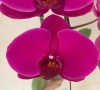
Are Phalaenopsis orchids harmful to cats? Can you keep Phalaenopsis orchids at home if you have a cat?
Cat owners who live with their feline friends and Phalaenopsis orchids, pay attention! As for whether Phalaenopsis orchids are harmful to cats, today let's talk about it. First, a little background: within the broader category of plant toxicity, Phalaenopsis orchids are actually harmful to cats. Although they do not have that kind of immediate, severe toxicity, once a cat accidentally eats them, it will still
-

Does low temperature affect Phalaenopsis orchids? What harm does low temperature do to Phalaenopsis orchids?
Phalaenopsis orchids, beautiful flowers originating from the tropical rainforests of Southeast Asia. Phalaenopsis orchids have high demands on their growing environment, especially when it comes to temperature; once the temperature is too low, it will have many adverse effects on Phalaenopsis orchids. Phalaenopsis orchids are native to tropical and subtropical regions, and their ideal growing temperature is usually between 18°C and 30°C
-

How should you fertilize Phalaenopsis by season to avoid the harm of overfertilizing?
Phalaenopsis (moth orchid) is an elegant and popular ornamental plant, and its beautiful flowers and unique form are deeply loved by gardeners. However, overfertilizing has become an easy mistake for many gardeners to make when caring for Phalaenopsis. Overfertilizing not only damages the root system of Phalaenopsis, but may also cause yellowing leaves, flowers
-

What plants cannot be kept in spring rain? Does floral water harm plants?
Before spring arrives, there are always several heavy rains, and this is also a major process in the growth of all things. However, although rainwater contains many trace elements and is excellent for flower growth, there are also some flowers and plants that are not suited to being rained on. If they accidentally get too much rain, they may die the very next day. If the place where you live happens to be in the rainy season
-

Does Repotting a Phalaenopsis with Too Much Force Kill It, and What Specific Harm Does It Cause?
Phalaenopsis (moth orchid) is a highly popular ornamental flower. During care, repotting is an important step, but if done with too much force, it can cause serious damage to the plant. Will a Phalaenopsis die if repotted with too much force? And what harm does excessive force cause? Phalaenopsis is an epiphytic plant, and its root system differs from that of ordinary plants, not
-

Improper repotting of Phalaenopsis orchids can harm their growth; what should you do if the potting mix is unsuitable?
In the process of caring for Phalaenopsis orchids, repotting is an important operation, but if done improperly it can easily damage their growth. At the same time, if the potting mix is unsuitable, it will also affect the health of the Phalaenopsis. The harm that improper repotting methods cause to Phalaenopsis growth cannot be underestimated. First, in terms of choosing the repotting time, if the Phalaenopsis
条件筛选