-

Key Techniques for High-Yield Cultivation of Honeysuckle (Lonicera japonica) in Saline-Alkali Soil
The Yellow River Delta is located in a warm temperate semi-humid region with a continental monsoon climate, and the climatic conditions are suitable for the growth of honeysuckle. In recent years, the honeysuckle planting area has gradually expanded, but due to the high degree of soil salinization and insufficient cultivation experience, honeysuckle production has been characterized by small scale, low yield, delayed returns, and severe pests and diseases. Through research on large-scale high-yield cultivation techniques for honeysuckle in saline-alkali soil, the results show that the goals of raising seedlings in the same year, transplanting in the same year, and harvesting flowers the following year can be fully achieved. After 3 years, the yield per mu (667 sq
-
What livestock and poultry diseases can honeysuckle (Japanese honeysuckle, Lonicera japonica) and common selfheal (Prunella vulgaris) treat?
Honeysuckle and common selfheal have the functions of clearing heat and detoxifying, clearing the liver and reducing internal heat, and dispelling wind and unblocking collaterals, and they have a strong inhibitory effect on bacilli and some viruses. Used alone or in combination, they can treat a variety of livestock and poultry diseases. 1. Rabbit heatstroke: 10-15 g each of honeysuckle, common selfheal and Jinji grass, decocted in water and given orally. 2. Piglet white scour: 100 g honeysuckle added to 1000 mL water, decocted down to 500 mL, mix the liquid together with the residue into the feed and feed it to the sow. Feed once each morning and evening, for 2 consecutive days; the cure rate reaches over 98%. 3. Pig eye opacity: affected pig's eye
-
A Detailed Guide to the Prevention and Control of Pests and Diseases on Japanese Honeysuckle (Lonicera japonica)
Anthracnose occurs frequently in summer and can be controlled by drenching with a 500-1000 times dilution of wettable Dexon powder. For rust, spray a 200-250 times dilution of the technical-grade dithianon sodium (you may add 50-100 g of washing powder to 50 kg of the spray solution as a sticker). Insect pests include aphids, longhorn beetles and others; aphids can be sprayed with a 4000 times dilution of 10% imidacloprid, while longhorn beetles can be sprayed with a 500 times dilution of duomeike (methomyl). Note, however, that toxic pesticides must never be used on Japanese honeysuckle during the bud stage.
-
Detailed Explanation of the Key Technical Points for Cultivation and Management of Japanese Honeysuckle (Lonicera japonica)
1. Intertillage, weeding and earthing up. After the seedling or vegetatively propagated plants of Japanese honeysuckle are planted out, intertillage and weeding should be carried out in a timely manner during the growing season each year. When planting in cold winter regions, before the soil freezes in early winter, soil should be earthed up around the root zone along with loosening the soil, to prevent the root system from freeze damage. 2. Fertilization, drainage and irrigation. In early spring or late autumn, decomposed barnyard manure and superphosphate, etc. are applied in combination. When fertilizing, the ring fertilization method can be used: that is, open a ring-shaped trench around the plant, apply the fertilizer, then cover with soil and level it. In addition, when flower bud differentiation is seen before flowering, foliar supplementary spraying of monoammonium phosphate
-
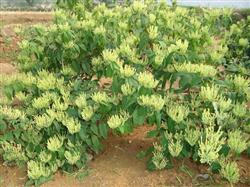
What are the main management measures for growing honeysuckle (Lonicera japonica)?
What are the main management practices for growing honeysuckle? Please give an introduction. The main management practices for growing honeysuckle are as follows for reference: 1. Cultivation and weeding. Generally 3-4 times a year. The 1st time is when new leaves sprout in spring; the 2nd time is in June; the 3rd time is in July-August; the 4th time is in late autumn and early winter. During...
条件筛选