-

Mixed fish and turtle farming puts Wang Xiaoyao on the road to prosperity
Wang Xiaoyao: The story of getting rich by farming fish and turtles together
-
Mixed planting doubles profits, Zhangjiakou's Wang Liang innovates with a clever approach
Zhangjiakou's Wang Liang innovates with mixed planting, doubling profits
-
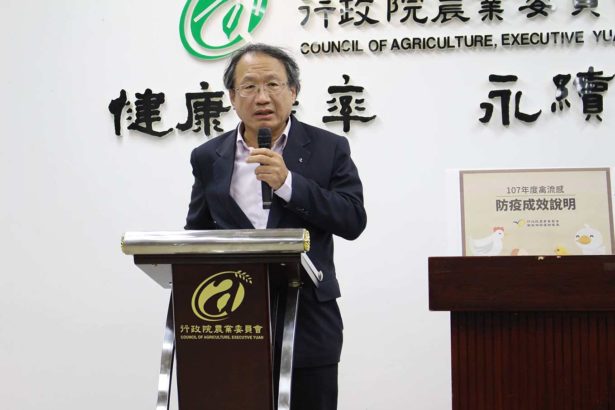
Avian influenza runs rampant in the cold winter, and mixed raising of three generations of laying hens is the toughest; open-air duck farming must be tightened and controlled
Battling the peak of avian influenza in the cold winter! Mixed raising of three generations of laying hens is the toughest; open-air duck farming must be tightened and controlled
-
How do you make mixed fresh shrimp with raw noodles delicious?
Ingredients: (1 serving) 2 fresh shrimp, 1 egg, as needed Japanese greenhouse cucumber, as needed bamboo shoots slices, as needed Japanese-style fish cake slices, 1 portion Sapporo miso raw noodles. Method: 1. Slice the cucumber. Boil the egg, peel it, and cut it lengthwise into two halves. Wash the fresh shrimp, boil them, then remove and set aside. Bring a pot of water to a boil, add the raw noodles and cook for 4 minutes, stirring occasionally, then turn off the heat and mix in the included seasoning powder. 2. Place the seasoning oil in a large bowl, then pour in the noodles and soup, and mix well. Serve with the fresh shrimp, cucumber, bamboo shoots slices
-
How to Treat Mixed Infections in Chickens? Detailed Guide to Prevention and Treatment
If a chicken has a mixed infection, the first step is to test the sick chickens to confirm exactly which diseases are involved in the mixed infection, and then treat them promptly. If Newcastle disease is detected, the sick chickens should receive emergency vaccination with the Newcastle disease vaccine, which can be given via drinking water, oral administration, nasal drops, eye drops, or injection at several times the normal dose. Antibiotics are highly effective against fowl cholera; antibiotics such as ofloxacin and norfloxacin can be given in drinking water or mixed into feed, twice a day. Then use a broad-spectrum anticoccidial drug in drinking water or mixed into feed for treatment. For respiratory diseases, if they are caused by Myco
-
What should you do if herbicide is accidentally mixed into oyster mushroom (Pleurotus ostreatus) substrate?
Herbicide should never be mixed into the substrate when growing oyster mushrooms. As for what adverse effects mixing herbicide into the substrate may have on the growth of oyster mushroom mycelium, we have not yet carried out experiments in this area. I think that mixing 50 grams of herbicide into 2000 jin of substrate is not a low concentration; even if it does not affect mycelial growth, at the very least herbicide residues will accumulate in the oyster mushroom fruiting bodies, making it very difficult to guarantee the safety and hygiene of the product. The solution is to repeatedly rinse the herbicide-containing substrate with water (5-6 times), then drain off some of the excess water, add an appropriate amount of carbendazim (reduced by about 20% from the original amount), pile it up for fermentation, and then use the original method for inoculation and cultivation.
-
Technique for Top-Grafting Mixed Pear Trees to Nanguo Pear in Western Liaoning
1. Re-grafting. Whether a mixed pear top-grafted to Nanguo pear has survived can be determined 20 to 25 days after grafting. On surviving Nanguo pear scions, the bark remains green, and the buds begin to sprout; those that have not survived show shrunken, dried bark. Re-graft those that failed as soon as possible: in spring, cut off the dead stub and then cleft-graft; in summer, after the bark slips, green-wood bark grafting can be used. After re-grafting, cover promptly with paper bags to aid survival. If plastic bags are used, the high outside temperature can easily cause the scions to lose water. 2. Unbinding. After spring cleft grafting or side-veneer grafting, the new
-
Mixed farming of turtles and earthworms in the same pond yields high economic returns
Under micro-flowing water conditions, amphibious turtles and aquatic earthworms are co-cultured in one pond, with the aquatic earthworms serving as the main feed or supplementary feed for the turtles. This can make the turtles strong and healthy, grow faster, shorten the breeding cycle, reduce feeding costs, and more than double economic returns. Moreover, throughout the entire rearing process, contamination of the product by hormone drugs is avoided, meeting the basic requirements for pollution-free food and making it more popular with consumers. The main technical points are introduced as follows: 1. Pond construction: choose a site with abundant water sources and good water quality
-
Technical approach for mixed planting of strip mulberry and black locust in the conversion of cropland to forest on the plains
The technical approach for mixed planting of strip mulberry and black locust in the conversion of cropland to forest on the plains is: create an ecological forest through mixed planting of trees and shrubs, achieve a scientific and rational configuration of tree species, increase tree species diversity, focus on windbreak and sand fixation, use mulberry leaves for sericulture, and use mulberry twigs for weaving or papermaking; if fruit mulberry is planted, the mulberries can be eaten fresh or used to brew juice, which can achieve relatively high economic and social benefits.
-
Site preparation and planting measures for mixed forests of strip mulberry and black locust in converting farmland back to forest on the plains
Black locust uses pit-shaped site preparation, with a specification of 80 cm by 80 cm by 80 cm, a plant-to-row spacing of 3 m by 5 m, and a planting density of 45 trees per 667 sq m; plant in spring and autumn, apply sufficient base fertilizer before planting, and water after planting; strip mulberry is planted between the black locust, using pit-shaped site preparation, and planted in spring, the rainy season, or autumn.
条件筛选