-
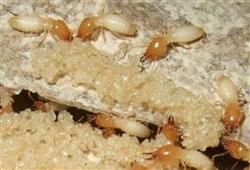
Lingzhi (Ganoderma lucidum) cultivation techniques: How do you control termites when growing lingzhi?
How do you control termites when growing lingzhi? Please explain: termites, also called white ants, belong to the order Isoptera, family Termitidae. Termites occur mainly in hilly and mountainous areas, and are less common in plains areas. The termite group is a large family, most thriving in tropical and subtropical regions. In the cultivation of lingzhi and other edible fungi, ants mainly bore into and feed on the log segments....
-

What are the control methods for the wolfberry gall mite?
The wolfberry gall mite belongs to the family Eriophyidae. It damages wolfberry leaves, tender shoots, petals, flower buds and young fruit, and the damaged parts form purple or yellow diseased galls. The wolfberry gall mite overwinters as mature adult mites inside the scales of wolfberry winter buds or in cracks in the bark of branches. When leaves unfold in April of the following year, the adult mites migrate to the new leaves on old branches to lay eggs; after hatching, the nymphs invade the plant tissues and cause galls. In mid-to-late May, the gall mites crawl from the galls onto new shoots to cause damage, continuing until late June, forming the first peak period of reproduction. By mid-August, when the autumn shoots grow, the gall mites move again to the new shoots to cause damage
-
Occurrence and Control Methods of Goji Gall Mite Disease
In mid-to-late August 2002, in the goji berry production area on the border between Julu and Longyao, goji gall mite disease broke out severely, causing great losses to goji berry growers. Damage symptoms: most obvious on the leaves, with densely packed yellow-green nearly circular raised dots on the damaged parts, and the leaves are distorted, similar to a viral disease, with plant growth severely stunted; the leaves and tender stems are inedible, and the fruits are deformed, reducing both yield and quality. Using a blade to cut open the small bumps on the leaves and taking out the adult mites from inside, under a microscope the adult mites are long conical and orange-yellow. Through
-
What are the control methods for the wolfberry rust mite?
The wolfberry rust mite belongs to the family Eriophyidae. Swarms of mites densely cover the leaves and suck the sap, causing the leaves to turn rust-colored and drop early. Adult mites overwinter in bark crevices, bud axils and other places. The following year, after the wolfberry leaves unfurl in mid-April, they begin their damaging activity, and they begin laying eggs in late April. Late May to late June is the peak period of reproduction. After that, because the leaves turn rust-colored and the nutritional conditions deteriorate, the number of mites drops greatly. From late July to early August, new leaves emerge and a second reproduction peak appears. In mid-September reproduction slows, and after leaf fall in October the adult mites move to
-
How to Control Termites in Ganoderma lucidum Cultivation? Detailed Methods
Termites, also called white ants, belong to the order Isoptera, family Termitidae. Termites occur mainly in hilly and mountainous areas, and are less common in plain areas. Termites are a large family, most abundant in tropical and subtropical regions. In the cultivation of Ganoderma lucidum and other edible fungi, ants mainly bore into and feed on log segments. Damage characteristics: termites bore into and feed on log segments, causing the bark and wood of the log segments to separate, inhibiting the growth of Ganoderma lucidum mycelium and the formation of fruiting bodies. This in turn reduces Ganoderma lucidum yield. Morphological characteristics: winged adults are 27-29.5 mm long, with a wingspan of 45-50 mm, head
-
Control Methods for Red Spider Mite Infestation on Codonopsis pilosula
Belongs to the class Arachnida, order Acarina, family Tetranychidae. Adults and nymphs gather in groups on the undersides of leaves to suck sap, and spin silk webbing, damaging leaves and tender shoots, causing leaves to turn yellow and eventually drop off; after flowers and fruits are damaged, they become shrunken and withered, spreading rapidly with severe damage, being most serious during dry autumn weather. Control methods: clear the garden in winter, pick up all dead branches and fallen leaves, and burn them in a centralized manner; after clearing the garden, spray 1-2°Bé (1-2 Baume degrees) lime sulfur mixture; in spring spray 0.2-0.3°Bé (0.2-0.3 Baume degrees) lime sulfur
-
What to do when white ants (termites) infest Ganoderma lucidum?
The white ant (Coptotermes formosanus Shiraki), also known as the termite or house termite, belongs to the class Insecta, order Isoptera. 1. Morphology and habits: Each colony contains three morphological forms and different functional types of termites. The large-winged ant (a type of reproductive ant), also called the flying ant, has a body length of 7.5-8.5 mm, wing length of 11 mm, a nearly round brown head, inconspicuous secretory pores, and 21 antennal segments. The thorax and abdomen are yellowish-brown. The wings are grayish-white and transparent, with the wings and front margins pale yellowish-brown. The soldier ant has a body
条件筛选