-

A Detailed Guide to Controlling the 3 Major Diseases of Carnations
Leaf spot, Fusarium wilt and viral diseases are the main diseases that occur on carnations. The control methods are as follows: Leaf spot mainly infects the leaves, and the disease usually starts on the lower leaves. On severely affected plants the diseased parts are distorted, and the diseased leaves wither, droop and hang down over the stem, but do not fall off. Old leaves are affected more often and more severely, while new leaves are affected less, and the disease occurs more in open-field cultivation than in greenhouses. Control methods: start spraying regularly from the early stage of the disease; spray a fungicide immediately after disbudding and cutting flowers for protection. A 75% chlorothalonil wettable powder solution diluted 800 to 1000 times can be used for spraying
-
Occurrence and Control Methods of Major Diseases, Insect Pests and Rodent Pests of Lilies
Lily, also known as night lily, mountain lily, Zhongpeng flower, etc., is a plant that combines medicinal, edible and ornamental uses, with a large market demand. Lily is also a traditional export specialty of China and is planted throughout the country. However, with the expansion of lily planting area, diseases, insect pests and rodent pests have become increasingly serious, becoming the main factors restricting stable and high yields of lilies. The occurrence and control methods of the main diseases, insect pests and rodent pests of lilies are introduced as follows: 1 Main diseases and control 1.1 Main diseases There are many kinds of lily diseases, but fungal diseases such as gray mold and Fusarium wilt are the main ones.
-
Three major pitfalls to avoid when buying Phalaenopsis seedlings
It is once again the selling season for Phalaenopsis seedlings, and according to consumption habits in China, the peak sales period for finished Phalaenopsis plants is concentrated just before the Spring Festival. Therefore, the Phalaenopsis seedlings that producers buy at this time are basically 2.5-inch intermediate seedlings; that is, calculated according to the normal growth cycle of Phalaenopsis, seedlings of this size are exactly able to bloom and go on the market before next year's Spring Festival. However, quite a few producers have experienced this awkward situation: they clearly bought 2.5-inch seedlings, yet the plants failed to bloom on schedule. They suspect something went wrong with the seedlings, but the seedling supplier says it was the producer who
-
What plant is Firmiana major? Learn about Firmiana major in one article
Firmiana major Hand.-Mazz., of the family Sterculiaceae. Aliases: Red-flowered Parasol Tree, Black-bark Parasol Tree. Deciduous tree, reaching over 14 m tall. Bark greenish with a grayish-black tinge, old bark black and slightly rough; branchlets stout, covered with short pubescence. Leaves palmately 3-lobed, 17-30 cm long, 19-40 cm wide, width often greater than length, apex acute. Base cordate, leaf surface nearly glabrous, underside densely covered with yellowish-brown short pubescence that gradually falls off later, basal veins 5-7; petiole stout, 15-45 cm long
-
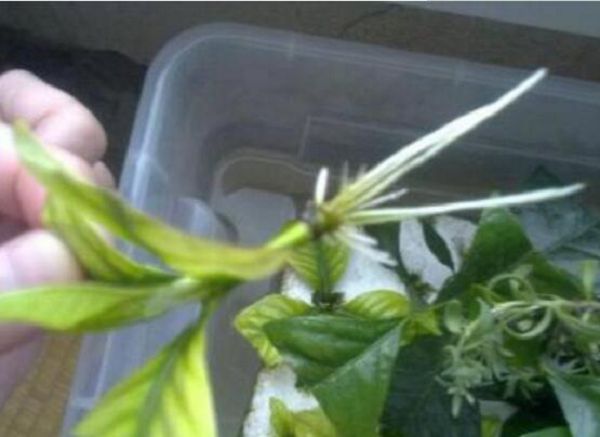
How to Propagate Gardenia: Five Major Gardenia Propagation Methods
How to Propagate Gardenia: Five Major Gardenia Propagation Methods
-
Major Pests and Diseases of Lilies and Their Control Methods
After sowing, lilies must undergo several years of cultivation and management before commercial bulbs suitable for harvest can be obtained. Generally, asexual propagation is used first to obtain seed bulbs, or seed propagation may be used first to obtain seed bulbs; the seed bulbs are then planted in the field and, through field management, grow into commercial lilies. Seed bulbs are various propagation materials first cultivated into 50-100 g small...
条件筛选