-
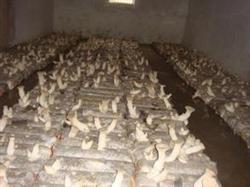
Cultivation and Management Methods for Getting More Flushes of King Oyster Mushroom in Spring
Control the environment and try to keep the ambient temperature within the growth range. The growth temperature of king oyster mushroom (Pleurotus eryngii) is 6°C to 25°C. At 6°C to 15°C, the fruiting body grows slowly, but its tissue is dense and its color is attractive, so high-quality mushrooms can be produced. Bud-stage management 1. Increase ventilation Increase ventilation to promote cap growth and inhibit stipe growth...
-
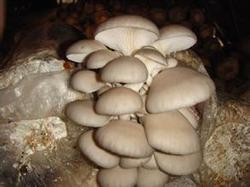
After harvesting oyster mushrooms for two flushes, the substrate surface needs to be scraped.
Growing oyster mushrooms on peanut shells can increase economic returns by 9.67%-21.82% compared with cultivation using rice straw. The following steps should be followed in the process. 1. Raw material processing and formula: crush the peanut shells into small particles and sun-dry them for 2-3 days before use. The formula is: peanut shells 90%, wheat bran or rice bran 8%, lime 3%, superphos...
-
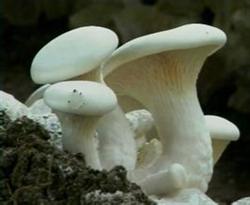
Key techniques for multiple flushes of white lingzhi mushrooms in spring
White lingzhi mushroom (Pleurotus nebrodensis) is a rare edible fungus developed in recent years, with excellent mushroom quality, good marketability, and high economic and nutritional value, offering broad market prospects. At present, it is mainly cultivated with cottonseed hulls as the main substrate, and developing white lingzhi mushroom cultivation in non-cotton regions presents certain difficulties. Through experiments, the author found that cultivating white lingzhi mushroom using whole corn plants is entirely feasible, and the biological...
-
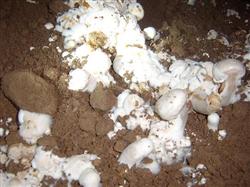
How can button mushrooms be cultivated to produce mushrooms in two flushes and achieve high yields?
Brown rot, also known as white rot, wet bubble disease, blister disease, etc., infects mushroom buttons when they are young, and the disease is caused by a fungus called Mycogone perniciosa. In the later stage, it forms irregular grayish-white "lumps" or deformed mushrooms, and a layer of "white fuzz" grows on the surface. That is, when the temperature of its pathogenic mycelium is above 20°C, in just 4-5 days...
-

What to do if the second flush of mushrooms does not appear? Causes and solutions
Normally, after the first flush of mushrooms is harvested, the second flush will begin to appear in about 10 days. In some cases, no mushrooms appear for a long time. The main reasons are, first, a high yield in the first flush and too long a growing period, causing a serious shortage of water content in the growing medium; second, temperature that is too low or too high, affecting the timing and yield of the next flush. The solution is to soak the growing medium bags in clean water for 1-2 hours, adding to the water 1% white sugar, 0.3% potassium dihydrogen phosphate, 0.5%-1% magnesium sulfate, 0.1% urea, and 0.1% zinc sulfate
-
How to handle oyster mushrooms during the flush transition period? A detailed guide to practical management methods
When oyster mushrooms are in the flush transition period, the first step is to remove mushroom stumps and dead mushrooms. Use a sharp knife to dig out the roots without leaving any residue, and pull out the dead mushrooms. Second, for wall-style fruiting, use wooden sticks with a diameter of 2 cm to 3 cm to make holes in the mushroom wall, driving them from top to bottom to a point 20 cm from the bottom layer, then pour the prepared nutrient water into the holes. Irrigate little but often, and add enough water. The nutrient water can be rice-washing water, mushroom root soup, urea water, etc. For ground-cultivated fruiting, the nutrient water can be poured into the pool along with the irrigation water. Third, after pouring the nutrient water, stop watering for 5 to 7 days. During this time, keep the air humidity at
-
Detailed Explanation of the New Technology for One-Time Massive Mushroom Flushing of Oyster Mushrooms
The so-called new technology for massive mushroom flushing refers to the use of a supporting set of techniques to force a one-time high yield at the first flush of mushrooms. This is a further improvement and strengthening of "simulated industrial cultivation technology," and practice has shown that the results are very good and that it can be promoted for use. This technology mainly consists of five steps: 1. Carry out virus elimination treatment on the spawn. "Good seed produces good seedlings" is a truth everyone knows, but indefinite preservation of spawn and continuous, unlimited subculturing can lead to problems such as trait degeneration or naturally carrying viruses and pathogens.
条件筛选