-
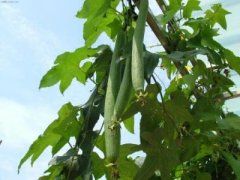
How to Grow Luffa: Early Spring Seedling Techniques and Planting Time Explained
There are many varieties of luffa, and most people choose to grow early spring luffa because it comes to market much earlier than ordinary luffa, which meets market demand and brings high returns. Do you know the methods and timing for growing early spring luffa? Would you like
-

High-Yield Cultivation Techniques for Luffa with a Yield of 50,000 Jin per Mu
Abstract Sunlight greenhouse: seedling raising in plug trays can be done in late January, with a seedling age of about 35 days, then transplanting in early February, and harvesting begins 50-55 days after transplanting. Plastic tunnel: depending on seedling raising and planting facility conditions, seedling raising in plug trays can be done in mid-to-late February, with a seedling age
-
Key Technical Points and Management Methods for Growing Luffa in Open Fields
Summary Sowing and seedling raising: First, soak and germinate the seeds, then select well-germinated seeds for proper sowing, and control the temperature well. Transplanting and fertilizing: When the seedlings grow to 4 true leaves and 1 heart leaf, they can be reasonably densely planted on a sunny day in April. Sufficient base fertilizer is needed, then deep plow and plant the seedlings. Later management: After transplanting
-
How to Grow Luffa? Mastering Scientific Cultivation Techniques Is Key
Luffa has been cultivated in China for a very long time and is currently grown across a very wide range. Luffa has high edible value, so it is very popular with consumers, and many people want to grow it themselves. The first step is to understand how to grow it.
-
Detailed Explanation of Key Techniques for Spring Open-Field Cultivation of Loofah
Loofah (scientific name: Luffa cylindrica), in the Pearl River Delta loofah specifically refers to the eight-angled gourd, is a plant of the Cucurbitaceae family native to India, also known as vegetable gourd, and is widely cultivated in East Asia. It cannot be eaten raw, and can also be used medicinally; it has cooling, diuretic, blood-activating, menstruation-promoting and detoxifying effects.
-
What are the key points of high-yield management techniques for loofah in greenhouses?
Loofah (scientific name: Luffa cylindrica); in the Pearl River Delta, loofah specifically refers to the eight-angled gourd. It is a cucurbitaceous plant native to India, also known as vegetable gourd, and is widely cultivated in East Asia. It is a climbing herbaceous plant of the Cucurbitaceae family, and loofah has a strong root system. The stem is vine-like, five-angled
-
How to Grow Luffa for High Yield? A Detailed Guide to Cultivation Techniques
High-yield luffa cultivation techniques have always been a key topic that many novice growers want to learn about, so let's take a look together today! High-Yield Luffa Cultivation Techniques 1. Variety: For summer luffa, choose varieties that are heat-tolerant, early-maturing and high-yielding. 2. Site selection: Summer luffa has no
-
A Detailed Guide to Growing Luffa in Open Ground in Spring
Luffa is a common vegetable that can be served cold, stir-fried, braised, made into soup, or juiced. It can also be used medicinally, with effects of cooling, promoting urination, invigorating blood, clearing meridians, and detoxifying. Below is an introduction to growing luffa in open ground in spring. 1. Soil Luffa has
-
How to Grow Luffa for High Yield? A Detailed Guide to Practical Growing Techniques
Growing luffa requires choosing a suitable planting time; cultivation is not recommended in winter, while in the other seasons it can be harvested in 2-3 months. Get the timing of fertilizer application right, and water according to the growth conditions, which can promote the swelling of the luffa. Reasonable field management can effectively promote the growth of luffa
-
Detailed Explanation of Key Points for Greenhouse Luffa Cultivation Techniques
Varieties: It is advisable to select varieties that tolerate low temperatures and weak light, favor fertilizer and water, are of high quality and early maturing, and suit the market. Seed soaking and germination: After disinfection, soak the seeds; during germination, rinse them twice a day with clean water, and they can be sown after one week. Seedling stage management: Water and fertilize appropriately, prevent and control
条件筛选